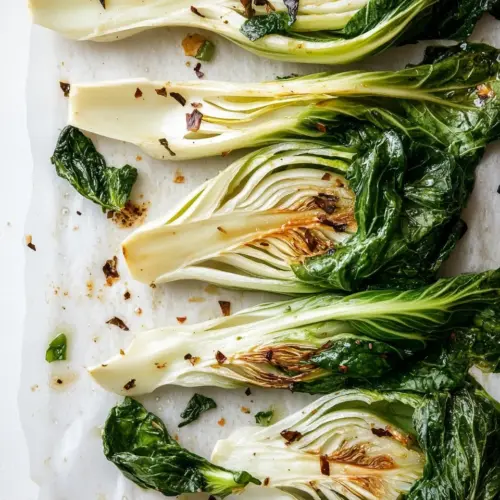
Easy Roasted Baby Bok Choy
Easy Roasted Baby Bok Choy is a quick, crispy vegetable side that brings tender white stems and blistered green leaves together with a tangy soy lemon sauce. This easy weeknight side uses simple pantry ingredients like olive oil and soy sauce to create a bright, savory finish, perfect for pairing with rice bowls or grilled proteins. Make it when you want flavor fast.
Equipment
- Oven
- Baking Sheet
- Parchment Paper
- Small Bowl
- Whisk
Ingredients
- 1 pound baby bok choy Provide tender leafy greens that become slightly sweet and crisp-tender when roasted; use whole baby bok choy halves for quick, even cooking and attractive presentation. Offer a mild cabbage-like flavor that balances the savory sauce and adds bulk to the dish.
- 1/4 cup olive oil Coat and gently crisp the bok choy while helping other seasonings adhere; choose a good-quality olive oil for a smooth mouthfeel and higher smoke point for oven roasting. Add richness and facilitate caramelization on cut surfaces.
- Pepper to taste Season the bok choy to taste with aromatic heat and a contrasting bite; freshly ground black pepper brightens flavors and provides subtle warmth. Use sparingly and adjust after roasting to avoid overpowering the delicate greens.
- 3 tablespoons low-sodium soy sauce Deliver savory umami and salty depth while keeping sodium lower than regular soy sauce; drizzle over bok choy before or after roasting to infuse flavor. Balance the lemon juice and olive oil while adding a glossy finish to the leaves.
- 1 tablespoon lemon juice Add bright acidity to balance the dish and lift the overall flavor profile; squeeze over the finished bok choy to provide freshness and cut through richness. Pair with soy sauce to create a pleasant sweet-sour contrast.
- 1/2 teaspoon garlic powder Impart a concentrated garlic flavor without moisture from fresh garlic; sprinkle evenly to give gentle savory notes throughout the bok choy. Use measured amounts to avoid bitterness from overuse during roasting.
- Red pepper flakes to taste (start with 1/2 teaspoon) Introduce controlled heat and a touch of smoky spice that complements the soy and lemon; start with a modest amount and increase to preferred spiciness. Provide visual interest and a lingering warmth that enhances the roasted greens.
Instructions
- Preheat oven to 450 F. Move the rack to the middle of the oven. Line a large baking sheet with parchment paper.: As the oven hums to temperature you will notice the kitchen air warm and the oven light glow, signaling readiness. Lining the pan with parchment prevents sticking and makes cleanup effortless, and placing the rack in the middle ensures even heat circulation so the bok choy gets uniform color. The high heat is essential to encourage quick caramelization rather than slow steaming, which preserves crispness. A common mistake is using a cold pan, which delays browning, so always let the oven fully reach temperature before you slide the sheet in. If your oven runs hot, watch the first batch closely to avoid overdarkening.
- Cut the baby bok choy in half lengthwise and trim the dry ends if needed (the white part). Place the baby bok choy on the baking sheet. Pour olive oil on both sides of each piece of bok choy (and rub it in), then grind some pepper on each piece too. I like to roast it face-down first. Place the baking sheet in the oven and roast for 5 minutes/side (it will be tender-crisp with some crispy leaves). If you want it done more, roast it a little longer.: You will see the pale stems and green leaves reveal a clean cut surface that will brown beautifully when exposed to heat. Trimming the dry ends improves presentation and removes woody bits that do not soften as quickly. Arrange the halves with the cut side slightly exposed to heat, which maximizes browning on the stems while letting the leaves crisp at the edges. A frequent oversight is overcrowding the pan, which traps steam and prevents crisping, so give each piece breathing room.
- Meanwhile, whisk the soy sauce, lemon juice, garlic powder, and red pepper flakes together in a small bowl.: As you rub olive oil into the surface, it glistens and highlights the veins of the leaves; the oil also acts as a heat conductor that promotes those pretty browned tips. The cracked pepper will toast slightly in the oven, adding a toasted spice note. Ensure a thin, even coat of oil rather than drowning the vegetable, because excess oil can pool and slow crisping. Avoid skipping the rub step, as uneven oiling leads to patchy browning.
- Once the baby bok choy is done to your liking, drizzle the sauce on each piece. Serve immediately.: Placing the bok choy cut side down against the sheet produces a concentrated sear on the stem, which yields a sweeter, caramelized flavor and a satisfying contrast with the leafy tops. You will hear a faint sizzle as the oil meets the hot pan, and after a few minutes the edge will begin to darken and char slightly, which is the visual cue to flip if you choose to. One mistake people make is leaving pieces face-up, which reduces direct contact with the hot surface and limits browning.
- Place the baking sheet in the oven and roast for 5 minutes/side (it will be tender-crisp with some crispy leaves). If you want it done more, roast it a little longer.: Near the five minute mark you will notice the stems turning translucent with the slightest golden edges and the leaves blistering at the tips, releasing an aroma that is vegetal, nutty, and faintly sweet. That tender crispness is the goal, where the stems yield a bite but still hold texture. If you prefer softer stems, add a minute or two, but watch closely because the leaves can go from blistered to burnt quickly. Avoid overcooking, which produces limp, flavorless greens.
- Meanwhile, whisk the soy sauce, lemon juice, garlic powder, and red pepper flakes together in a small bowl.: As you whisk the glossy sauce, the citrus scent lifts and the soy sauce tames with a salty umami depth, while garlic powder adds roundness and the red pepper flakes introduce warmth. The texture should be smooth and slightly thin so it can be drizzled easily; if it seems too viscous, a tiny splash of water will loosen it. Mixing while the bok choy roasts ensures the sauce is fresh and bright when you finish. A common slip is making the sauce too heavy handed in salt, so taste and adjust before drizzling.
- Once the baby bok choy is done to your liking, drizzle the sauce on each piece. Serve immediately.: The final drizzle brings the dish together, and you will hear the faint hiss as the sauce meets the hot surface and releases aromatics, and the lemon will sparkle against the roasted sugars. Serve right away so the contrast between warm stems and crisp leaves is preserved, and watch how the glossy sauce clings to the textures. A typical error is letting the bok choy sit too long after saucing, which softens the crisp edges and dulls the initial brightness, so plate and pass quickly.
Notes
- Add citrus zest: Grate a little lemon zest into the sauce before drizzling to amplify bright notes without increasing acidity. The fragrant oils in the zest lift the dish and pair nicely with roasted stems.
- Boost the heat: Increase the red pepper flakes slightly or sprinkle a pinch of chili flakes on top after saucing for a sharper kick. It warms the palate and contrasts with the vegetal sweetness.
- Use toasted sesame: Finish with a few drops of toasted sesame oil or a sprinkle of toasted sesame seeds for a nutty aroma that complements the soy sauce. Add at the end to retain aroma.
- Keep it gluten free: Swap the soy sauce for tamari if you need a gluten free option, keeping the salty umami intact.
- Double the sauce: Make extra sauce and serve it on the side for diners who like to dip; the bok choy will remain crisper when the sauce is not poured directly on leftovers.
- Adjust lemon intensity: If you prefer milder acidity, use half the lemon juice and add a teaspoon of water to the sauce to balance brightness.
- Try a quick broil: After roasting, pop the pan under the broiler for 30 to 60 seconds to char tips more aggressively, watching closely to avoid burning.