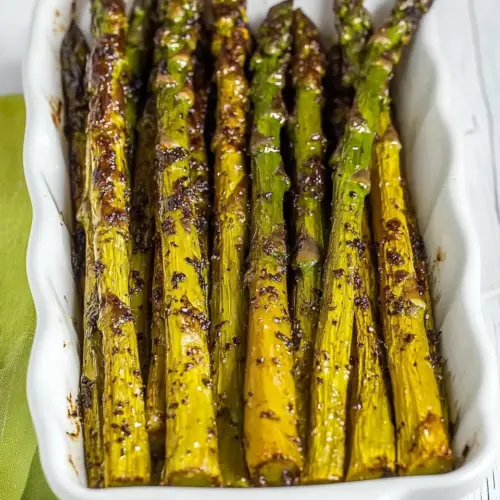
Easy Roasted Asparagus
Easy Roasted Asparagus brings a crisp tender bite with toasty edges and a bright balsamic finish. This simple, flavorful side is perfect for an easy weeknight dinner or a springtime gathering, offering minimal prep and big impact. Roast to your preferred doneness for a reliable vegetable dish that complements many mains, making it a must try for anyone who loves fresh seasonal sides.
Equipment
- Baking Sheet
- Large Ziploc bag
- Plastic container with snap tight lid
Ingredients
- 1 pound asparagus, ends trimmed Trimmed and tender, provides the main vegetable body and fresh green flavor; roasting concentrates natural sweetness and creates a slightly crisp texture that contrasts well with dressings.
- 2 T extra virgin olive oil Extra virgin olive oil imparts rich, fruity fat for roasting and helps promote even caramelization; it also carries aromatics and prevents the asparagus from sticking to the pan while adding silky mouthfeel.
- 1 T best quality balsamic vinegar (more or less to taste) High-quality balsamic vinegar adds bright, tangy-sweet acidity to balance the oil and vegetable richness; a drizzle after roasting enhances flavor depth and creates pleasant contrast to the caramelized asparagus.
- salt and fresh ground black pepper to taste Seasoned with salt and freshly ground black pepper to elevate and balance flavors; salt enhances natural sweetness while pepper adds a subtle spicy warmth for finishing.
Instructions
- Oven should be preheated to 350 F/180 C. (See below for other cooking temperatures.): The room fills with a neutral warm scent as the oven reaches temperature, which sets the stage for even cooking. Preheating ensures the asparagus starts to brown right away instead of slowly steaming, producing better texture. A common mistake is skipping preheat, which leads to uneven doneness and limp spears.
- Take one piece of asparagus and hold by both ends and snap. This will give you a guide as to how much woody stem of the asparagus needs to be cut off (usually about 2 inches).: You will hear a clean crack and see the woody stem separate, giving you a physical guide for trimming. This tactile test is more reliable than measuring and helps avoid woody bites. If you skip this, you might leave tough ends that ruin the mouthfeel.
- Trim the rest of the asparagus pieces to that size. (You can cut it into shorter lengths if you prefer.): The sound of a decisive snip or snap and the visual of uniform spears matters, because even lengths cook uniformly. Cutting into shorter lengths is fine if you prefer bite sized pieces. Uneven pieces will finish at different times, so try to match sizes.
- Put asparagus in large Ziploc bag or plastic container with snap-tight lid, pour in olive oil, vinegar, and season with salt and pepper.: When you combine the asparagus with extra virgin olive oil and balsamic vinegar , you'll notice a glossy shine and a tangy aroma that starts to cling to the spears. This coating helps with caramelization and flavor distribution. Avoid overloading with oil, or the asparagus will steam rather than roast.
- Manipulate bag or turn over container until asparagus is well coated with oil/vinegar mixture. (You can let it marinate for a while if that fits your schedule.): You should hear a slight rustle as spears rub together and see an even sheen, sign that each piece will roast consistently. Letting it marinate a short time deepens flavor, but too long can make stalks floppy. If you leave it overnight, the texture may soften more than you like.
- If you marinated the asparagus in a Ziploc bag, just cut off a corner and let the oil and vinegar drain out.: The sound of a soft pour and the sight of excess liquid leaving the bag prevents sogginess on the tray, which helps the spears brown. Draining is critical because pooled oil causes steaming. Forgetting this will reduce crispness and dilute flavor.
- When you're ready to cook, put the asparagus on a baking sheet, spacing it out as much as possible.: You will hear a light clack as spears meet metal, and spacing creates hot dry air circulation so edges char slightly. Crowding the pan traps steam, yielding limp, pale stalks rather than crisp edged ones. Use two trays if needed to maintain space.
- Cook until it's as done as you prefer. Start to check at about 20 minutes if you're using the 350 F/180 C temperature.: Visual cues matter here, look for bright green stalks with a few toasted tips and a gentle give when you press a spear. Start checking at the suggested times so you can catch your preferred doneness. Waiting too long results in overly soft texture and can diminish the visual appeal.
- If you're cooking at 375 F/190 C I would start to check at about 18 minutes. If you're cooking at 400 F/200 C, I would start to check at about 16 minutes.: At this warm setting you may notice more pronounced toasting at the tips and a nuttier aroma, signaling progress. Keep an eye on color change to avoid overbrowning. A common misstep is leaving the tray unattended, which can quickly cross from perfect caramelization to burnt edges.
- Cooking time for asparagus is a personal preference. I prefer it still slightly crisp, but some people like it softer.: Higher heat speeds browning and concentrates aroma, producing a more robust roasted character. Look for gently charred tips and a tender interior. Very high temperatures can char too fast, so check early to prevent bitterness from blackened areas.
- You might want to serve this with a few drops of that very expensive balsamic vinegar you’ve been saving drizzled over just before serving.: Trust your palate; some like a crisp bite while others prefer soft spears. The sensory guide is the best measure, so taste a spear to decide. Overcooking removes the bright green flavor and makes the texture mushy, so sample early if unsure.
- You might want to serve this with a few drops of that very expensive balsamic vinegar you’ve been saving drizzled over just before serving: The final drizzle adds a glossy sheen and a sharp sweet note that lifts the dish, and the aroma will be noticeable the moment you plate it. Use sparingly to avoid overpowering the asparagus . Too much will mask the roasted nuances you worked to develop.
Notes
- Adjust roasting temperature To get a more tender spear, roast at the lower end of the suggested temperatures and check earlier; for more char and nuttiness, increase the oven temperature slightly and watch closely to prevent burning.
- Marinating time matters A brief marinade of 10 to 15 minutes helps flavor penetrate without softening the stalks too much, while a longer soak will make them milder and softer.
- Use room temperature asparagus Letting spears come to room temperature before roasting reduces the time in the oven and promotes even cooking across the stalks.
- Layering flavor Tossing the spears with just oil and vinegar keeps the profile simple, but if you prefer more complexity, infuse the oil lightly with pepper or citrus zest before coating to add aroma without masking the vegetable.
- Serving finish Add a finishing drizzle of the best quality balsamic right before serving to preserve its bright sweetness and add a glossy visual pop to the plate.