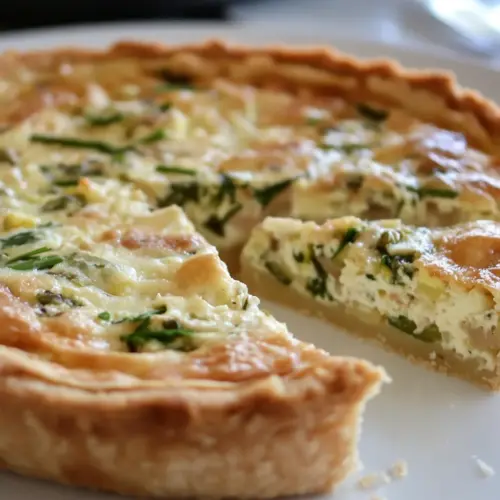
Easy Quiche Recipe
Easy Quiche Recipe is a creamy, savory tart with melty cheese, tender asparagus, and diced chicken sausages, perfect for an easy weeknight dinner or leisurely brunch. The flaky 10 inch tart shell holds a silky egg custard that sets beautifully while the browned onions and grated cheese add deep flavor. Make it when you want a comforting, crowd pleasing meal with minimal stress.
Equipment
- Oven
- Skillet
- Mixing Bowl
- Microwave
Ingredients
- 10 inch tart shell unbaked (1 pie shell) Provides a flaky, sturdy base that holds the custard and fillings; pre-baked shells prevent a soggy bottom and ensure even browning. Presses into the tart pan to define the quiche shape and supports slicing for serving.
- 3/4 cup onion diced Adds a sweet, savory foundation and soft texture when sautéed; diced pieces release moisture and caramelize slightly to deepen flavor. Sweeping up pan fond, cooked onion integrates with eggs and cheese for balanced taste.
- 1 tablespoon butter Contributes a rich, savory cooking fat that aids in gently softening the onion and browning sausage bits; butter lends a creamy mouthfeel to the filling. Melts quickly to help distribute flavor and prevent sticking during sautéing.
- 2 chicken sausages diced, such as Al Fresco Provides seasoned, meaty protein and a smoky flavor when diced and browned; chicken sausages add texture and savory depth to the quiche. Offers ready-to-use cooked meat that shortens preparation time while complementing cheese and vegetables.
- 3 large eggs Forms the primary structure of the quiche custard by coagulating during baking; eggs bind the other ingredients together into a sliceable filling. Supply richness and body, creating a tender, set interior when combined with dairy.
- 3 tablespoons heavy cream and whole milk mixture Creates a silky, tender custard when whisked with eggs; blending heavy cream and milk balances richness and pourability for proper set. Adjusts final creaminess and mouthfeel, preventing the quiche from becoming rubbery or overly dense.
- 1 1/4 cups grated dubliner cheddar cheese such as Kerry Gold Imparts sharp, nutty, and slightly sweet flavor while melting into the custard for gooey texture; grated Dubliner-style cheddar enhances savory complexity. Adds color and helps the top brown attractively, contributing to a cohesive filling.
- 1/3 lb asparagus spears Provides a fresh, slightly crisp vegetable component that offers bright, grassy notes and textural contrast when trimmed and blanched or roasted. Complements rich eggs and cheese while adding color and lightness to each bite.
- salt & pepper to taste Enhances and balances overall flavors by brightening savory and creamy elements; seasoning to taste sharpens the finished dish. Controls salt levels and pepper adds subtle heat, making each component more distinct.
Instructions
- Set the oven temperature to 375 degrees and preheat. In a small skillet, melt butter and sauté onions over medium heat until tender and lightly browned for about 5 minutes. Set aside.: Warm, preheated ovens ensure even baking, which is crucial for a custard to set without overcooking the edges. You want the oven to be at a steady 375 degrees before the tart goes in so the crust begins to crisp as soon as it meets heat. I often check with an oven thermometer because many ovens run hot or cold; uneven heat can make the custard bake bumpy instead of smooth. A common mistake to avoid is sliding the tart into an oven that is not fully preheated, which can extend baking time and lead to an unevenly baked center. Listen for the faint sound of the oven fan and look for a consistent glowing element as cues that the temperature has stabilized.
- Bend asparagus spears one by one to snap the bottom stalky parts off. Place into a shallow bowl and top with a little cold water. Microwave for 1-3 minutes until crisp and tender. Drain and top with ice. Set aside.: The aroma becomes sweet and rich as the onion softens and edges pick up color, and that scent signals depth that will carry through the quiche. Use a skillet that conducts heat evenly so the onions cook uniformly and stir occasionally to avoid hot spots. You should aim for translucent pieces that are just starting to caramelize, which adds complexity without sweetness taking over. One misstep is cooking over too high heat, which will brown them too fast and add a burnt note; medium heat gives you control. When done, the onions should smell nutty and look glossy, not dry.
- In a large bowl, place cooked onions, diced sausage, half the cheese, eggs, cream, milk, salt, and pepper. Stir. Pour into the tart shell. Sprinkle it with remaining cheese and top with asparagus spears. Bake covered with foil for 15 minutes. Remove foil and bake for another 5-10 minutes. Remove from the oven and cool for 10 minutes before serving.: Cooling the sautéed onions slightly before adding them to the egg mixture prevents premature cooking of the eggs and helps maintain a silky custard. I give them a minute to come down from the pan heat so residual warmth does not scramble the eggs on contact. The texture should remain tender, and the juices should be mostly absorbed into the onions. A trap to avoid is adding piping hot onions directly to eggs, which can create small cooked bits in the custard. Let them rest briefly and they will integrate smoothly into the filling.
- Bend asparagus spears one by one to snap the bottom stalky parts off: Snapping each asparagus reveals the natural break between tender and woody parts, and doing it by hand is a quick way to get a perfectly trimmed stalk. As you bend them, you will feel a distinct give where the spear naturally cleaves, which ensures you keep only the edible portion. Save the woody ends for stock if you like, or compost them. Over trimming is unlikely, but cutting too high can waste the tender part, so let the spear guide you for the correct snap point.
- Place into a shallow bowl and top with a little cold water: Submerging the trimmed asparagus in cold water refreshes them and prepares them for the quick microwave step. The cool water helps preserve that vivid green color by stopping enzymatic change, and it makes them crisp after the brief heat. Ensure the bowl is shallow so the spears heat uniformly. Avoid soaking for long periods which can leach flavor; a quick chill is all you need.
- Microwave for 1 to 3 minutes until crisp and tender: The microwave gently cooks the asparagus so it remains firm yet tender, and the short timeframe keeps the bright green hue. Times vary by thickness, so test a spear after the minimum time; you want slight resistance when bitten, not mush. Overcooking will make them limp and dull, so check early and add small increments of time if needed. The sound is subtle, a faint steam hiss, and the stalk should look glossy and alive.
- Drain and top with ice: Shocking the asparagus in ice or very cold water immediately stops cooking and locks in color and texture, which is vital if they will go into a hot oven later. After draining, the spears should look vibrant and feel cool to the touch. If you skip this step, residual heat can continue to cook them and result in a limp finish. Make sure to dry them well before arranging on the tart, since excess water can create a soggy patch in the custard.
- In a large bowl, place cooked onions, diced sausage, half the cheese, eggs, cream, milk, salt, and pepper: When the components are combined, the custard becomes a glossy, well seasoned mixture ready to fill the tart shell, and the aroma will be savory and inviting. Stir gently so everything is uniformly distributed; the sausage and cheese should be evenly suspended in the egg base. The mixture should look smooth and slightly thick from the dairy. A common error is overmixing which adds air and can make the custard quake and puff; combine until homogeneous but not frothy.
- Stir: A brief stir ensures uniformity of texture and seasoning, and the sound is a quiet gliding as the mixture blends. You will notice the custard become coherent and glossy, and the pieces of sausage and onion will be visible throughout. If the custard seems too thin, check your ratios; too much liquid can prevent proper setting. Avoid vigorous whisking which adds bubbles that may leave holes in the baked quiche.
- Pour into the tart shell: As you pour, the filling should flow smoothly and settle into the corners, surrounding the pre-baked or raw crust. A slow pour helps prevent splashes and keeps the surface even so the top finishes uniformly. The visual cue is a leveled surface with the suspended pieces clearly visible beneath. Overfilling is the main pitfall, so leave a small margin under the rim to avoid overflow while baking.
- Sprinkle it with remaining cheese and top with asparagus spears: The final cheese layer browns and the arranged asparagus provides a striking presentation and bursts of texture. Place the spears in a single layer so they steam rather than clump, and the cheese should be distributed to encourage even browning. If you pile them, the spears may not heat through evenly, so arrange thoughtfully for both look and function.
- Bake covered with foil for 15 minutes: Covering the tart for the initial bake gives the custard a gentler rise and prevents the top from browning too quickly while the interior sets. The oven hum is steady and you will notice a subtle steam escaping around the foil edges, a sign the filling is warming through. A mistake is leaving the foil on for too long which can prevent browning later; follow the timing closely.
- Remove foil and bake for another 5 to 10 minutes: Uncovering allows the top to color, the cheese to bubble, and the edges of the crust to achieve golden crispness, which adds both texture and aroma. Look for a slight jiggle in the center, with edges set; this indicates a tender, not rubbery custard. Overbaking will make the filling dry and custardy texture tough, so monitor closely during this short final stage.
- Remove from the oven and cool for 10 minutes before serving: Cooling lets the custard finish setting and makes slicing neater, plus the aroma settles into a comforting warm note. The surface should still be warm and slightly glossy, and cuts will hold their shape without oozing. A tempting mistake is to cut immediately, which can yield sloppy slices; patience here rewards you with clean portions and a better mouthfeel.
Notes
- Use a store bought tart shell for ease, it saves time and ensures a consistent, flaky base when you want a quick weeknight or brunch solution.
- Swap the sausage for another cooked protein, if you prefer a different flavor profile, but keep the diced size similar so pieces distribute evenly through the custard.
- Grate cheese finely, it melts more uniformly and integrates into the custard rather than forming large pockets that may shift during slicing.
- Trim asparagus with a snap, the natural break preserves the tender top portion and removes woody ends efficiently without special tools.
- Use an oven thermometer, many ovens vary from their set temperature and this helps bake the custard reliably without over or undercooking.
- Cover with foil for the first bake period, this prevents the top from browning too quickly and allows the center to set gently for an even texture.