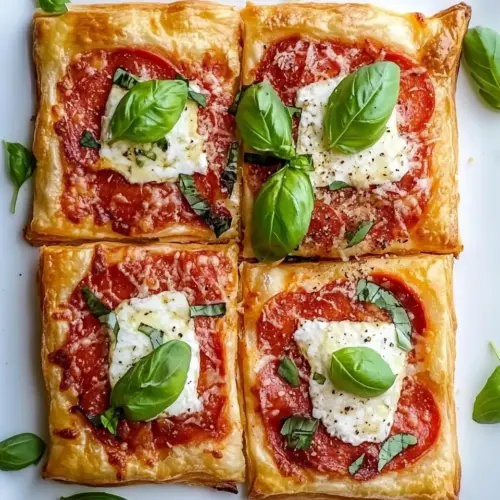
Easy Puff Pastry Pizza
Easy Puff Pastry Pizza is a quick, crispy, and cheesy treat that combines flaky puff pastry with bubbly mozzarella and fresh tomato. Perfect for an easy weeknight dinner or casual lunch, this simple recipe delivers impressive texture and flavor in minimal time, making it a go to for busy nights and last minute hosting.
Equipment
- Sheet Pan
- Parchment Paper
- Rolling Pin
Ingredients
- 1 sheet puff pastry sheet thawed Use thawed to provide a flaky, buttery base that crisps up in the oven; roll gently to fit the pan and dock if desired. Keeps preparation quick and forms the structural layer for toppings, offering a tender contrast to melted cheese.
- 1 medium tomato sliced 1/2” circles Slice into 1/2” circles to add bright acidity and moisture that balance the richness of cheese and pastry; arrange evenly to prevent overcrowding. Releases gentle juices while baking that meld with sauce and toppings for fresh tomato flavor.
- 6 small mozzarella balls fresh, cut in half Cut in half to distribute creamy, milky pockets of melted cheese across the pizza; scatter pieces to create bite-sized bursts of flavor. Fresh texture and mild taste complement shredded mozzarella and brown slightly for appealing finish.
- 1 cup mozzarella shredded Shred to provide even, melty coverage that binds toppings together and creates a gooey texture; sprinkle uniformly for consistent melting. Adds a familiar stretchy cheese character and a golden top when baked to perfection.
- 1/4 cup pizza sauce Spoon to introduce concentrated tomato flavor and seasoning that anchors the pizza; spread thinly to avoid sogginess and ensure balanced taste. Supplies savory depth and helps the cheeses adhere to the pastry while contributing classic pizza flavor.
- 1 tbsp basil fresh chopped thin (optional) Chop thin to add aromatic herb freshness and a bright, peppery finish when sprinkled after baking; use sparingly if desired. Enhances visual appeal and lifts overall flavor without overpowering the other components.
Instructions
- Preheat the oven to 425°F. Take out a sheet pan and set it aside.: You should feel the oven heating up and hear the faint hum as it climbs to temperature, ensuring the puff pastry responds with a dramatic rise. Preheating is crucial because the sudden burst of heat traps steam and creates flaky layers. A common mistake is placing the pastry into a lukewarm oven, which results in a dense rather than airy crust, so always wait until the oven reaches the target temperature.
- Place a piece of parchment paper on a cutting board or work surface. Add the puff pastry dough sheet on top. Use a rolling pin to roll out puff pastry dough so it is 2-3 inches larger. (You can elongate the dough as you roll it out, to make a rectangle pizza shape instead of a square pizza, if desired to fit your sheet pan.): The sheet pan should be clean and dry, and when you tap it you can hear a light metallic tone. Using the right pan helps promote even browning on the bottom of the pastry. If you use a warped or thin pan, the crust may brown unevenly, so choose a sturdy sheet pan for best results.
- Assemble the puff pastry pizza by adding a layer of tomato sauce in the center, and leaving 1” around the outside without sauce (for the pizza crust). Add tomato slices on top of the sauce. Then, top it with shredded and fresh mozzarella cheese. (You can set it in the fridge to meal prep it in advance once it’s assembled, or bake it at this time.): The parchment provides a nonstick buffer, letting the pastry move freely and preventing sticking. When you slide the assembled pizza, the parchment glides smoothly, reducing stress on the flaky crust. Skipping parchment risks tearing the pastry when you transfer it, so always keep this protective layer beneath the dough.
- Add the puff pastry pizza to the oven and bake it for 10 -15 minutes or until the cheese has melted at 425°F. Rotate the sheet tray in the oven halfway for best results. When it’s done, the crust will be fluffy and golden brown.: The dough feels cool and slightly tacky, and when you lift it you’ll notice the folded layers. Place it gently so you preserve its lamination. If the dough gets too warm it will become sticky and hard to maneuver, so work quickly and consider chilling briefly if needed.
- Remove puff pastry pizza from the oven and top it with fresh basil before serving.: You will see the pastry thin and broaden, and the surface should remain cool to the touch. Expanding it two to three inches creates a generous border that puffs into a golden crust. Over rolling can collapse the layers, so stop once you reach the size; if it springs back, let it rest in the fridge to relax the gluten.
- You can elongate the dough as you roll it out, to make a rectangle pizza shape instead of a square pizza, if desired to fit your sheet pan.: Stretching into a rectangle helps the dough fit snugly on the pan and produce uniform edges. The visual cue is that the pastry should align nearly to the pan edges without hanging over. Forcing it to fit can thin some sections too much, which can scorch in the oven, so aim for even thickness.
- Assemble the puff pastry pizza by adding a layer of tomato sauce in the center, and leaving 1” around the outside without sauce for the pizza crust.: As you spread the pizza sauce , you should see a thin glossy layer across the center while the border remains bare, promising a puffy rim. Leaving this one inch border ensures the pastry can puff and brown unencumbered. A frequent error is over saucing, which will seep into the layers and soften them rather than letting them crisp.
- Add tomato slices on top of the sauce.: The slices should sit on the sauce, releasing little beads of juice that glisten as they warm. Arrange them so heat circulates and they do not crowd each other. If you overlap too many slices, the center may become too moist, so space them for even roasting.
- Then, top it with shredded and fresh mozzarella cheese.: The shredded mozzarella will form a blanket that begins to melt and stretch, while the halved fresh balls will create pockets of creaminess. Watch as the cheese transforms from opaque to glossy and then to bubbling, lightly browned spots. If you overload the cheese, the pastry beneath may not crisp properly, so distribute it evenly rather than mounding.
- You can set it in the fridge to meal prep it in advance once it’s assembled, or bake it at this time.: Chilling tightens the pastry and can make handling easier, and you may notice the cheese firms slightly in the cold. When you plan to bake from chilled, allow a few extra minutes in the oven so the center reaches the right temperature. Baking directly from cold without adjusting time may leave the center underdone.
- Add the puff pastry pizza to the oven and bake it for 10 to 15 minutes or until the cheese has melted at 425°F.: During baking you’ll hear faint crackles, and the edges will turn a warm golden brown while the cheese bubbles. Rotating the sheet tray halfway promotes even browning, and the finished crust should be puffed and crisp. A mistake to avoid is opening the oven frequently, which lets heat escape and prevents full lift, so limit door openings.
- Rotate the sheet tray in the oven halfway for best results.: Rotation evens out hot spots, so each side gets the same exposure and browns uniformly. You’ll be able to watch the transformation as one side goes from pale to golden then to deeper amber. Neglecting to rotate can leave one side darker, so set a timer for the midpoint to remind yourself.
- When it’s done, the crust will be fluffy and golden brown.: The ideal crust looks puffed, with crisp ridges and a tender interior. Tap the rim gently and you should hear a light crispness. If the center feels soggy, it usually means excess sauce or underbaked time, so ensure proper spacing of sauce and sufficient baking time.
- Remove puff pastry pizza from the oven and top it with fresh basil before serving.: The aroma of warmed basil lifts the whole pizza, and adding it at the end preserves its bright color and fragrance. Let the pizza rest a minute so the cheese sets slightly, making slicing easier. Cutting immediately can cause the cheese to slide, so a brief pause improves presentation.
Notes
- Thin Crust Option: Roll the puff pastry slightly thinner to get a crisper, less pillowy base, watching closely to avoid over browning.
- Extra Cheese: Add a touch more shredded mozzarella for stretch and browning, but keep it level so the pastry beneath bakes through.
- Tomato Arrangement: Lay the tomato slices in a single even layer to prevent excess moisture pooling during baking.
- Chilled Prep: Assemble and chill on the parchment for up to a day, then add a few extra minutes to the bake time when cooking from cold.
- Herb Finish: Swap the chopped basil for whole leaves scattered on top after baking for a dramatic presentation.