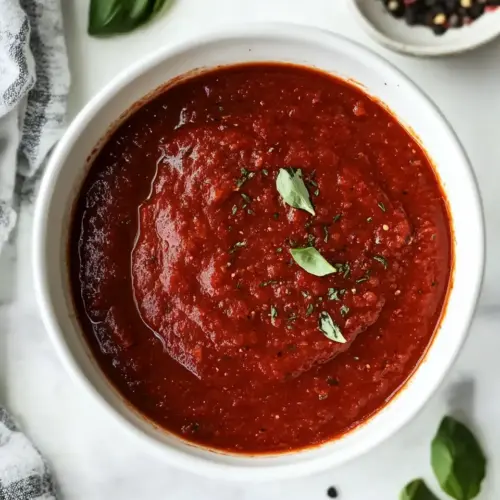
Easy Pizza Sauce
Easy Pizza Sauce is a bright and rich tomato sauce made with crushed tomatoes and tomato paste, scented by garlic, fennel, dried basil and oregano. It is creamy in texture yet still saucy, perfect for an easy weeknight dinner or a pizza night with friends. Make a batch, refrigerate or freeze, and you have a fast shortcut to better homemade pizza.
Equipment
- Saucepan
- Wooden Spoon
- Jar or airtight container
Ingredients
- 1 tablespoon olive oil Sauté gently in a skillet to release fruity aroma and provide a silky base for the sauce, helping distribute flavors evenly throughout.
- 2 cloves garlic minced Mince finely then fry briefly to infuse the oil with pungent, savory notes and build depth, acting as a key aromatic backbone for the sauce.
- Pinch fennel seed Toast lightly to awaken warm, anise-like flavor that adds subtle complexity and Italian character without overpowering the tomatoes.
- 28 ounces crushed tomatoes Simmer slowly to deliver bright, natural tomato sweetness and body, forming the bulk of the sauce and carrying the seasonings.
- 6 ounces tomato paste Stir in to thicken and concentrate tomato intensity, contributing rich umami and a smoother, more cohesive texture to the sauce.
- 1 teaspoon dried basil Sprinkle in during simmering to impart a sweet, slightly peppery herbaceousness that complements the tomato base and rounds the flavor.
- 1 teaspoon dried oregano Add for savory, slightly minty earthiness that enhances the Italian profile and balances sweeter tomato notes during cooking.
- 1 teaspoon salt Season early so salinity helps extract and meld flavors, enhancing overall taste and ensuring the sauce is well-balanced.
- 1/4 teaspoon crushed red pepper Pinch in to introduce warm heat and a touch of spice, brightening flavors and providing a subtle kick that enlivens the sauce.
Instructions
- In a medium saucepan, heat the olive oil over medium heat. Add the garlic and sauté for 1 minute. Add the fennel seed, crushed tomatoes, tomato paste, basil, oregano, salt, and crushed red pepper. Stir until combined and simmer over low heat for 10 minutes. You can simmer for up to 30 minutes, if you want.: As the oil warms, you should notice it shimmer slightly and become more fluid, which tells you it is ready to carry aromatics. The reason we gently warm the olive oil is to coax flavor from the garlic without burning it, because burnt garlic turns bitter. A common mistake is heating the pan too hot, which makes the oil smoke and the garlic char quickly. If your oil begins to smoke, lower the heat immediately and start again with fresh oil to avoid off flavors that will linger in the sauce.
- Store the pizza sauce in a jar or airtight container in the refrigerator for up to 1 week or cool completely and freeze for up to 3 months.: In this short second you will smell the garlic transform from raw sharpness to a milder, roasted scent, and the pan will sound softly as the garlic sizzles. This quick sauté draws out sweet, mellow notes that deepen the sauce, rather than leaving a harsh bite. Mistakes here include letting the garlic turn brown, which produces bitterness; to avoid that keep the heat moderate and stir frequently.
- Add the fennel seed crushed tomatoes tomato paste basil oregano salt and crushed red pepper: Once everything goes into the pan you will see a mosaic of colors and textures, the paste lending a dense, almost glossy quality while the crushed tomatoes introduce irregular chunks and bright red color. Stirring helps the paste dissolve and marry with the tomatoes so the flavors become cohesive. The why behind this combination is balance, the paste providing body, the herbs offering aromatic lift, and the heat and salt fine tuning the final profile. One troubleshooting note, if the mixture seems too thick, a splash of water can help, but add it sparingly so the sauce does not become diluted.
- Stir until combined and simmer over low heat for 10 minutes: During the simmer the sauce will slowly release steam and aromatic vapors, the surface bubbling gently rather than roaring. This gentle bubbling allows flavors to meld and bitter edges to soften, and the sauce will reduce slightly, concentrating its taste. The reason you simmer at low heat is to avoid breaking down the tomato into an overly flat flavor that can happen with high heat. A common error is boiling vigorously which can lead to uneven cooking and a thinner texture; keep the heat low and watch for a gentle, regular bubble.
- You can simmer for up to 30 minutes if you want: Extending the simmer encourages deeper integration of flavors and a smoother mouthfeel, and you will notice the sauce darken slightly and thicken as water evaporates. I sometimes let it go to 30 minutes for a richer, more jam like body, but that is a stylistic choice rather than a requirement. Be mindful that over reducing can concentrate salt and heat, so taste periodically and adjust if needed. If your sauce becomes too thick, stir in a small amount of water and reheat gently.
- Store the pizza sauce in a jar or airtight container in the refrigerator for up to 1 week or cool completely and freeze for up to 3 months: When you transfer the sauce, the sound of it settling into a jar feels satisfying, and the residual steam should dissipate before sealing to protect texture and safety. Proper storage lets you pull out just what you need for a single pizza, and freezing in flat containers or ice cube trays makes portioning simple. A frequent mistake is sealing warm sauce which can trap steam and promote condensation, so always cool to room temperature before closing and refrigerating or freezing.
Notes
- Warm the oil slowly: Heating the olive oil gently prevents the garlic from burning and produces a sweeter aromatic base.
- Use a full flavored tomato paste: A quality tomato paste will deepen the sauce, so choose one with a rich color and concentrated taste.
- Keep fennel light: The pinch of fennel seed should be subtle, because too much will shift the flavor toward licorice.
- Simmer patiently: Letting the sauce rest on low heat for up to 30 minutes builds complexity, but check the texture so it does not reduce too far.
- Cool before sealing: Always bring the sauce to room temperature before closing jars to prevent condensation inside containers.