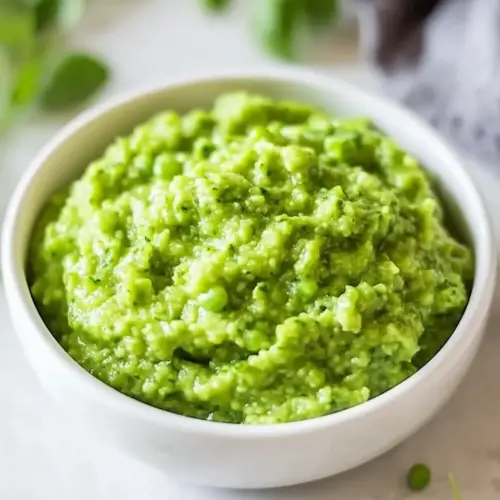
Easy Pea Pesto
Easy Pea Pesto is a creamy, bright sauce made from frozen peas, parmesan cheese, and olive oil. This quick, vibrant spread is perfect for an easy weeknight dinner or a flavorful dip for appetizers, delivering fresh lemon lift and garlicky depth. Make a batch to toss with pasta or freeze portions for later, a simple way to add spring flavor to many meals.
Equipment
- Food Processor
- Spatula
- Measuring Cups
Ingredients
- 1 cup frozen peas Blanched and sweet, adds bright color and a tender texture to the pesto; purees smoothly for a vibrant base. Provides natural sweetness and vegetal flavor that balances the cheese and oil. Also contributes fiber and a pop of green to the sauce.
- 1/4 cup grated parmesan cheese Grated finely, brings savory umami and salty depth to enrich the pesto's overall flavor profile. Helps thicken the sauce while adding a creamy mouthfeel when combined with oil and pureed peas. Melts slightly into the warm pasta or dish it tops, boosting richness.
- 3 tablespoon olive oil Measured for a smooth emulsion, supplies healthy fat that carries and melds flavors into a silky sauce. Helps create a cohesive pesto when blended with cheese and peas while adding a fruity, peppery note depending on variety. Coats pasta or crostini for a luscious finish.
- 1 teaspoon lemon juice Squeezed lightly, provides bright acidity that lifts and balances the richness of cheese and oil. Helps highlight the pea's sweetness and freshen the overall flavor of the pesto. Adds a subtle citrus note without overpowering the other components.
- 1/2 clove garlic Minced sparingly, contributes a pungent aromatic bite that enhances savory complexity in the pesto. Adds depth and a subtle heat that complements the peas and cheese when blended. Use cautiously to avoid overpowering the delicate pea flavor.
- salt and pepper to taste Seasoned to taste, brings necessary balance by enhancing other flavors and rounding out the sauce. Adjusts saltiness and controls seasoning intensity, while pepper adds mild heat and aromatic lift. Essential for personalizing the final taste to preference.
Instructions
- Place the ingredients in a food processor and use the pulse button to chop and combine them until you reach your desired consistency.: You should hear short, rhythmic pulses rather than a constant running whir. As the peas break down you will see a shift from distinct grainy bits to a cohesive green mass, and the aroma will open up with a hint of fresh garlic and citrus from the lemon juice . Aim for bursts so you can control chunkiness, and pause to scrape down the sides with a spatula if the mixture clings; this ensures even blending. The texture will change slightly as the olive oil splays through the paste, creating a glossy finish. A frequent mistake is running the processor continuously which can overheat and create a mushy, warm pesto with less vibrant color. If the mixture seems dry, add a little more olive oil by the teaspoon until it loosens; if it seems too wet, pulse less and add a pinch of parmesan cheese to thicken.
- Use immediately as a sauce for pasta/chicken/fish, as a dip or as a topping for crostini/bruschetta. Or the pea pesto can be frozen in an airtight container for up to 6 months.: When you first spoon the pesto onto something warm, the heat will release fragrant oils and the bright green will deepen slightly, offering a lively contrast on the plate. Tossing it with hot pasta brings out a glossy sheen and allows the sauce to coat each strand; the first twirl should smell of lemon and savory parmesan cheese . As a dip, the texture should be thick enough to cling to pieces of bread or vegetable, and as a topping it should sit on the surface without sliding off. A typical error is combining the pesto with very hot ingredients right away which can mute the fresh lemon notes, so let piping hot items rest for a minute before mixing. If the pesto separates when warmed, stir in a little extra olive oil off heat to reincorporate the sauce.
- Or the pea pesto can be frozen in an airtight container for up to 6 months.: When freezing, portion the pesto into ice cube trays or small containers so you can thaw only what you need; this preserves freshness and avoids waste. The cold smell is muted compared to fresh, but once thawed the scent of peas and lemon juice returns—sometimes a touch less vivid. To maintain color and flavor, press a thin layer of olive oil on top before sealing to reduce oxidation. A common slip is storing pesto in a loosely sealed container that allows freezer burn, which dries and dulls the sauce. Thaw gently in the refrigerator and stir before serving, adding a splash of olive oil or a pinch of fresh lemon juice if it seems flat.
Notes
- Control the texture: Add olive oil slowly to move from chunky to silky without overprocessing.
- Boost brightness: Increase the lemon juice by small increments to heighten freshness, tasting after each addition.
- Mellow garlic: If raw garlic feels too sharp, let the blended pesto rest in the fridge for 20 to 30 minutes to let the flavors marry.
- Measure cheese thoughtfully: Use freshly grated parmesan cheese and avoid tightly packing the measuring cup to prevent excess saltiness.
- Batch and freeze: Portion into ice cube trays for single serve amounts, then transfer the cubes to an airtight container for easy thawing.