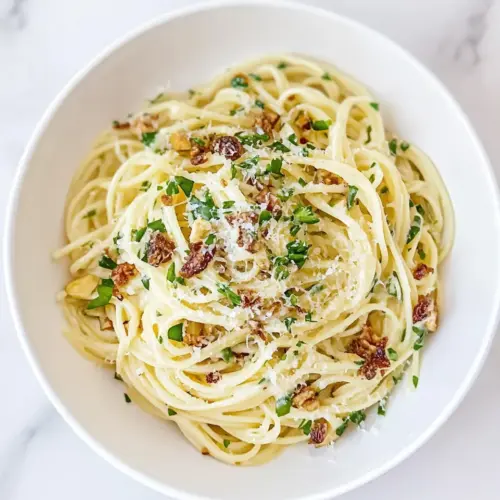
Easy Pasta with Yogurt Sauce
Easy Pasta with Yogurt Sauce is a creamy, tang forward weeknight pasta that comes together in minutes. This comforting yet light dish combines silky Greek yogurt and Parmesan cheese to coat spaghetti with a glossy sauce, brightened by fresh parsley and lemon zest. Perfect for an easy weeknight dinner when you want something satisfying and quick to make.
Equipment
- Green Pan Non-Stick Pan
Ingredients
- 8 ounces spaghetti (or other preferred pasta) Cook evenly to provide the pasta base that carries the sauce and textures; al dente cooking ensures pleasant bite and prevents mushiness when tossed with yogurt sauce. Use preferred shapes to influence sauce cling and presentation, keeping the quantity appropriate for serving size.
- 2 tablespoons olive oil Enhance flavor and mouthfeel by sautéing or finishing the dish with gentle richness; olive oil helps bind the sauce to the pasta and adds a fruity backdrop. Use good-quality extra virgin for cold finishes or regular olive oil for higher-heat steps.
- 1 teaspoon minced garlic Infuse aroma and savory depth by releasing volatile compounds when minced and briefly warmed in oil or tossed raw for sharper bite. Adjust amount to balance pungency without overpowering the delicate yogurt and cheese components.
- 1/2 teaspoon salt Season uniformly to elevate all flavors and control the overall savory balance; salting pasta water and adjusting at the end prevents blandness. Use measured amounts and taste as you combine ingredients to avoid over-salting the finished dish.
- 1 cup full-fat plain Greek yogurt Provide creamy tang and body as the primary sauce component; full-fat Greek yogurt contributes richness, smooth texture, and a pleasant tartness that contrasts with cheese. Whisk before mixing to ensure a silky consistency and avoid curdling when combined with warm pasta.
- 1/2 cup grated Parmesan cheese Add nutty, savory complexity and umami that deepens the sauce; grated Parmesan blends into the yogurt to create a cheesy, cohesive coating. Use finely grated cheese for smooth incorporation and reserve a little for finishing the plated dish.
- 2 tablespoons fresh parsley Brighten and freshen the dish by contributing herbaceous notes and a hint of green color; chopped parsley cuts through richness and adds a light, clean finish. Stir in at the end to preserve delicate leaf texture and aromatic presence.
- 1 tablespoon freshly grated lemon zest Lift and brighten flavors by providing concentrated citrus oils and aromatic brightness; freshly grated lemon zest adds vibrancy without additional acidity. Zest directly over the finished pasta to maximize fragrance and integrate with the yogurt and cheese.
Instructions
- Bring a large pot of salted water to a boil over high heat and prepare the pasta according to package directions. Before draining, reserve 1/2 cup of the pasta cooking water. Drain.: The kitchen will fill with the comforting, wheaty steam as the spaghetti bubbles in the pot, and you should smell a toasty, grain like aroma when the water first comes to a rolling boil. When the pasta nears al dente, you will see the strands become translucent at the edges while still having a slight white core, and that is the cue to taste a piece. Reserving pasta water is a key move, because the starchy liquid helps bind the sauce to the spaghetti , creating a glossy coating; you will notice the sauce cling rather than pool when you add a splash. A common mistake is draining without saving any water, which can make the sauce feel thin or not cling properly. If the pot is too crowded, the pasta may stick together, so use a large pot with plenty of water and give the pasta a gentle stir as it cooks.
- Add the olive oil to a large skillet over low heat. When warm, add the garlic and salt. Stir and cook for 1 minute. Turn off the heat. Add the yogurt, Parmesan, and pasta cooking water and gently whisk to warm through and combine into a smooth sauce.: As the olive oil warms, it perfumes the pan and you will see faint ripples on the surface; adding the minced garlic will release a fragrant, savory scent almost immediately. Stirring for about a minute on low keeps the garlic soft and aromatic without turning it brown, which would change the flavor to bitter and sharp. Turning off the heat before adding the Greek yogurt helps prevent separation, and when you whisk the Parmesan cheese in with reserved pasta water you should see the mixture become silky and glossy, the texture like a light custard that clings when tipped. The whisking motion helps emulsify the fats with the starchy water, creating cohesion. A pitfall here is adding the yogurt to a hot pan, which can make it curdle; keeping things gentle preserves the sauce texture.
- (I turn the heat off since the residual heat is enough to warm the yogurt and there's a lower risk of the yogurt separating.): The lingering heat of the skillet is perfect for bringing the Greek yogurt to a pleasant warmth without scrambling it, so you will feel the sauce relax into a smoother consistency as you stir. The gentle residual warmth allows the cheese to meld and the sauce to take on a unified, slightly glossy appearance, and you should notice the aroma move from sharp dairy to a mellow, savory note. One mistake is trying to speed this by increasing heat, which risks grainy texture and an uneven sauce. Trust the residual warmth and use your whisk to keep the texture even.
- Add the drained pasta, parsley, and lemon zest. Serve warm immediately.: When you fold the hot, drained spaghetti into the sauce, each strand will become coated and take on a slight sheen, reflecting light and signaling the sauce has adhered properly. The chopped parsley will release a herbaceous pop as it meets the warm pasta, and the freshly grated lemon zest will perfume the dish with bright citrus oils; inhale as you toss, you should get a lively, fresh scent. Serve right away so the sauce stays silky and the zest remains fragrant. A frequent error is letting the pasta sit too long, which cools the sauce and causes it to thicken or firm up, losing that luxurious mouthfeel.
Notes
- Warm the yogurt gently to avoid curdling, always add it off heat and use the skillet's residual warmth to bring it up to temperature.
- Save pasta water because its starch content helps the sauce emulsify and cling to the spaghetti, producing a glossy finish.
- Use full fat yogurt for richness and stability, it produces a creamier mouthfeel than lower fat versions.
- Toast nuts lightly in a dry pan to add crunch, but watch them closely as they can go from fragrant to burnt within seconds.
- Grate cheese fresh to ensure the Parmesan cheese melts evenly and contributes real umami rather than a powdery texture.
- Add herbs last to preserve brightness, dropping them in at the end keeps color and aroma lively.