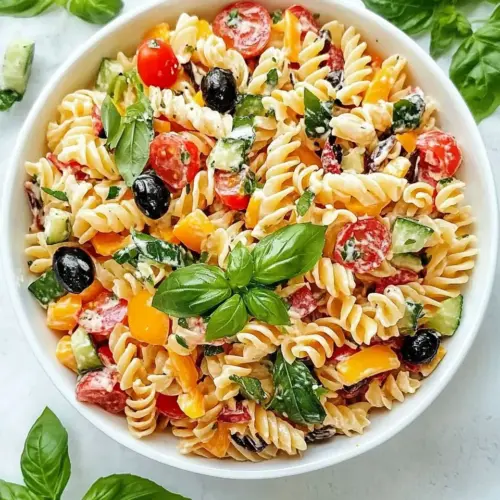
Easy Pasta Salad
Easy Pasta Salad is a bright, creamy and crunchy summer side that's perfect for easy weeknight dinners and gatherings. With juicy grape tomatoes, crisp bell peppers, briny black olives, and freshly grated Parmesan cheese, every bite is satisfying. Make it ahead for effortless entertaining and enjoy a reliable crowd pleaser that is quick to assemble.
Equipment
- Large Pot
- Colander
- Large Bowl
- Grater
Ingredients
- 1 lb pasta, fusilli, penne, rotini Boil until al dente and provide the starchy base that holds dressing and other flavors; choose fusilli, penne, or rotini for their ability to trap sauce and vegetables. Rinse briefly under cold water to stop cooking and prevent sticking, then toss with dressing to let flavors meld while cooling.
- 1 red bell pepper, seeded and chopped Chop finely and contribute crisp, sweet notes and vibrant color that balance the salad’s acidity; removing seeds reduces moisture so the salad stays firm. Toss with the pasta and dressing early so the pepper softens slightly and absorbs surrounding flavors.
- 1 yellow pepper, seeded and chopped Chop finely and add bright, mildly sweet flavor and crunchy texture that complements the red bell pepper; yellow peppers also enhance visual contrast. Mix evenly through the salad to distribute sweetness and maintain a pleasing bite in each serving.
- 2 cups halved grape tomatoes Halve and supply juicy, acidic bursts that brighten the overall flavor and cut through the richness of cheese and dressing. Add them near the end of preparation to preserve their fresh texture while allowing some juices to mingle with the dressing.
- 1 cup sliced black olives Slice and introduce briny, savory notes that provide contrast to sweet peppers and tomatoes; black olives also add a soft, meaty texture. Distribute evenly so each portion gets a balanced salty element without overwhelming the other flavors.
- 1 cup Italian dressing or use your favorite store bought dressing Pour over and act as the primary seasoning and coating, bringing acidity, herbs, and oil to unify the ingredients; use Italian dressing or your preferred store-bought alternative. Start with less, then toss and adjust to taste so the salad is lightly but thoroughly dressed.
- 1/2 cup chopped basil Chop and deliver fresh herbaceous aroma and a peppery, slightly sweet flavor that lifts the entire salad; basil pairs especially well with tomatoes and parmesan. Add most of it when tossing and reserve a bit for garnish to preserve its bright green color.
- 1 cup freshly grated parmesan cheese Grate finely and provide a savory, umami-rich finish that adds creaminess and depth; freshly grated parmesan melts slightly into the warm pasta for better integration. Sprinkle and toss to ensure even distribution, and reserve some for topping before serving.
- Kosher salt and pepper, to taste Season sparingly and adjust flavors to taste, using kosher salt to enhance sweetness and pepper to add mild heat and complexity. Taste the salad after dressing and before serving, adding increments until the balance is pleasant and not overpowering.
Instructions
- In a large pot of salted boiling water, add the pasta. Cook according to package instructions. Drain and rinse the pasta with cold water. Drain the pasta well after rinsing.: When you drop the pasta into actively boiling water you should hear a lively simmering and see the strands or shapes float then sink, moving freely. The salt seasons the pasta from the inside out, and the water should taste mildly salty like the sea. A common mistake is under salting the water which leaves the final salad flat. If the water is not at a rolling boil, the pasta can become gummy, so wait until the surface bubbles vigorously before adding it.
- In a large bowl, combine the pasta, bell peppers, tomatoes, and olives. Add the dressing and stir until pasta noodles and vegetables are well coated.: As the pasta cooks, watch for the texture to shift from stiff to springy, and test it a minute or two before the lower bound of the package time. Al dente pasta will feel slightly resistant to the bite yet tender. Overcooking will make it limp and more likely to absorb too much dressing. If you are unsure, sampling a piece gives you the most reliable cue.
- Stir in the basil and Parmesan cheese. Season with salt and black pepper, to taste. Serve at room temperature or cold.: After cooking, pour the pasta into a colander and run cold water over it until the steam subsides and the pieces feel cool. The rinse stops the cooking and removes surface starches that can make the salad gummy. Be cautious not to over rinse if you want a bit of sauce adhesion, otherwise the dressing may slide off.
- Drain the pasta well after rinsing: Let the pasta sit for a minute in the colander so excess water can drip away, or gently shake in short bursts. If too much water remains, the dressing will dilute and the salad will become watery. A common oversight is to skip this rest, which can make the bowl thin in flavor.
- In a large bowl, combine the pasta, bell peppers, tomatoes, and olives: When you fold these elements together you should notice a chorus of textures the moment they meet, the crispness of peppers alongside the juicy pop of tomatoes. Use a wide bowl so you can toss without crushing the tomatoes, and aim for even distribution so each forkful is balanced. Pressing too hard while tossing will bruise the vegetables, so be gentle.
- Add the dressing and stir until pasta noodles and vegetables are well coated: Pour the Italian dressing over the combined ingredients and slowly fold it in with a large spoon or spatula. You want glossy, lightly shiny surfaces on the pasta and vegetables rather than pools of dressing. If you add too much dressing at once, the salad can become oily; add a bit, taste, then adjust. A common misstep is overdressing early on, which is harder to correct than adding more later.
- Stir in the basil and Parmesan cheese: Add the chopped basil and freshly grated Parmesan cheese , folding gently so the herb remains vibrant and the cheese starts to cling to the pasta . The aroma of basil should lift instantly, and the cheese will add savory depth. If you mix vigorously the basil can wilt and lose its brightness, so incorporate with soft strokes.
- Season with salt and black pepper, to taste: Finish by tasting and adjusting with Kosher salt and freshly ground black pepper . Salt intensifies other flavors while pepper adds a warming note. Add cautiously and taste after each small addition, because the Parmesan cheese and black olives already contribute saltiness. Over salting is a frequent error and is difficult to reverse.
- Serve at room temperature or cold: This salad presents well either slightly chilled or at room temperature; the flavors open up as it rests. If serving cold, let it sit in the fridge for a little while so the dressing melds with the pasta . A common issue is serving too cold immediately from the fridge which can mute flavors, so allow a short tempering time if possible.
Notes
- Salt the pasta water: It seasons the pasta internally and makes a huge flavor difference compared to adding salt at the end.
- Choose ridged pasta shapes: Fusilli, penne, or rotini hold dressing and small bits of cheese best, ensuring each forkful is satisfying.
- Add basil last: Fresh basil wilts quickly, so add it just before serving to keep the aroma bright.
- Grate cheese fresh: Freshly grated Parmesan cheese blends into the salad more naturally than pre grated, improving texture and flavor.
- Adjust dressing gradually: Start with less dressing and add more after tasting, avoiding an over dressed bowl.
- Store properly: Keep leftovers in an airtight container in the fridge and toss with extra dressing if it dries out.