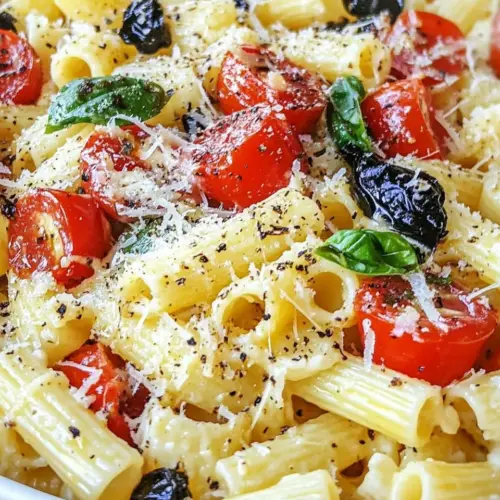
Easy Pasta Caprese
Easy Pasta Caprese brightens the table with tender angel hair, juicy grape tomatoes, and fragrant basil. Creamy notes from shredded Parmesan cheese and a savory splash of chicken broth make it an easy weeknight dinner that still feels special. Light, quick, and full of fresh Mediterranean flavor, it’s perfect for summer evenings when you want fast comfort with a gourmet touch.
Equipment
- cast iron pan
Ingredients
- 1/2 lb Angel Hair or Capellini pasta cooked and drained Adds light, tender strands that form the base of the dish; cook until al dente and drain to prevent sogginess. Toss with sauce ingredients so the pasta absorbs flavors without becoming mushy.
- 2 tablespoons olive oil Provides a fruity, smooth fat that helps coat the pasta and carry flavors; use extra-virgin for best aroma. Drizzle while tossing to create a glossy finish and prevent sticking.
- 2 tablespoons minced garlic Imparts a pungent, aromatic kick that builds the savory backbone; mince finely so it integrates evenly. Gently sauté to mellow raw sharpness and release sweet, roasted notes.
- 1 dry pint grape tomatoes cut in half Contributes juicy, sweet-tart bursts that brighten the dish; halve to increase surface area for flavor release. Lightly cook to soften skins while preserving fresh acidity and color.
- 1/2 cup chicken broth Offers a savory liquid element to deglaze the pan and add depth; choose low-sodium or adjust seasoning accordingly. Simmer briefly to concentrate flavor without overpowering the fresh ingredients.
- 6 oz . black olives whole Supplies briny, rich bites that add contrast and umami; leave whole for textural interest or slice if preferred. Rinse if overly salty and stir in near the end to retain firmness.
- 1/2 teaspoons salt Balances seasoning and enhances all flavors when adjusted carefully; measure and add gradually to avoid oversalting. Taste as you cook since other components may already contribute saltiness.
- 1/2 cup chopped fresh basil Lends bright, herbal freshness and aromatic lift when chopped; add toward the end to preserve vibrant color and scent. Gently toss into the warm pasta so oils release without wilting completely.
- 1/2 cup shredded Parmesan cheese Provides nutty, savory richness and a finishing savory note when shredded; sprinkle over the top for melty texture. Combine with pasta off heat to allow gentle melting and an even cheesy coating.
Instructions
- Prepare the pasta: Start by cooking 1/2 lb. of angel hair pasta according to the package instructions. Remember to drain it well once it's cooked.: The kitchen should smell neutral but expect a subtle toasty note from the boiling water, and you want the pasta to be just tender when you test it between your fingers, with a slight bite in the center. This texture allows it to hold sauce without becoming mushy. Drain thoroughly so excess water does not dilute the sauce, and toss briefly with a drizzle of olive oil if you must hold it for a moment. A common mistake is overcooking the pasta , which makes it limp and unable to carry the flavors.
- Sauté garlic and tomatoes: In a large skillet, heat 2 tablespoons of olive oil over medium heat. Add 2 tablespoons of minced garlic and 1 dry pint of halved grape tomatoes. Cook for about 4 minutes, or until the garlic starts to brown.: As the olive oil warms, you will hear a faint shimmer and smell the oil’s fruitiness before adding the garlic . Once the garlic hits the pan, it should sizzle gently and release a sharp, aromatic perfume. Add the halved grape tomatoes , and after a few minutes they will begin to soften and sigh as their skins loosen, releasing bright juices. Browning at the edges introduces sweet, caramelized notes that balance acidity. Watch closely, since garlic can turn from golden to bitter very quickly, which is an easy pitfall to avoid.
- Add broth and olives: Pour in 1/2 cup of chicken broth and add the olives from 1 small can. Let the mixture simmer for about 5 minutes.: When you pour in the chicken broth , it will hiss and deglaze the pan, lifting the concentrated fond into the sauce. The pan will steam briefly, and the broth will mellow the raw edge of the tomatoes , creating a cohesive base. Toss in the whole black olives and let the mixture simmer; the olives will impart a saline, tangy note. If the liquid reduces too quickly, lower the heat so flavors have time to meld without burning.
- Combine with pasta: Add the cooked and drained angel hair pasta to the skillet along with 1/2 teaspoon of salt. Mix everything together well.: When you add the cooked, drained pasta to the skillet, strands will glisten as they pick up the sauce. The salt should be measured carefully; it amplifies flavors and brings balance, but too much will overwhelm the delicate tomatoes and basil . Use tongs to gently lift and fold the pasta so every strand is coated, and listen for a soft, reassuring sizzling that indicates the pasta is marrying the sauce. Rushing this step can leave pockets of blandness.
- Final heating: Continue to heat the mixture for an additional 3 to 5 minutes, or until everything is heated through.: As the skillet warms for the last few minutes, steam will rise and aromas will intensify. This stage lets the flavors knit, and you’ll notice the sauce become glossy and slightly reduced, clinging to the pasta . Keep the heat moderate so the parmesan cheese that will come later does not overcook. A common error is overheating, which can dry the dish and mute fresh flavors.
- Incorporate basil: Stir in 1/2 cup of chopped fresh basil for a fresh flavor.: When you stir in the chopped fresh basil , you should immediately sense a bright, peppery scent. The heat will gently wilt the leaves, releasing their essential oils without turning them dark and limp. This finishing herb lifts the whole plate and creates contrast with the warm, savory elements. Add it at the end to preserve its perfume; adding it too early will soften and diminish its character.
- Garnish with cheese: Just before serving, top the pasta with 1/2 cup of shredded Parmesan cheese.: Sprinkling shredded Parmesan cheese right before serving creates a savory finish that melts slightly against the warm pasta . The cheese adds umami and a touch of salt that harmonizes the tomatoes and olives. Serve immediately so the cheese maintains a light, melty texture rather than clumping into a thick paste.
Notes
- Tip on pasta choice Use angel hair for the lightest texture, or capellini if you prefer a bit more presence on the fork.
- Tip on olive handling If whole olives feel too intense, chop them to distribute brininess more evenly across the plate.
- Tip on garlic timing Add minced garlic to warm oil and watch for a pale golden color to avoid bitterness.
- Tip on broth Use low sodium chicken broth if you want tighter control over seasoning, especially with salty olives and Parmesan cheese.
- Tip on cheese Shred Parmesan cheese yourself for better melt and flavor compared with pre shredded varieties.