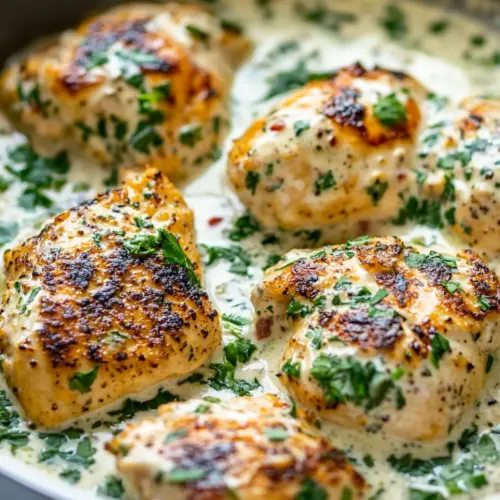
Easy One Skillet Creamy Cilantro Lime Chicken
Easy One Skillet Creamy Cilantro Lime Chicken is a creamy, tangy, and bright one pan meal perfect for an easy weeknight dinner. The seared chicken, lime juice, and fresh cilantro create a lively contrast to the smooth cream based sauce, delivering comforting texture with minimal cleanup. Make it when you want a fast but flavorful meal that tastes like you spent more time than you did.
Equipment
- Large heavy duty skillet
- Tongs
- Spatula
- Measuring Cups
Ingredients
- 4 medium boneless, skinless chicken breasts Cook thoroughly and provide the primary protein for the dish, delivering hearty texture and bulk to the skillet; slice or pound evenly for uniform cooking and to absorb the sauce flavors.
- 1 tablespoon oil of choice Heat first and create a nonstick or flavor-building surface, helping to sear the chicken and carry aromatics; choose a neutral or flavored oil based on desired taste and smoking point.
- 1/4 cup finely chopped onion Sauté finely chopped to add a mild sweet and savory base, softening into the sauce and contributing small pieces that meld with garlic and cilantro for depth.
- 2 cloves garlic, crushed or minced Release pungent aromatics when crushed or minced, infusing the chicken and sauce with savory sharpness and enhancing overall flavor complexity during quick cooking.
- 1 cup chicken broth, water can also be used Deglaze and build the sauce by adding savory liquid, creating a cooking medium that concentrates flavors, helps tenderize the chicken, and forms the base for the creamy finish.
- Juice of 1 lime, or 2 tablespoons Brighten and acidify the dish with fresh citrus juice, balancing richness and cutting through cream to lift flavors while adding a subtle tang and aroma.
- 2 tablespoons cilantro, chopped cilantro Provide fresh herbal brightness when chopped, contributing a citrusy, slightly peppery note that complements lime and brightens the creamy sauce.
- 1/2 teaspoon red pepper flakes Add heat and a touch of smokiness with a measured amount of flakes, providing background warmth and optional kick without overwhelming the other flavors.
- salt and pepper to taste Season to balance and enhance all components, adjusting saltiness and peppery bite to taste so the final dish is well-rounded and savory.
- 1/2 cup heavy cream or half and half, or sour-cream or greek yogurt Enrich and create a silky, creamy sauce when added, lending body and tang depending on choice; choose based on desired richness and slight acidity for consistency.
Instructions
- In a large heavy-duty skillet, heat the oil over medium-high heat. Season chicken generously with salt and pepper then add the chicken and cook for 7-8 minutes, turning once or until chicken is cooked through. Remove chicken from skillet and cover with foil on a separate plate, set aside.: Warmth should shimmer from the surface and the pan will give off a faint smell of hot oil, signaling readiness. Using a heavy skillet concentrates heat evenly so the chicken develops a golden crust, which locks in juices and creates those caramelized bits, or fond, that flavor the sauce. If the oil smokes aggressively, reduce the heat slightly to avoid burning. A common mistake is adding meat to a cold pan so it sticks and releases moisture; wait until the oil moves freely across the pan before adding the chicken .
- Add onions to the same skillet (without washing it) and cook onion for 1 minute. Add garlic and cook for just 30 seconds. Add chicken broth, lime juice, cilantro, red peppers flaked, and salt and pepper to taste. Bring to a gentle boil for 8-10 minutes or until liquid is reduced by 1/4 cup.: As you place the chicken in the pan, you will hear a steady sizzle that indicates proper contact. After a few minutes the edges will rise and the surface will develop deep golden patches, which shows the Maillard reaction at work. Turning once preserves the crust while letting the interior come to temperature. Use a thermometer to ensure the internal temperature reaches about 165 F for safety and juiciness. A pitfall here is flipping too often, which prevents a crust from forming and leads to uneven cooking.
- Whisk in cream during the last minute. Turn off heat and return chicken to the sauce. Garnish with more cilantro. Serve with aside of steamed veggies or rice. Enjoy!: Resting the chicken allows the juices to redistribute so slices remain moist when cut. Covering keeps heat trapped and lets carryover cooking finish the last few degrees without drying. You might be tempted to slice immediately, but that releases juices and makes the meat drier, so give it those few minutes of quiet rest.
- Add onions to the same skillet (without washing it) and cook onion for 1 minute.: The aroma of softened onion blooming in the residual oil and fond is savory and slightly sweet. Working in the same pan harnesses those brown bits to enrich the sauce. Cook just until the onion becomes translucent, because you want sweetness not caramelization at this stage. Overcooking will darken the pan and can bring a bitter note.
- Add garlic and cook for just 30 seconds.: The garlic should become fragrant quickly, releasing a warm, nutty scent without changing color. Because it browns faster than onion, keeping this step short prevents an acrid burnt flavor. If you smell even a hint of bitterness, remove the pan from heat briefly and proceed cautiously.
- Add chicken broth, lime juice, cilantro, red peppers flaked, and salt and pepper to taste.: As you pour in the broth and lime juice, listen for a gentle hiss as the liquid lifts the fond from the pan, creating a savory base. The citrus scent will pop immediately, brightening the mix, while the cilantro adds a fresh herbal layer. Stir to combine and taste, keeping seasoning balanced because the broth will concentrate as it reduces. Adding too little liquid can make the sauce overly salty once reduced.
- Bring to a gentle boil for 8-10 minutes or until liquid is reduced by 1/4 cup.: Watch the surface for steady bubbling and a reduction in volume, which signals concentration of flavor and thickening. You will smell a deeper, roast like aroma as the sauce intensifies. Reducing properly ensures the sauce has body before adding dairy. A common error is rushing this step with high heat, which leads to uneven reduction and can scorch the sauce.
- Whisk in cream during the last minute.: When you add the cream , whisking incorporates it smoothly into the hot liquid, creating a glossy, cohesive sauce. The aroma turns richer and the texture becomes silky under gentle simmering. If the sauce is boiling hard, temper the dairy by adding a tablespoon first to avoid splitting. Using cold dairy straight into very high heat risks curdling, so moderate the temperature and whisk steadily.
- Turn off heat and return chicken to the sauce.: Nestle the rested chicken back into the pan so it warms in the sauce and picks up flavor from the reduced liquid. The residual heat finishes melding everything without overcooking the meat. Spoon a bit of sauce over the top for gloss. Reheating on high or simmering after adding dairy may break the sauce, so keep the heat off or very low.
- Garnish with more cilantro. Serve with aside of steamed veggies or rice.: The final sprinkle of fresh cilantro restores a bright green aroma and visual contrast to the creamy sauce. Serving it alongside simple steamed vegetables or rice lets the sauce shine, absorbing flavor effortlessly. If you let the dish sit too long before serving, the sauce can thicken; gently rewarm with a splash of broth to loosen it.
- Enjoy!: Savor the interplay of textures and flavors as each forkful combines the seared exterior of the chicken , silky sauce, and citrus herb lift. Take note of any balance issues so you can tweak salt, acid, or heat next time. A misstep sometimes is under tasting at the end, so always adjust just before plating.
Notes
- Swap dairy carefully: If you choose half and half, expect a lighter sauce; heavy cream gives the richest mouthfeel, while Greek yogurt or sour cream adds tang but must be tempered to prevent curdling.
- Adjust heat: Increase or decrease the red pepper flakes to suit your family; add a pinch during sauce reduction so the heat melds rather than sits on top.
- Pound for even cooking: If breasts vary in thickness, gently pound them to uniform thickness so they finish at the same time and stay moist.
- Use warm broth: Adding room temperature or warm broth speeds up the deglazing and keeps the sauce temperature steady, reducing the chance of the dairy separating later.
- Fresh cilantro last: Add most of the chopped cilantro at the very end to preserve its bright flavor and vibrant color; a little cooked cilantro earlier gives depth but tends to fade.