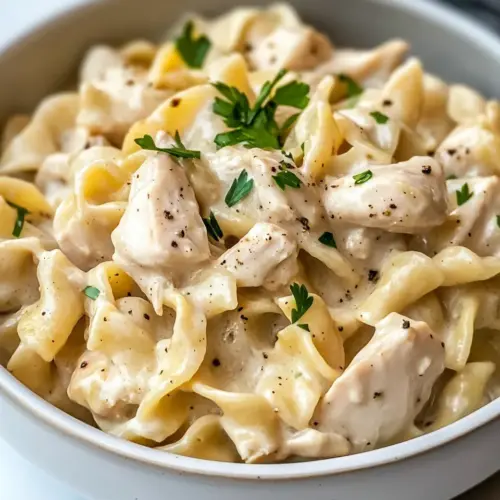
Easy One Pot Chicken and Noodles
Easy One Pot Chicken and Noodles is a creamy, comforting weeknight dinner with tender chicken and wide egg noodles in a savory mushroom and cream broth. This easy weeknight dinner is cozy, fast, and family friendly, perfect when you want a simple, satisfying meal that comes together in one pot. Make it when you need comfort and speed.
Equipment
- Dutch oven or large pot
- Wooden Spoon
Ingredients
- 2 tablespoons butter Provide a rich mouthfeel and help brown aromatics; melts in the pan to create a flavorful base for sautéing the onion and garlic and enriches the final sauce.
- 1/2 medium onion chopped Offer sweet, savory depth and aromatic foundation when chopped and sautéd; softens and releases flavors that balance the creamy broth and enhance overall dish complexity.
- 2 cloves garlic minced Deliver pungent, savory notes and build aromatic depth when minced; quickly releases oils during cooking to accentuate the savory, creamy components of the recipe.
- 2 cups chicken broth Contribute savory liquid and concentrated chicken flavor to cook the noodles and build the sauce; dissolves the condensed soup and blends with cream for a cohesive cooking liquid.
- 1/2 cup heavy/whipping cream Add luxurious creaminess and a silky texture to the sauce; enriches the broth to create a velvety coating for the noodles and helps bind the condensed soup.
- 1 (10.5) ounce can condensed cream of mushroom soup Provide concentrated mushroom and cream flavors while thickening the sauce; melts into the cooking liquid to add body, umami, and a classic comfort-food profile.
- 3 cups uncooked egg noodles extra wide size Absorb the flavorful cooking liquid and provide satisfying, tender bite; cooks directly in the pot to thicken the sauce and make the dish hearty and filling.
- 2 cups cooked chicken I used rotisserie Introduce protein and meaty texture to make the dish substantial; pre-cooked chicken warms through in the sauce, offering convenient flavor and substance.
- Salt & pepper to taste Enhance and balance overall taste by allowing for personalized seasoning; adjusts saltiness and brightness to suit preference and bring out other ingredients.
- Chopped fresh parsley optional, to taste Add fresh herbal brightness and a subtle color contrast when chopped; sprinkled at the end to lift richness and provide a light, fresh finish.
Instructions
- In a Dutch oven or pot, sauté the onion in the butter for 4-5 minutes over medium heat.: The kitchen should start to smell warm and slightly sweet as the onion softens, and you may hear a gentle sizzling as the butter coats the pan. You are looking for the onion to turn translucent with just a hint of golden at the edges, which signals that sugars are caramelizing and building savory depth. This step matters because raw onion would taste sharp in the finished dish, while properly softened pieces blend into the creamy base. A common mistake is using too high heat, which makes the onion brown too quickly and risk a bitter edge. If you see rapid browning, lower the heat and stir more often to achieve even softening without burning.
- Stir in the garlic and cook for 30 seconds.: Almost immediately you will notice the aroma of the garlic bloom into the pan, bright and savory. The sizzling will be softer now, and the aroma is your cue to move quickly, because garlic can go from fragrant to bitter in a heartbeat. This brief cook time is enough to release its essential flavors into the butter and softened onion , which lifts the whole pot. The reason we keep this very short is to avoid any burnt notes that would overpower the creamy broth later. If you smell bitterness, the garlic likely overheated; reduce heat and consider starting over in a cleaner pan if it is strong.
- Add in the chicken broth, heavy cream, and cream of mushroom soup. Stir until combined and increase the heat to high.: When these liquids hit the pan, the aroma shifts to a savory, steamy comfort that promises richness. The condensed soup dissolves into the broth, thickening as you stir, and the cream adds a glossy texture. Raising the heat to high brings the mixture to a boil faster, which is useful to start cooking the noodles promptly. The reason for this order is to ensure the condensed soup integrates smoothly into the warm fat and liquids rather than clumping. Watch for splatter when the liquid first heats, and stir thoroughly. A common misstep is turning the heat too high and letting the liquids erupt into a furious boil, which can cause uneven cooking and reduce liquid too fast. Maintain attention until it comes to a steady boil.
- Once it's boiling, add in the egg noodles. Cook for 10 minutes, uncovered, stirring fairly often. Turn the heat down (to medium or even medium-low) to maintain a rapid simmer (not a furious boil). You don't want the liquid to reduce too much before the pasta has cooked.: As the noodles hit the boiling liquid, you will see them sink and then begin to swell, releasing a soft wheat fragrance into the pot. Stirring helps keep the noodles separated and ensures they absorb liquid evenly rather than clumping. The surface will show a gentle rolling of bubbles at the rapid simmer stage, and that movement is perfect for cooking the pasta through while letting the sauce thicken slightly. The why here is that controlled simmer prevents the liquid from evaporating too fast before the noodles reach tenderness; if it boils too hard you risk the pasta sticking or the sauce reducing too much. A common issue is undercooked centers, so test a noodle before finishing, and if the liquid level looks low, add a splash more broth to maintain coverage.
- Stir in the chicken and let it warm through, then season with salt & pepper as needed and top with fresh parsley if using. Serve immediately.: As you fold the shredded or cubed chicken into the pot, the temperature will drop slightly and then recover, releasing a savory meaty aroma that melds with the creamy base. Letting the chicken just warm prevents it from drying out and keeps the texture tender. Tasting to adjust salt and pepper at the end ensures balance, since the condensed soup and broth already contain seasoning. Adding chopped fresh parsley at the finish brings a bright visual contrast and a fresh herbal lift to each spoonful. A typical mistake is overcooking the chicken during this step which can make it stringy, so warm just until heated through and serve while the texture is plump and juicy.
Notes
- Timing varies by stove and pot Pots and stoves differ in how they distribute heat, so watch the simmer and be prepared to add a minute or two to noodle cooking time on cooler burners.
- Add liquid if noodles are drying If the noodles look like they might stick before they finish, add a splash of chicken broth or cream, lower the heat, and continue cooking gently until tender.
- Use low sodium products if sensitive to salt Choosing low sodium versions of the condensed soup and chicken broth gives you more control over seasoning, letting you adjust salt at the end to taste.
- Stir often but gently Frequent stirring prevents clumping and sticking, especially with wide egg noodles, but avoid vigorous stirring that can break the pasta into fragments.
- Warm the chicken through, do not overcook Add pre cooked chicken near the end to preserve moist texture; overheating can make the protein dry and stringy.