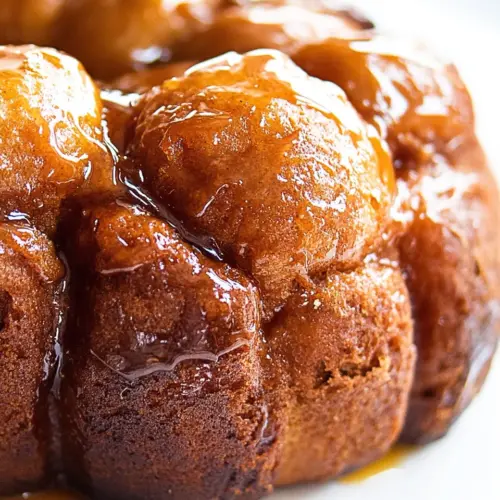
Easy Monkey Bread Recipe
Easy Monkey Bread Recipe is a gooey, pull apart loaf with warm ground cinnamon and a rich brown sugar sauce. Soft biscuit pieces or a lightly kneaded dough yield a tender crumb while the caramelized topping creates crispy edges. Perfect for an easy weeknight brunch or a festive morning, this recipe is crowd friendly and irresistibly shareable, making it a perfect reason to gather and indulge.
Equipment
- 12 cup bundt pan
- 3-quart heavy-bottomed saucepan
- large zip-top bag
- Large Bowl
- Rolling surface
Ingredients
- 2 (12 ounce) cans (380 g) refrigerated biscuits Cut into portions and provide the doughy biscuit pieces that form the pull-apart layers of the monkey bread, offering convenience and a tender, flaky texture when baked.
- 1/2 cup (99 g) granulated sugar Sweeten and help caramelize the surface by coating dough pieces or combining with butter to create a glossy, sugary crust that balances the richness of other components.
- 3 teaspoons (7.8 g) ground cinnamon Flavor and aromatize the sugar coating, imparting warm, slightly spicy notes that complement the sweet and buttery elements throughout the bread.
- 1 cup (213 g) brown sugar, packed Add deep, molasses-like sweetness and moisture to the caramel sauce, melting smoothly with butter to create sticky layers that cling to the dough.
- 3/4 cup (169.5 g) butter, cut into pieces Melt and emulsify with sugars to form the rich, creamy caramel that soaks into the biscuit pieces and gives the finished bread its tender, buttery mouthfeel.
- 1/2 cup (113.5 g) warm milk Warm and loosen the yeast mixture or enrich the dough blend, contributing moisture and temperature control to help other components combine smoothly.
- 1/2 packet (3.5 g) active yeast Leaven and provide mild fermentation activity when activated, helping any dough components or texture elements achieve lightness in the finished product.
- 1/4 cup (49.5 g) granulated sugar Granulate and combine with other seasonings to form a coating or dough mixture, contributing additional sweetness and structure where needed.
- 1/4 cup (56.5 g) melted butter Bind and add richness while dissolving sugars to create a smooth sauce; melted butter also promotes a tender crumb and flavorful crust.
- 1 teaspoon (2.8 g) kosher salt Season and balance the sweetness by enhancing overall flavor complexity and helping control yeast activity and dough seasoning.
- 1 large (50 g) egg Enrich and bind ingredients, adding tenderness and structure; beaten egg contributes moisture, color, and helps with browning.
- 2 cups (240 g) all-purpose flour, + a little more for handling Provide bulk and structure as the primary dry component, giving gluten formation for chew and stability while allowing for some additional dusting during handling.
Instructions
- Preheat oven to 350º F. Grease bottom and sides of a 12 cup bundt pan. Alternately, you can brush with homemade cake goop. Set aside.: The room fills with warmth as the oven comes up to temperature, and prepping the bundt pan now ensures the caramel does not stick. Make sure the bundt pan is well greased down into the fluted edges, because those crevices collect the sticky sauce and you want the loaf to release cleanly. A common mistake is skimping on grease, which leads to tearing when you invert the bread, so be generous and get into every curve. You will notice the oven light glow and a faint warming smell as the metal heats, a good cue it is ready.
- Mix granulated sugar and cinnamon in a large zip-lock type bag. Set aside. Cut each biscuit into quarters. Toss 8 – 10 pieces of the biscuits at a time in the bag of sugar/cinnamon mixture until well coated. Layer the coated biscuits in the bundt pan. Set aside.: The sugar and ground cinnamon smell bright and spicy when combined, and shaking the biscuit pieces in the bag distributes the coating evenly without making a mess. Work in batches so each piece has full coverage, then layer them loosely in the prepared pan so heat can circulate during baking. Avoid overcompacting the pieces which can prevent even cooking; a common error is pressing the dough too tightly, leading to dense interiors. You should hear the light rustle of the bag and see a glittering sugar sheen on each piece when they are ready.
- Add brown sugar and butter to a 3-quart heavy-bottomed sauce pan. Cook on low heat, stirring constantly, until melted and the butter and sugar are smooth. Pour this mixture over the coated biscuits.: As the butter and brown sugar melt, steam rises and the aroma turns deep and toasty, evocative of caramel. Stirring constantly prevents scorching and helps the sugars dissolve into a glossy sauce. Pour evenly over the layered pieces so the sauce sinks into the gaps; if you miss spots you will have uneven caramel pockets. A key thing to avoid is boiling aggressively, which can crystallize the sugar, so keep it gentle and low. You will see the sauce coat the pan and the biscuit edges start to glisten when it is done.
- Bake 30 to 35 minutes until golden brown. Allow to cool 15 minutes then turn out onto a cake plate.: The oven transforms the sugars into a sticky, amber crust and the surface should be deeply golden when done. Letting it rest for about 15 minutes helps the sauce set slightly, so the loaf holds together when you invert it. A tempting mistake is to unmold right away, which risks losing the gooey top, so resist the urge and let it settle. You want to hear a gentle crackle as it cools and smell the intensified caramel notes that indicate it is ready to be turned out.
- Add yeast and sugar to warm milk in a large bowl. Stir gently to combine and allow the yeast to foam to proof. Once the yeast has proofed, stir in melted butter, salt, eggs, and flour into yeast mixture. Gently mix until well-combined. Turn dough onto a lightly floured surface and knead for 10-12 minutes. Form the dough into a large ball and place into a large buttered glass bowl. Cover lightly with plastic or with a tea towel and place in a warm location free of any drafts. Allow to rise so that the dough is doubled in size.: When the yeast blooms in warm milk you will see bubbling that smells faintly sweet and yeasty, a reliable sign the culture is alive. Stirring in the melted butter , salt , egg , and all-purpose flour forms a tacky dough that becomes smooth and elastic through kneading. Kneading for the full 10 to 12 minutes develops the gluten for a springy crumb; stop too soon and the dough will be loose and tear easily, overwork and it can get too tight. Place the dough in a buttered bowl and watch it gently puff up to double, which can take longer in cool kitchens, so give it time in a warm spot.
- Roll the dough on a lightly floured surface and cut into 64 individual pieces. Roll the pieces into balls and then proceed with the recipe with shaking in the cinnamon sugar mixture.: Rolling into small uniform pieces ensures even baking and creates lots of buttery edges when assembled. The texture should be soft and slightly tacky, and rolling in a light dusting of flour prevents sticking without drying them out. Rolling them into neat balls gives a pleasing, consistent look and helps the caramel cling. A frequent pitfall is making pieces uneven in size, which leads to some pieces finishing early and others underdone, so aim for consistent portioning. You will feel the dough relax as you roll, and the tiny balls should yield slightly when pressed, promising a tender interior once baked.
Notes
- Make ahead: You can assemble the unbaked loaf and refrigerate it overnight, covered well, then bake fresh the next morning for warm, freshly baked pull apart bread.
- Storage: Once cooled, cover under a cake dome or in an airtight container and store at room temperature for a few days to maintain soft texture.
- Freezing: Fully baked loaf freezes well; wrap tightly in plastic and foil and freeze up to three months, thaw overnight in the fridge before reheating gently.
- Even coating: Use a zip top bag and shake the biscuit or dough pieces in small batches to ensure uniform cinnamon sugar coverage and avoid clumps.
- Caramel control: Cook the brown sugar and butter on low heat and stir constantly to avoid burning or crystallization, and pour evenly over the pieces.