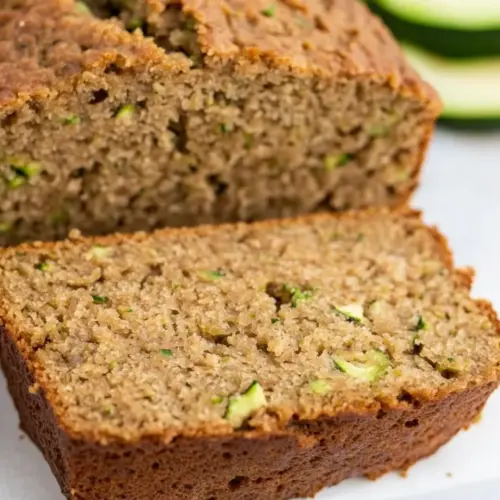
Easy Low Sugar Zucchini Bread
Easy Low Sugar Zucchini Bread is a moist, warmly spiced loaf that balances whole grain texture with restrained sweetness. Packed with shredded zucchini, whole wheat pastry flour, and a mix of monk fruit and a touch of sugar, it bakes into a tender, fragrant bread perfect for easy weeknight breakfasts or snacks. Try it for a healthier treat that still feels indulgent and satisfying.
Equipment
- Loaf Pan
- Mixing Bowls
- Grater
- Fork
- Cooling rack
Ingredients
- 2 cups shredded zucchini use the large hole of the grater (about 2 medium size zucchini unpeeled). Provide moisture and tender texture while contributing mild vegetal flavor; grate with the large holes so excess water is minimized and gently squeeze if needed to avoid soggy batter.
- 2 cups whole wheat pastry flour Serve as the primary whole-grain structure for the loaf, offering nutty flavor and more fiber than all-purpose flour; measure by spooning into the cup and leveling for accuracy.
- 1 teaspoon baking soda Lighten the crumb and help the bread rise by producing carbon dioxide when combined with an acid; ensure even distribution by sifting or whisking into the dry ingredients.
- 1/2 teaspoon baking powder Contribute additional lift and a slightly finer crumb by releasing gas during baking; use in conjunction with baking soda for balanced rise and avoid overuse which can cause collapse.
- 1 teaspoons salt Enhance overall flavor balance by sharpening sweetness and rounding out spices; dissolve evenly into dry ingredients to prevent pockets of salt in the loaf.
- 2 teaspoons ground cinnamon Provide warm spice and aromatic depth that complements the zucchini and sweeteners; measure carefully as cinnamon can overpower other flavors in large amounts.
- 1/4 teaspoon ground nutmeg optional Add subtle warmth and complexity with nutmeg’s sweet, slightly nutty aroma; include only if desired for a more spiced, autumnal profile without dominating the batter.
- 1/2 cup golden monk fruit Offer bulk sweetness with fewer digestible carbohydrates and contribute to a moist texture; incorporate thoroughly with wet ingredients to ensure uniform sweetness.
- 1/3 cup granulated sugar Contribute conventional sweetening and help with browning of the crust while balancing the monk fruit’s intensity; dissolve into wet mixture to prevent grainy texture.
- 2 large eggs Bind ingredients and add richness and structure through proteins and fat, promoting a tender crumb; beat lightly before adding to combine evenly with other wet components.
- 1/2 cup unsweetened applesauce Replace some fat while keeping moisture and tenderness, contributing mild apple flavor and natural sweetness; use unsweetened applesauce to control added sugars.
- 1/2 cup vegetable oil Provide richness, improve mouthfeel, and help carry flavor while keeping the loaf tender; choose a neutral oil to avoid overpowering the zucchini and spices.
- 2 teaspoons vanilla extract Enhance overall flavor profile by adding aromatic sweetness that rounds out other ingredients; add to the wet mixture to evenly distribute its flavor throughout the batter.
Instructions
- Preheat oven to 350°F. Lightly grease a 9″ x 5″ loaf pan or line with parchment paper and set aside.: The scent of the oven warming fills the kitchen and signals that you are ready to bake, and a properly preheated oven ensures even rising and a golden crust. I always check that the oven reaches 350°F before sliding the pan in, because starting in a cold oven can produce a dense center. A common mistake is skipping the parchment or insufficient greasing, which can cause the loaf to stick, so take the extra minute to prepare the pan well.
- Place grated zucchini in a large mixing bowl.: The zucchini has a fresh green aroma and a soft, damp texture that will blend into the batter to create moisture. I listen for the soft rustle as I scoop it into the bowl, and I can see the tiny shreds that promise tenderness. If your zucchini seems exceptionally watery, patting it gently with a paper towel will prevent a soggy loaf, but avoid squeezing too hard, because some moisture is desirable.
- In a small bowl combine the eggs, applesauce, vegetable oil, and vanilla extract. Add the wet ingredients to the shredded zucchini and mix with a fork to combine.: The wet mixture will smell faintly of vanilla and apples, and when you stir it into the zucchini you should see the batter starting to look cohesive and glossy. The oil gives it a slightly silky sheen while the applesauce lightens the texture. One trap is overmixing here, which can break down the zucchini too much, so use a fork and gentle strokes to combine until just integrated.
- In a medium bowl whisk together the flour, baking powder, baking soda, salt, cinnamon, nutmeg, monk fruit and granulated sugar.: As you whisk, the warm fragrances of cinnamon and nutmeg rise, and the dry mix becomes uniform and aerated. Whisking ensures even distribution of leaveners and spices so the loaf rises evenly and tastes balanced. A frequent error is not breaking up clumps in the sweeteners or flour, which can lead to pockets of uneven taste, so whisk thoroughly until the mixture looks smooth.
- Mix the wet and dry ingredients together until combined.: When the batters meet, you will notice the texture change from loose to a slightly thick, scoopable batter. The sound is subtle, a gentle scraping as you fold, and visually you want a uniform speckled batter with no dry flour streaks. The reason for gentle mixing is to avoid gluten development that can make the crumb tough, so mix until you see even distribution and stop. Overworking the batter is the most common mistake at this stage.
- Pour batter into the prepared loaf pan and bake for 45-55 minutes or until a toothpick inserted in the center comes out with a few crumbs.: As the loaf bakes, the aroma of cinnamon and warm bread will become pronounced and the top will take on a golden hue. I watch for a gentle rise and a set center, and I begin testing at 45 minutes to avoid over baking. The toothpick should come out with a few moist crumbs, not wet batter, which indicates perfect doneness. Avoid opening the oven frequently in the first part of baking, as that can cause the center to sink.
- Place the loaf on a cooling rack for 10-15 minutes before removing the bread from the loaf pan. Allow the loaf to cool completely before slicing.: Cooling lets the crumb set and the flavors meld, and during this time the loaf gives off a warm, comforting scent. When you run a knife along the pan edges, the loaf should release easily, and removing it to a rack prevents a soggy bottom by allowing air to circulate. Cutting too soon is a common misstep, as it can crush the crumb and make slices gummy, so be patient and let it cool fully.
Notes
- Reduce sugar carefully if you want it even less sweet, decrease the granulated sugar by one tablespoon at a time, tasting the batter conceptually, knowing that sweetness concentrates slightly as it bakes.
- Swap oils with caution you can use a neutral oil substitute for vegetable oil, but avoid strong flavored oils which will change the profile markedly.
- Adjust spice levels increase or decrease the cinnamon and nutmeg to match your preference, keeping in mind a little extra will deepen the aroma during baking.
- Modify texture grate zucchini finer for a uniform crumb or coarser for speckles of green and extra moisture pockets.
- Swap sweeteners carefully if you replace the golden monk fruit, ensure the sweetness intensity matches so you do not over or under sweeten the loaf.
- Scale the recipe to fit smaller pans by reducing bake time and checking early, since a shallower loaf will set faster.