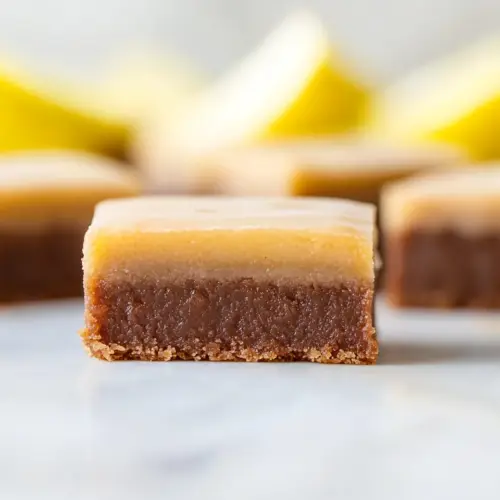
Easy Lemon Brownies
Easy Lemon Brownies offer a creamy yet fudgy bar with bright lemon flavor and a glossy sugar glaze. These bars combine tender texture with tangy zest, perfect for an easy weeknight dessert or make ahead treat. The fresh lemon aroma and dense bite make them addictive, and they are quick enough to bake when guests arrive.
Equipment
- 9 x 13 inch baking dish
- Mixing Bowl
- Whisk
- Parchment Paper
- Rubber spatula
Ingredients
- 1 3/4 cups all-purpose flour Provide structure and bulk to the brownies while yielding a tender crumb; whisk in to combine with the dry ingredients and avoid overmixing to prevent toughness.
- 1 1/4 cup granulated sugar Sweeten the batter and help with moisture and texture; dissolve into the wet ingredients to create a balanced sweetness throughout the lemon brownies.
- 1/4 cup cornstarch Lighten the texture by absorbing moisture and reducing density; sift or whisk with the flour to ensure even distribution and a softer bite.
- 1/2 teaspoons salt Enhance and balance flavors by cutting sweetness and amplifying lemon brightness; measure carefully to avoid oversalting which can overpower the dessert.
- 1 cup melted butter Contribute richness, moisture, and a fudgy mouthfeel when melted into the batter; incorporate at warm temperature to blend smoothly with sugar and eggs.
- 4 large eggs Provide leavening, structure, and richness; beat into the batter to trap air and create a cohesive texture that sets during baking.
- 3 tablespoons lemon zest from 4-5 lemons Deliver concentrated citrus oils and aroma to intensify lemon flavor; zest into the batter for fresh brightness and fragrant top notes.
- 3 tablespoons lemon juice Add bright, tangy acidity to balance sweetness and create a refreshing lemon profile; stir into the wet mix to distribute brightness evenly.
- 1 teaspoon lemon extract Boost and deepen lemon flavor with a concentrated citrus note; add a small amount to enhance lemon character without thinning the batter.
- 1 teaspoon vanilla extract Add complementary warmth and complexity to the lemon profile; mix in to round out flavors and contribute subtle vanilla aroma.
- 2 cups powdered sugar Create a smooth, sweet topping or glaze component when combined with lemon juice; sift to remove lumps and achieve a silky texture.
- 3 tablespoons lemon juice Provide additional acidity and shine for a glaze or finishing touch; combine with powdered sugar to create a glossy, tart lemon glaze.
Instructions
- Preheat the oven to 350°F. Set out a 9 x 13 inch baking dish. Line the baking dish with parchment paper, so you can easily lift the whole sheet of lemon brownies out of the pan once they are baked.: Warmth in the oven creates predictable rise and texture. When you preheat to 350°F , you will notice the oven hum and the light inside it glow, signaling stable heat. Lining the dish with parchment ensures clean edges and easy removal, which preserves the glaze and the bars when slicing. A common mistake is skipping parchment, which often makes the bottom stick and tears the bars when lifting. If your oven runs hot, rotate the pan halfway through baking to avoid uneven browning, and always confirm the temperature with an oven thermometer.
- Set out a large mixing bowl. Combine the flour, sugar, cornstarch, and salt. Whisk well. Then vigorously whisk in the melted butter and eggs, until smooth.: At this stage you should hear soft whisking and see a pale, slightly glossy batter forming. Whisking the dry ingredients first ensures even distribution of salt and cornstarch , preventing pockets that could affect texture. When adding melted butter and eggs , the mixture will transform from powdery to silky, and you will feel the batter thicken slightly. If you underwhisk, the batter can be lumpy; if you overwhisk, you may incorporate excess air and risk a more cake like crumb. Aim for a smooth, cohesive batter.
- Add the lemon zest, lemon juice, lemon extract, and vanilla extract, whisk again until the mixture is very smooth.: When you add lemon zest you will smell a burst of citrus oils that change the room atmosphere. The lemon juice will make the batter shine and slightly loosen, while the lemon extract and vanilla extract round the flavor. The batter should become glossy and aromatic, with visible flecks of zest. A frequent error is using bottled juice that can taste flat; always prefer fresh lemon for best aroma. If the batter splits or looks curdled, whisk gently until it comes back together rather than overworking it.
- Scoop the lemon brownie batter into the prepared pan. Smooth it out into an even layer. Bake for approximately 15 minutes, until a toothpick inserted in the center comes out mostly clean. You do not want to overbake these bars; the fudgy texture is what makes them feel like brownies.: As you smooth the batter, you will notice it gliding and settling into the corners. The top will look slightly glossy before baking, and during baking you may see tiny bubbles form at the surface. The edges will set first and take on a faint golden tone while the center remains slightly jiggly. The toothpick test is about feel, not absolute dryness, so expect a few moist crumbs to cling. Overbaking dries the bars and defeats the fudgy intent. If your oven bakes unevenly, check a minute early and err on the side of slightly underdone.
- Allow the lemon brownies to cool.: Cooling transforms the texture, so patience is crucial. As the pan cools on a rack, the internal steam dissipates and the crumb firms up, producing that dense, chewy bite. You will notice the scent intensify as it cools, with lemon notes becoming more pronounced. A common mistake is glazing too soon while the bars are still warm, which melts the glaze and makes it runny. Wait until the surface is at least lukewarm before proceeding to the next step.
- Set out a clean bowl for the glaze, and whisk together the powdered sugar and additional lemon juice. Once smooth, pour the glaze over the top of the lemon brownies and smooth it out with a rubber spatula. Allow the brownies to continue cooling to room temperature as the glaze sets.: The glaze should be glossy and pourable, with a consistency that coats the back of a spoon. As you whisk powdered sugar into lemon juice , you will see it transition from grainy to silky, and the aroma will become sweet and citrus forward. Pouring creates a thin white sheen that settles into little crevices and highlights the top. If the glaze is too thin, it will run off the sides; if too thick, it will crack when cut. Adjust with tiny amounts of juice or sugar to reach the right spreadable texture.
- Once the glaze is fully set, lift the entire sheet of lemon brownies out of the pan by the edges of the parchment paper. Cut into squares and serve!: Lifting the bars reveals clean sides and preserves the glaze. When cutting, use a sharp knife and wipe the blade between cuts for neat squares. The texture should feel dense and slightly moist as you slice, and the glaze should be matte but firm to the touch. A common issue is ragged edges from a dull knife, so chill briefly if you need cleaner slices. Serve at room temperature for the best texture and flavor.
Notes
- Choose fresh lemons Fresh zest and juice provide bright, lively oils and acids that bottled products cannot match, elevating the aroma and clarity of the lemon flavor in the bars.
- Measure flour accurately Spoon flour into the measuring cup and level it off to avoid packing, which can dry out the final texture and make the bars denser than intended.
- Melt butter gently Warm the butter until fully melted but not scorching; overheating can change its flavor and the batter consistency, while lukewarm butter mixes more smoothly into the batter.
- Whisk for silkiness Vigorous whisking after adding wet ingredients creates a smooth batter and ensures the batter holds together, which is key for the fudgy interior rather than a crumbly one.
- Use the toothpick test wisely A mostly clean toothpick with a few moist crumbs is ideal; if it comes out completely dry, you may have overbaked and lost the desired fudgy texture.
- Adjust glaze thickness carefully Add lemon juice a teaspoon at a time to powdered sugar to reach a pourable glaze, and test by drizzling a spoonful on wax paper to see how it sets.