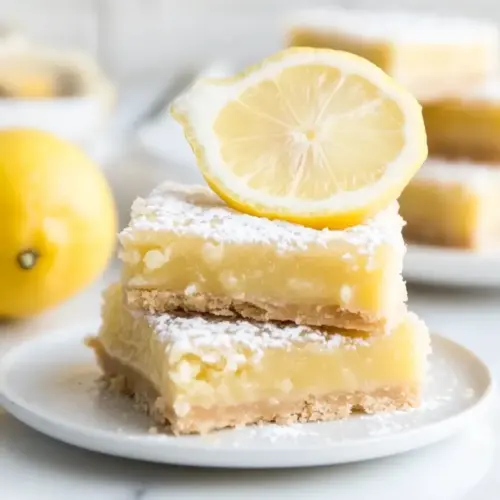
Easy Lemon Bars
Easy Lemon Bars are bright, tangy, and irresistibly buttery, with a tender shortbread base and a silky lemon topping. This easy crowd pleasing dessert is perfect for picnics, parties, or simple weeknight treats, offering a crisp edge and custardy center that bake up beautifully. Make a pan ahead to save time, and enjoy a refreshing citrus finish that keeps guests coming back for seconds.
Equipment
- 13 x 9-inch baking dish
- Mixing Bowl
- Measuring Cup
- Whisk
Ingredients
- 8 ounces butter at room temperature Cream until soft and spreadable to create a tender, rich base for the crust; helps bind dry ingredients and contributes buttery flavor and flakiness to the shortbread layer.
- 3 1/2 cups granulated sugar divided use Sweeten and balance tartness while providing bulk to both crust and filling; divide use so some sugar creates structure in the crust while the remainder sweetens and sets the lemon topping.
- 3 cups all-purpose flour divided use Provide structure and body by forming the crumb and holding the crust together; divided use allows some flour to create a sturdy base while the rest thickens the lemon filling.
- 6 eggs at room temperature Whisk until incorporated to enrich the filling with moisture, protein, and structure; eggs help set the lemon custard as it bakes and give a smooth, cohesive texture.
- 1 cup lemon juice Add bright, acidic flavor and liquid to form the tangy filling; lemon juice reacts with eggs and sugar to create a balanced, zesty custard that sets when baked.
- 1 teaspoon vanilla extract Enhance and round out flavors by adding a subtle sweet-vanilla note; vanilla helps mellow sharp citrus and elevates the overall aroma of the bars.
- 1/2 teaspoons salt Season lightly to enhance sweetness and balance flavors; salt strengthens dough structure and brightens the lemon filling when used in small amount.
- powdered sugar for dusting Dust lightly after baking to add a delicate sweetness and an attractive finish; powdered sugar softens the tartness on the surface and creates a classic presentation.
Instructions
- Preheat oven to 350 degrees.: Warm, slightly citrusy aromas will develop in the kitchen as the oven reaches temperature, and starting with a properly preheated oven ensures the crust and filling begin cooking immediately and evenly. You will hear the oven click as it cycles, and the interior should register steady heat if you use an oven thermometer. A common mistake is skipping preheat, which can cause uneven rise and a soggy filling, so always wait until the oven is fully ready.
- Cream together butter, 1/2 cup granulated sugar, and 2 cups flour.: As you cream the butter with the granulated sugar , you will notice the mixture go from pale and glossy to slightly denser, and when you add the all purpose flour it will become crumbly but cohesive. The tactile sensation should be that the crumbs stick together when pressed. This technique creates a tender shortbread texture by distributing the fat evenly. Avoid over mixing, which can develop too much gluten and make the crust tough.
- When the mixture is crumbly, press it into a 13 x 9-inch baking dish. Press dough out evenly so that it has a uniform height throughout the pan. Bake for approximately 15 minutes, and remove from the oven.: Pressing the dough evenly will produce uniform color and bake time, and you should feel a slight resistance as you compact the crumbs into a flat layer. Use the back of a measuring cup for a smooth surface, and aim for consistent thickness across the pan to avoid thin edges that brown too fast. One mistake is leaving the crust uneven, which causes uneven baking and sections that are either underdone or overly crisp.
- In a bowl, mix together eggs, 3 cups granulated sugar, lemon juice, 1 cup flour, vanilla, and salt.: A uniform surface encourages even browning and a consistent bite in every square. When done right, the crust will look smooth and compact before it goes into the oven. If the crust is patchy, the filling can pool in low spots and make slicing messy later, so take a little extra time to level it now.
- Mix until the filling is uniform in texture, and pour over the cooked shortbread cookie crust.: During this short bake you will smell warm, buttery notes and notice the edges beginning to color slightly. The crust should feel set rather than doughy when you gently touch the pan edge with a spatula. Leaving it in longer can result in an overly hard base, while removing it too early risks a soggy underlayer, so aim for that brief golden edge as your cue.
- Bake for an additional 30 to 35 minutes. Allow this to cool to room temperature before dusting with powdered sugar.: As you whisk these ingredients the mixture will turn glossy and pourable, and the lemon aroma will intensify. The eggs and granulated sugar create a custard like foundation, while the all purpose flour helps the filling set without being cakey. Over mixing can incorporate too much air, which makes the filling puff then crack, so stir until smooth and uniform in texture only.
- Be sure to refrigerate these cookies when not being served.: Pouring a smooth, even filling across the warm crust will produce a clean layer that bakes into a glossy top. You may hear a faint hiss as warm crust meets the cooler filling, and the visual should be a level, pale yellow surface before it returns to the oven. Pour gently to avoid disturbing the crust, and if you see pooling in one area nudge the pan to spread the mixture evenly.
- Bake for an additional 30 to 35 minutes: While baking the aroma will shift toward sweeter, zesty notes, and the edges of the filling will begin to gain a faint golden color. The center should look set and no longer jiggle like liquid; a slight wobble at the very center is okay because it will firm as it cools. A frequent misstep is under baking, leaving the filling loose, so look for those browning edges and a mostly set center as your sign.
- Allow this to cool to room temperature before dusting with powdered sugar: As they cool, the filling firms and becomes easier to slice, and the aromas mellow into a balanced lemon sweetness. Dust the powdered sugar only after the bars have cooled so it stays visible rather than melting into the surface. Cutting too soon can lead to sloppy slices, so be patient and let the texture settle.
- Be sure to refrigerate these cookies when not being served: Chilling tightens the filling and keeps the bars fresh, and you will notice the texture becomes more like a firm custard. Refrigeration also helps when you want clean slices for serving later. Leaving them at room temperature for extended periods can soften the crust and invite spoilage, so store covered in the fridge between servings.
Notes
- Use fresh lemon juice: Freshly squeezed lemon juice gives superior brightness and aroma compared to bottled juice, and it makes the filling taste lively and true to citrus. If you have a lemon zester, a little zest folded into the filling amplifies fragrance, but keep it minimal to avoid bitterness.
- Chill before slicing: After cooling to room temperature, refrigerate the bars for at least an hour to firm the filling. This makes slicing tidy squares much easier and prevents the filling from smearing, which is especially helpful if you are transporting them to a gathering.
- Evenly press crust: Press the shortbread base with the back of a measuring cup to create a compact, uniform layer. An even crust ensures consistent bake across the pan, avoiding very thin edges that brown too quickly or thick spots that stay doughy.
- Watch the edges: The filling is done when the edges start to turn a faint golden color while the center is mostly set. If the center is still very jiggly, return to the oven in short increments to avoid over baking the edges.
- Dust just before serving: Apply the powdered sugar right before you present the bars to guests so it looks fresh and delicate. If you dust too early, it will absorb moisture and fade, reducing the visual contrast that makes each square pop.