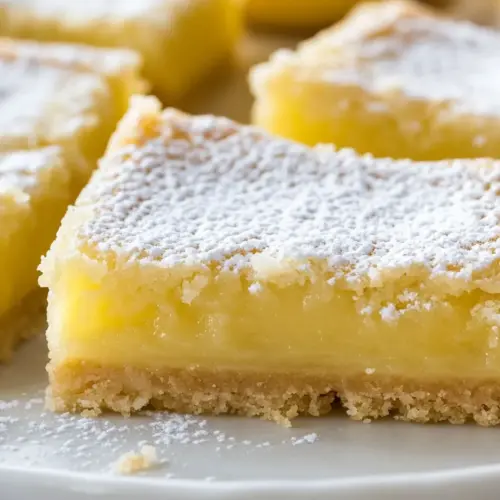
Easy Lemon Bar Recipe
Easy Lemon Bar Recipe is a bright, tangy dessert with a buttery, tender crust and a glossy lemon filling. The bars are creamy yet light, offering a perfect balance of sweet and tart for easy weeknight baking or a crowd friendly potluck treat. Make a batch ahead for a reliably impressive dessert that stays fresh in the fridge and disappears fast.
Equipment
- 9 x 13-inch baking pan
- Parchment Paper
- Mixing Bowls
- Pastry Cutter
- Whisk
- Measuring Cups
Ingredients
- 1 cup butter, cold (cut into tiny pieces) Provide cold, cubed fat that creates a flaky, tender crust; cut into tiny pieces to chill quickly and incorporate evenly into the dough. Use cold butter to prevent a greasy texture and ensure the base bakes up crisp and golden. Handle minimally to keep the butter solid for proper layering during baking.
- 6 tbsp brown sugar Add a touch of molasses-sweetened depth to balance the lemon tang and enhance the crust's flavor complexity. Brown sugar contributes moisture to the dough and helps the crust brown attractively during baking. Use measured tablespoons to maintain the intended crumb and sweetness of the base.
- 3 cups all purpose flour Build structure and bulk for both the crust and filling by providing starch and gluten when mixed with liquids. Sift or whisk before measuring to avoid lumps and ensure even distribution in the dough. Use all purpose flour for a reliable balance of tenderness and strength in the bars.
- 1 large egg Bind the crust ingredients together and add richness for a slightly tender texture in the base. Beat the egg lightly before incorporating to ensure even moisture and cohesion throughout the dough. Use a large egg for consistent volume and structure.
- 1 tsp lemon juice Brighten the filling with sharp acidity and a subtle citrus note that enhances overall lemon flavor. Add measured lemon juice to balance sweetness and help the filling set as the acid interacts with eggs during baking. Use fresh juice when possible to ensure clean, vibrant flavor.
- 6 large eggs Thicken and set the filling through coagulation when heated, providing a custard-like texture for lemon bars. Whisk eggs thoroughly to incorporate air and ensure a smooth, uniform filling mixture. Use large eggs for predictable consistency and reliable setting.
- 3 cups sugar Sweeten the lemon filling to create the classic sweet-tart balance and provide body to the custard. Dissolve sugar well into the lemon and egg mixture to avoid graininess and promote even baking. Adjust slightly if a less or more sweet result is desired, but follow the recipe for intended texture.
- 2 tbsp lemon zest Concentrate aromatic citrus oils to intensify lemon flavor and lift the aroma of the bars. Finely grate only the yellow outer peel to avoid bitterness from the pith, and measure zest tightly for consistent potency. Use freshly zested lemon for the brightest, freshest citrus notes.
- 1 cup lemon juice, freshly squeezed Deliver the main lemon flavor and necessary acidity to set the custard filling while providing a vivid, fresh citrus profile. Freshly squeezed juice ensures clean acidity and avoids off-flavors from bottled alternatives. Measure accurately to maintain the balance between tartness and sweetness.
- 1 cup all purpose flour Provide additional structure and slight thickening to the filling while contributing to a smooth texture when combined with the wet ingredients. Use the same all purpose flour as in the crust for a consistent crumb and to help the filling hold its shape once baked. Whisk in gradually to prevent lumps for a silky custard.
- Powdered sugar Lightly dust the cooled bars to add a delicate sweetness and attractive presentation; powdered sugar also mellows intense lemon tartness on the palate. Sift before sprinkling to avoid clumps and achieve an even, snowy finish. Apply just before serving to maintain a fresh appearance.
Instructions
- Preheat oven to 350 degrees F. Line a 9 x 13" pan with parchment paper or tinfoil so the paper comes over the edges of the pan, making it easier to remove the bars once cooled.: You will notice a warm, dry scent when the oven reaches temperature and the pan should feel stable when you press the parchment into place. Proper lining provides a sling so you can lift the bars out cleanly, avoiding jagged cuts. If you skip the sling you risk tearing the crust when removing the bars, which affects presentation. A common mistake is not securing the parchment at the corners, causing it to shift during baking; tuck the edges tightly so the crust presses evenly into the pan.
- Combine the ingredients for the crust in a large bowl and use a pastry cutter to make a coarse and crumbly mixture. Alternatively you can place the ingredients into your food processor and pulse until mixture becomes crumbly.: As you cut the butter into the all purpose flour and brown sugar , you should feel small pea sized pieces of butter distributed throughout the dry mix, and the aroma will turn slightly rich and nutty. Those pea sized bits are crucial because they melt in the oven and create that tender, flaky crumb. If you overwork the dough it can become mealy or greasy, losing that desirable texture. A frequent error is letting the butter warm up too much, which leads to a heavy crust rather than a delicate one.
- Press the mixture into an even layer in the prepared 9 x 13" pan. Bake for 15 to 20 minutes or until a pale golden brown.: When you press the crust, aim for an even thickness across the pan so it bakes uniformly; visually check edges to ensure they are not thinner than the center. During baking you will see the edges turn a pale golden brown and you may smell a toasty, buttery note rising from the oven, signaling readiness. If you underbake the crust the final bars can be soggy from the filling, while overbaking will make them too crumbly and dry. Avoid pressing too hard which can compress the texture and make the base dense.
- While the crust is baking combine the ingredients for the filling in a large bowl and whisk until smooth. Pour mixture over the crust and bake for an additional 30 to 35 minutes, or until the center is set.: As you whisk the eggs , sugar , lemon juice , lemon zest , and a bit of all purpose flour , the mixture should go from grainy to glossy and slightly thickened; the fragrance of citrus will become pronounced and bright. Pouring it onto the warm crust lets the heat begin the set so you should see the filling settle and the surface gently shimmer as it bakes. The center should appear mostly set with only a faint jiggle when gently nudged, similar to a firm custard; this ensures a tender, not rubbery, texture. A common pitfall is overbaking until the surface cracks, which results in a dry filling, so remove as soon as the wobble is slight.
- Let bars cool completely and then lift out of the pan by holding the sides of the paper and lifting straight up. Cut into bars and dust with powdered sugar. Keep refrigerated. Enjoy!: Cooling transforms the hot, wobbly custard into a sliceable, silky bar; you will notice the filling tighten and the citrus aroma mellow into a pleasant balance with the buttery base. When you lift the sling, the pan should release cleanly; if the bars are still warm they will be soft and hard to slice neatly, so patience is rewarded. Dusting with powdered sugar creates an inviting visual contrast and adds a faint sweetness on the first bite. A frequent mistake is slicing too soon while the filling is still warm, which leads to ragged edges and a messy plate, so wait until fully cooled and chilled if possible.
Notes
- Use fresh lemon juice: Fresh lemon juice brightens the filling in ways bottled juice cannot, providing a clean acidity and lively aroma. Squeeze and strain to remove seeds and pulp for a smooth custard.
- Keep butter cold: Cold diced butter ensures a tender, short crust because the solid fat creates pockets that melt during baking, giving a flaky texture rather than a dense one.
- Room temperature eggs for the filling: Let the eggs sit at room temperature for easier incorporation, which helps you achieve a uniform, smooth filling and reduces the chance of lumps.
- Even press for the crust: Press the crust into the pan with an even hand or use the bottom of a measuring cup to create a consistent layer, so it bakes uniformly and supports the filling.
- Don’t overbake the filling: Remove when the center has a gentle jiggle, not when it is fully firm; carryover heat will continue to set the custard, preventing a dry texture.
- Chill before slicing: Cooling completely, and briefly chilling, firms the bars so you can slice cleanly and achieve neat, presentable pieces for serving.