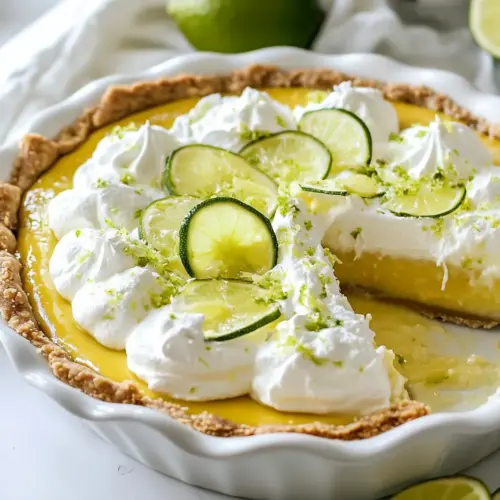
Easy Key Lime Pie Recipe
Easy Key Lime Pie Recipe is a creamy, tangy dessert with a buttery graham crust and bright lime flavor. Easy to make and perfect for summer gatherings, this pie offers a silky filling set by egg yolks and sweetened condensed milk, finished with whipped cream and lime wheels for a fresh touch. Make it ahead for effortless entertaining, and enjoy a slice that is both light and indulgent.
Equipment
- Kitchen Scale(optional)
- Pie Pan
- Stand mixer
Ingredients
- 1 1/2 cups graham cracker crumbs 213 grams (about 12 cracker sheets) Provide a crunchy, mellow base for the pie crust when combined with melted butter, offering structure and a toasty flavor that contrasts the filling.
- 6 tablespoons unsalted butter 85 grams, melted (3/4 stick) Bind the graham cracker crumbs together and add richness to the crust by melting into the crumbs and setting firm as it cools.
- 1/3 cup granulated sugar 67 grams Add a touch of sweetness to the crust mixture to balance the tang of the filling while helping to enhance overall flavor depth.
- 1/4 teaspoons ea salt optional Season the crust or filling lightly to brighten flavors; optional inclusion ensures a balanced sweet-tart profile without overpowering citrus.
- 4 teaspoons grated lime zest 8 grams, from 2 Persian limes Deliver concentrated lime aroma and bright citrus oils that intensify the fresh lime flavor throughout the filling without extra juice.
- 4 large egg yolks 56 grams Contribute richness, silky texture, and natural thickening to the custard-style filling while helping it set once baked or chilled.
- 14 ounces sweetened condensed milk 396 grams (1 can) Provide the primary sweet, creamy body of the filling and react with egg yolks to create a dense, smooth, custard-like texture.
- 1/2 cup freshly squeezed lime juice 114 grams, from 10-12 key limes or 4 Persian limes Introduce vibrant acidity and the primary tart flavor that sets key lime pie apart, balancing sweetness and helping the filling firm.
- stabilized Whipped Cream (or cool whip) - click for recipe Offer a light, airy topping with stabilized structure that complements the dense filling and keeps decorative peaks intact for serving.
- lime slices/wheels Serve as a fresh, decorative garnish that reinforces lime flavor and adds visual appeal to each slice when placed on top.
Instructions
- Preheat oven to 350°F.: You will notice a faint warmth in the air as the oven comes to temperature, and preheating is crucial so the crust begins baking immediately and does not absorb excess butter. A properly preheated oven ensures even browning and consistent bake times. Avoid the mistake of placing the pie into a cold oven, which can create a soggy base and uneven set. If your oven runs hot or cool, use an oven thermometer to verify accuracy.
- In a medium bowl, mix the graham cracker crumbs, melted butter, sugar and salt until well combined. The mixture will resemble wet sand.: Feel the texture shift as the crumbs absorb the butter; you want a cohesion that still looks granular rather than paste like. The sugar and salt dissolve slightly into the butter, giving the crumbs a glossy sheen. If your crumbs clump into large wet pockets, you likely used too much butter; add a tablespoon of extra crumbs to rebalance. Mixing by hand allows you to gauge texture, while a quick pulse in a food processor can help if the crumbs are uneven.
- Press the crust mixture evenly and firmly into the bottom and (almost all of the way) up the sides of the pie dish. (Do NOT cover the pans lip with crumbs.) Use the bottom of a measuring cup or of a flat-bottomed glass to press the crumbs into a crust, if desired.: As you press, you will hear the compacting of crumbs and feel the crust firm under your palm. The surface should be smooth and even, with slightly higher walls to contain the filling. Avoid pressing all the way to the rim; leaving the lip clear prevents overflow and allows the crust to adhere properly during baking. A common error is uneven pressing, which leads to thin spots that collapse when sliced, so take the time to make the thickness uniform.
- Bake the crust for 9 minutes. Transfer the cooked crust to a cooling rack and cool it completely before adding the pie filling.: During baking you will smell a toasty, buttery aroma as the crumbs set and brown slightly. The brief bake helps the crust lock together, preventing a soggy bottom once filled. Allowing the crust to cool fully is essential because a hot crust can melt the filling and ruin the set. Do not rush this step; if the crust remains warm, place it on a wire rack until it reaches room temperature. A pitfall is adding filling to a hot crust, which causes seepage and a soft center.
- In a medium-sized mixing bowl, whisk together the zest and yolks for 2 minutes. Whisk in the condensed milk and then add the juice and beat well. While the crust cooks and cools, set the lime pie filling aside at room temperature to thicken.: As you whisk, notice the change from glossy yolks to a pale, creamy mixture kissed by fragrant lime oils. The condensation like sheen of the sweetened condensed milk will make the mixture smooth and velvety. When you add the lime juice , the mixture will emit a bright citrus scent and begin to tone down in viscosity as the acid interacts with the yolks. Letting it rest at room temperature allows the filling to relax and slightly thicken, aligning the texture for baking. A common mistake is overbeating, which can incorporate too much air and create small surface bubbles during baking, so whisk steadily but not aggressively.
- Pour the filling into the cooled crust and bake until the center is just set, but it still a little wiggly, 15-17 minutes.: When the pie bakes, you will see the edges firm before the center; the look you are aiming for is a gently trembling center like gelatin that will set as it cools. The oven will return a warm citrus scent, and the filling should not brown deeply. This gentle set ensures a silky, custard like texture rather than a cakey result. A common error is overbaking for a fully firm center, which yields a crumbly, rubbery filling. Check at the lower end of the timing window and resist the urge to bake until fully solid.
- Transfer the pie to a cooling rack and let cool completely.: Cooling on a rack allows air to circulate and prevents condensation that can waterlog the crust. As the pie cools, you may notice the filling tightening from slightly jiggly to a firm, sliceable custard. This gradual transition improves texture and flavor melding. Avoid refrigerating immediately while piping hot as that can cause sweat and weeping; let it reach room temperature first.
- Cover the pie, tightly, with plastic wrap and refrigerate at least 3 hours and up to 24 hours, before serving.: Chilling deepens the flavors and gives the filling a clean, sliceable firmness. The wait also lets the zesty oils and sweet milk harmonize, producing a more cohesive, balanced bite. Refrigeration for the full three hours is the minimum to achieve proper texture; cutting it too early will produce a soft slice that may slide. Do not freeze the pie as the texture will degrade and separate upon thawing.
- Up to 2 hours before serving, top the pie with sweetened, freshly whipped cream. Garnish with twisted lime wheels or thin lime slices.: As you whip the cream, watch it transform from liquid to soft peaks, smelling fresh and slightly sweet. Folding in a touch of sugar and spreading it gently over the chilled pie creates a cloud like cap that complements the tart filling. Garnishing with lime wheels adds a zesty perfume at the table and a polished look. Be careful not to overwhip the cream into butter, and avoid adding the topping too soon, which can soften the cream and cause it to weep on the plate.
Notes
- Pan size matters, I use a 9 inch pie pan for this pie because it yields a classic depth and slice count; using an 8 inch will deepen the filling, while a 9 inch tart pan may spread the depth a bit more broadly. Adjust chilling time accordingly, because a deeper pie can need a little extra refrigeration to firm up fully.
- Warm the butter carefully, let melted unsalted butter cool slightly before combining with the crumbs so it does not liquefy them into paste. If the butter is too hot it can change the crumb texture and make pressing difficult, so aim for warm to the touch, not steaming.
- Measure citrus by weight, squeezing 10 to 12 small limes versus 4 larger Persian limes can vary the acid level a touch; weighing or measuring the lime juice helps maintain consistent tartness. Taste the mixture before baking if you are uncertain; it should be bright but not overpowering.
- Stabilize whipped cream for make ahead, if you want perfect peaks that hold for hours, add a small amount of powdered sugar or a stabilizer when whipping. This prevents weeping and keeps the topping attractive for serving, especially in warm environments.
- Loosen stuck crusts gently, if the pie clings to the pan when serving, dip the bottom of the pie pan briefly in warm water to release the crust. Do not submerge the pie, apply heat only to the plate bottom for a few seconds, then run a thin knife around the edge to loosen.