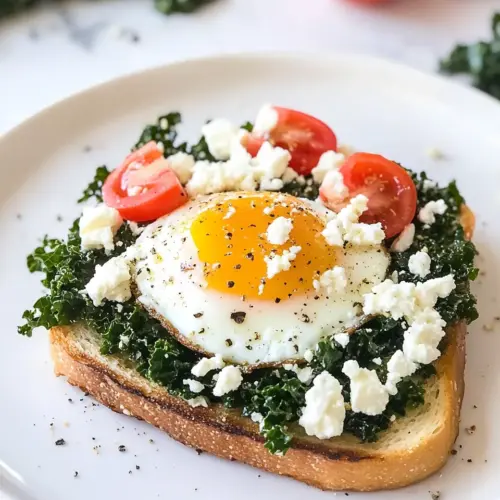
Easy Kale Feta Egg Toast
Easy Kale Feta Egg Toast is a quick, savory toast topped with sautéed kale, tangy feta, and a soft fried egg. Creamy yolk meets crispy toast for an easy weeknight dinner or hearty breakfast, delivering bright, salty, and comforting flavors in under 30 minutes. Make it when you want something fast, nutritious, and satisfying.
Equipment
- Toaster
- Large Skillet
- Small skillet
Ingredients
- 2 slices English Muffin Bread sourdough bread, multigrain bread, or English muffin, for serving Toast or serve as a base, providing crisp texture and a sturdy surface to hold toppings while complementing flavors with its mild, toasty profile.
- 3 teaspoons extra-virgin olive oil divided Drizzle and divide between sautéing and finishing, contributing richness and helping to soften and flavor the kale while adding a fruity, aromatic note.
- 3 cups chopped kale stems removed Chiffonade or chop finely after removing stems to add hearty, leafy greens that wilt when cooked and lend earthy, slightly bitter nutrients and body.
- 1 teaspoon minced garlic (2 small cloves) Mince finely to release pungent, savory oils that brighten and deepen the sautéed greens, helping to build a fragrant savory foundation for the dish.
- 1/8 teaspoons salt plus additional for seasoning Season sparingly during cooking to enhance and balance flavors, helping to bring out the natural taste of the kale and other components without overwhelming them.
- 1/8 teaspoon pepper plus additional for seasoning Sprinkle lightly to provide mild heat and depth, enhancing savory notes and balancing richness without dominating the overall flavor profile.
- 1/8 teaspoon red pepper flakes Add a pinch for concentrated heat and a touch of smoky spice, creating contrast with the creamy feta and mellow eggs when used sparingly.
- 2 large eggs Crack and cook to supply structure, creaminess, and protein; eggs set on the toasted bread and bind the toppings while adding a delicate, rich mouthfeel.
- 2 ounces feta cheese crumbled Crumble over the finished toast to contribute tangy, salty creaminess and a crumbly texture that contrasts with wilted kale and runny or set eggs.
Instructions
- Toast bread in a toaster, toaster oven, or beneath a broiler. Set aside.: The moment the bread turns golden and crisp you will smell nutty, toasty aromas that promise a satisfying crunch. Why this matters: crisp toast holds up under the warm kale and prevents sogginess. Sensory cues: look for uniform golden color at the edges and a firm snap when you press lightly. Common mistake: toasting too briefly leaves the bread floppy, and toasting too long can make it bitter. If you see dark brown spots, remove it and lower the heat next time.
- Heat 2 teaspoons olive oil in a large skillet over medium. Add the kale, stir to coat, then cook, stirring occasionally, until the kale begins to soften, about 5 minutes. Add the garlic, salt, pepper, and red pepper flakes. Stir and cook for 1 additional minute. Remove from heat, stir in the feta cheese, then cover to keep warm.: You will hear a gentle sizzle as the kale hits the hot oil and smell the earthiness of the greens. The leaves will darken to a vibrant deep green and shrink as water evaporates. The brief cook time softens the fibers while keeping some bite, which provides contrast against the soft egg . When you add the garlic , expect a fragrant lift that melds into the oil quickly, so stir constantly to avoid burning. After stirring in the crumbled feta , you should see small pockets of white that start to warm and soften, releasing salty aromas. Troubleshooting tip: if the kale steams instead of sautés, raise the heat slightly and spread the leaves so moisture can escape. Avoid overcooking until the greens are mushy, as that loses texture.
- In a small skillet, heat the remaining teaspoon of olive oil over medium heat. Gently crack the eggs into a skillet and season, to taste, with salt and pepper. Cook until whites are nearly set, about 1 minute. Cover skillet, remove from heat, and let stand until whites are set but yolks are still soft, about 3 minutes.: As the eggs hit the warm oil you will hear a delicate popping and see the whites begin to set around the edges. The surface will go from translucent to opaque, and steam rising when you cover the pan helps finish the whites without overcooking the yolks. The visual cue for success is opaque whites that wobble slightly when you tilt the pan and glossy, jammy yolks. Why this technique matters: removing the skillet from direct heat before the whites fully set prevents rubbery whites and keeps the yolks creamy. One common error is leaving the eggs on heat too long, which results in chalky whites and firm yolks. If the whites are taking too long, lower the heat and add a splash of water to create steam, then cover briefly.
- To serve, place half of the kale mixture on top of each toast, then top with a fried egg. Serve immediately.: When you assemble, the contrast of warm, sautéed kale against crisp bread is immediate, and the aroma of warm feta and toasted crumb is inviting. As you place the egg on top, the runny yolk will begin to coat the greens, creating a silky sauce that ties the components together. Visual cues: the toast should remain crisp at the base, the kale should glisten slightly from oil, and the yolk should shine and hold its shape until pierced. Why this assembly matters: layering keeps textures distinct, so every bite includes crunch, tender greens, salty cheese, and soft yolk. Troubleshooting: if the toast becomes soggy quickly, serve immediately and consider toasting a touch longer next time.
Notes
- Switch your bread: Try a hearty sourdough or whole grain to add nutty notes and extra structure so the topping stays crisp longer.
- Stir in citrus: A small squeeze of lemon over the warm kale brightens the flavors and cuts through the richness of the feta.
- Heat control for eggs: If you prefer firmer yolks, cook the eggs a bit longer before covering, but watch closely to avoid rubbery whites.
- Make it portable: Toast the bread thicker and pack the components separately to assemble just before eating for the freshest texture.
- Turn it vegetarian friendly: This recipe is already vegetarian without any changes, letting the eggs and feta be the protein focus.
- Prep the greens ahead: Cook the kale earlier in the day and store it in an airtight container, then rewarm briefly before assembling to save time.
- Adjust spice levels: Increase or decrease the red pepper flakes to suit your tolerance, adding more for a bolder finish.