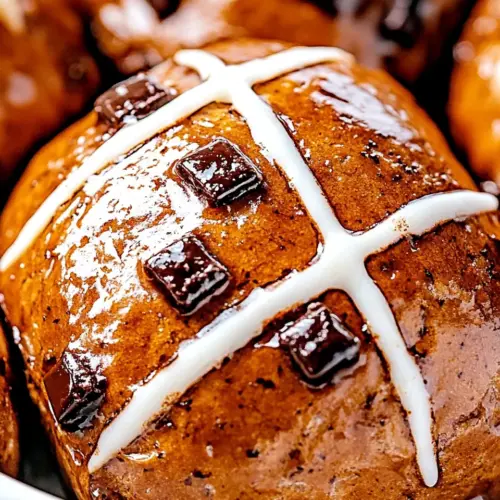
Easy Hot Cross Buns
Easy Hot Cross Buns combine warm cinnamon and all spice with pockets of melty semi sweet chocolate chips for an irresistible, easy to make treat. Tender, slightly enriched dough yields golden tops and a glossy apricot glaze, perfect for brunch or gifting. Follow straightforward steps for a bakery style finish, and youll have a crowd pleasing batch in under an hour and a half.
Equipment
- Large Bowl
- Wooden Spoon
- Baking Sheet
- Parchment Paper
- Microwave-safe Bowl
- Ziplock bag
- Pastry Brush
Ingredients
- 3 1/2 cups bread flour or all purpose or plain Measure precisely to provide the primary structure and gluten network for the dough, allowing the buns to rise and hold shape; choose bread flour for chewier texture or all-purpose for a softer crumb. Sift if lumpy and mix thoroughly with dry ingredients to ensure even hydration and consistent dough development.
- 1 tablespoon instant yeast or rapid rise yeast, quick-rise yeast Activate quickly to leaven the dough, producing carbon dioxide that makes the buns light and airy; instant or rapid-rise varieties mix directly with dry ingredients for convenience. Use the specified amount to balance fermentation speed and flavor without overproofing, and store unused yeast in a cool, dry place.
- 1/2 cup sugar caster or superfine sugar preferred Sweeten and tenderize the dough while feeding the yeast for fermentation, contributing to crust color and overall flavor; superfine or caster sugar dissolves more readily for even sweetness. Adjust slightly only if dietary needs require, since sugar also affects yeast activity and browning during baking.
- 1/2 teaspoons salt Season subtly to enhance overall flavor balance and strengthen gluten slightly, preventing blandness in the final buns. Dissolve into the dry mix so that salt distributes evenly and does not contact yeast directly, which can inhibit fermentation if added in excess.
- 2 teaspoons ground cinnamon Infuse warm aromatic spice throughout the dough to provide the classic hot cross bun flavor; cinnamon pairs well with dried fruit or chocolate additions. Mix thoroughly with the other spices to ensure consistent distribution in every bun.
- 1 teaspoon all spice Add depth and warmth to the spice profile, complementing cinnamon with a slightly peppery, clove-like note that enhances complexity. Use in small amounts to avoid overpowering the dough, and blend into the dry spices for even flavor.
- 1 cup milk warm, temperature at 110°F (45°C) Provide lukewarm liquid to hydrate the dough, activate the yeast, and dissolve sugar; maintain about 110°F (45°C) to ensure yeast viability without killing it. Warm milk also contributes richness and a tender crumb through its fats and proteins, so measure temperature carefully.
- 1/4 cup butter melted Enrich the dough with fat for tenderness, moisture, and richer flavor while helping crust color and softness; melted butter mixes easily into warm liquids. Cool slightly before adding to avoid shocking or killing yeast, and incorporate evenly for consistent texture.
- 1 large egg at room temperature Bind and enrich the dough while contributing to structure, moisture, and a richer crumb; room-temperature eggs incorporate more uniformly than cold eggs. Beat lightly before adding to ensure even distribution and to help with browning and a tender interior.
- 2 cups semi sweet chocolate chips mini or regular Provide sweet, chocolatey pockets throughout the buns for texture and flavor contrast, with mini chips distributing more evenly than regular chips. Fold in gently during shaping to avoid crushing the chips and to keep them evenly dispersed in each bun.
- 2 tablespoons apricot jam Glaze finished buns with a glossy, slightly sweet coating that enhances appearance and adds a hint of fruitiness; apricot jam also helps preserve softness. Warm and strain the jam if necessary to remove lumps, then brush lightly over hot buns for best shine.
- 1 tablespoon hot water Thin the jam to a brushable consistency and loosen any preserves for glazing, using hot water to dissolve and smooth the apricot jam. Mix thoroughly until uniform and apply immediately for an even, shiny finish that sets as it cools.
Instructions
- Sift the flour into a large bowl. Add the yeast, sugar, salt and spices and mix well to combine.: You should notice the dry mix smelling faintly of cinnamon and all spice , which signals the spices are evenly distributed and will flavor the dough consistently. Mixing first prevents clumps of yeast or salt touching wet ingredients directly, which can inhibit yeast action. A common mistake is not sifting, which can lead to uneven pockets of spices or yeast; if you see clumps, break them up with your fingers before adding liquids. The texture should be powdery and uniform, not patchy.
- Make a well in the centre and pour in the milk and butter. Stir the liquid into each other, then add in the egg. Mix with a wooden spoon then bring the dough together with your hands, pressing into it until it forms a sticky ball. (If the dough is too dry add a little water in tablespoon increments (up to 1/2 cup if needed) until the dough is just sticky to touch.): At this stage you will feel the transformation from dry to tacky, the bowl warming slightly as fats and proteins combine. The dough should be cohesive but still a little sticky, which means it will be soft and tender after baking. If it feels dry or crumbly, add water in tiny tablespoon increments, up to 1/2 cup; adding too much liquid at once is a common error and makes the dough overly slack. The aroma will shift as the egg and butter integrate, becoming richer and more fragrant.
- Transfer dough onto a lightly floured surface and knead for 5-10 minutes until it becomes smooth and springy.: While kneading, listen for the soft scrape of dough against your surface and watch it change from shaggy to elastic. Your hands will pick up a faint sheen from the butter. Proper gluten development gives the dough a smooth surface and a bounce when pressed, which ensures a good crumb structure. Over kneading is rare by hand but can make the dough feel tight, while under kneading leaves it sticky and fragile; aim for a satiny texture that springs back when poked.
- Transfer dough back into the bowl and cover with plastic wrap (or a clean, damp tea towel). Leave in a warm place to rise until doubled in size (about 1 hour depending on how warm the room is).: As the dough proofs, you will notice it growing and releasing a yeasty, slightly sweet scent. This rise creates air pockets for a light interior. If the room is cold, the rise can take longer, so patience is key. A common mistake is letting it overproof until it collapses, which causes dense buns, so check visually for about double volume rather than relying solely on time.
- Lightly grease a large baking sheet or line with parchment paper. Set aside.: Preparing the tray ahead of shaping prevents delays that can deflate the dough. You should feel the smoothness of parchment under your palms and appreciate that the buns will transfer with minimal sticking. If you skip lining, buns may stick and tear when removed, so taking a minute now avoids frustration later.
- Punch down dough and transfer onto lightly floured surface. Sprinkle with 3/4 of the chocolate chips and knead the dough for 2-3 minutes.: The act of punching down redistributes gases and evens the crumb; you ll hear a soft sigh as trapped air escapes. As you knead in the chocolate chips , they become embedded and form pockets of melted chocolate in the final bake. Be gentle, because aggressive handling can break up air pockets too much; if chips clump, gently fold rather than forcefully knead.
- Divide dough into 12 or 15 even portions (depending on how many buns you need). Roll each piece into round smooth balls and arrange on baking sheet, leaving space between each bun to allow them to rise. Press remaining chocolate chips on top of each bun.: Rolling creates surface tension that helps buns rise tall and even, which you can observe as a smooth sheen on each ball. Pressing a few chips on top gives a pretty finish and guarantees some chips on the crust. A frequent misstep is making uneven portions, which results in inconsistent baking; use a scale or careful eyeballing to keep sizes uniform.
- Cover with plastic wrap (or damp tea towel) and place in a warm place once again to prove for 20-30 mins, until doubled and just touching. Preheat oven to 400°F (200°C).: During this final proof you will see buns swell and edges begin to soften; they should be puffy and just touching. Preheating the oven ensures a strong initial oven spring, producing a lighter bun. If you skip preheating, the buns may bake unevenly and remain pale. Use visual cues, not just time, to judge readiness.
- When oven is hot, bake buns for 20 minutes until they are golden brown and sound hollow inside when tapped.: As they bake, the kitchen will fill with a toasty aroma and the tops will turn an even golden brown. Tapping the base should produce a hollow sound, signaling they are cooked through. A common error is underbaking; if the center feels soft, give them a few more minutes while watching the color to prevent overbrowning. Proper bake time yields a crisp exterior and soft interior.
- Melt the remaining chocolate in the microwave in 30 second increments until melted. Transfer chocolate to a ziplock bag and snip a small hole in a bottom corner (the larger the hole the wider the crosses will be).: Melted chocolate should be glossy and smooth, without grainy bits, indicating it s been heated gently. Using a bag lets you pipe neat crosses, and adjusting the hole size changes line thickness. Overheating chocolate is a common problem, which causes it to seize; if this happens, stir in a small amount of warm oil or discard and remelt carefully at lower power.
- Allow buns to cool slightly and pipe crosses onto your buns. Allow them to set before glazing.: Cooling a bit prevents the piping from sliding off and keeps the crosses defined rather than melting into the crust. You ll see the chocolate hold shape as it firms, giving a classic cross look. Piping while buns are too hot will smear the design, so wait until they are warm but not piping hot.
- Mix together the jam and warm water to combine, and brush the glaze evenly over each bun using a pastry brush.: Brushing the apricot jam glaze adds shine and a subtle fruit note, and the warmth helps it spread evenly over the surface. The finished buns should glisten and smell slightly fruity, which lifts the spice. If your glaze is too thin it won t hold, if too thick it will be sticky, so adjust with tiny water amounts for the right gloss.
Notes
- Choose your flour wisely, bread flour gives more structure and chew while all purpose yields a softer crumb; pick based on your texture preference and the result will match your expectation.
- Prefer quick rise yeast, if you want a faster turnaround, use instant or rapid rise yeast as recommended, and youll still get a good lift without extra fuss.
- Keep milk warm, around 110°F, to activate yeast effectively; too hot will kill yeast and too cool will slow the rise significantly.
- Knead to feel, aim for a smooth, springy dough rather than strict timing, as humidity and flour type change how long kneading needs to be.
- Distribute mix ins gently, fold in chocolate chips with care to avoid crushing air pockets and creating uneven density in buns.
- Glaze for shine, warm the apricot jam and strain if needed for a clear, glossy finish that enhances presentation and flavor.
- Adjust proofing by environment, if your kitchen is cool, place the bowl near a warm oven or on top of a warm appliance to encourage consistent rising.