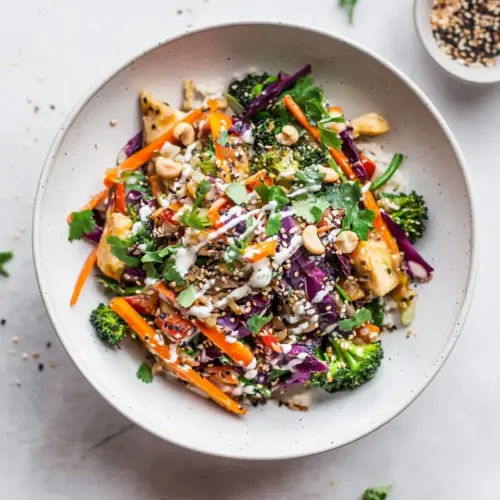
Easy Healthy Vegetarian Stir Fry With Cashew Cream Sauce
Easy Healthy Vegetarian Stir Fry With Cashew Cream Sauce is a creamy, colorful, and easy weeknight dinner that pairs tender brown rice vermicelli with crunchy vegetables and a velvety cashew coconut sauce, brightened by crushed pineapple and honey. This vegetarian stir fry is both satisfying and light, perfect for spring meals and a persuasive reason to make it tonight.
Equipment
- Oven
- Baking Sheet
- Parchment Paper
- Food Processor
- Large Bowl
- Large Skillet or Wok
Ingredients
- 1/2 cup cashews Soak and blend to form a creamy base that adds rich, nutty body and healthy fats to the sauce; use softened cashews for a smooth, dairy-free texture and mild flavor that carries spices well.
- 5 -7 tablespoons light coconut milk Add gradually to thin the cashew cream and adjust consistency; use light coconut milk for a subtle tropical sweetness and silky mouthfeel without excess richness.
- Pinch of salt Season sparingly to enhance overall flavors and balance sweetness; a small pinch of salt helps amplify aromatics and brings out the natural taste of vegetables and sauce.
- 2 ounces brown rice vermicelli Cook briefly to provide tender, delicate noodles that absorb sauce flavors; brown rice vermicelli offers a gluten-free option with a light, springy texture ideal for stir-fries.
- 1 tablespoon coconut oil Sauté aromatics and vegetables to impart a gentle coconut aroma and slight richness; coconut oil withstands higher heat and complements the dish’s tropical elements.
- 1 cup carrot sliced, about 2 small carrots Slice uniformly to ensure even cooking and pleasant bite; carrots contribute natural sweetness, color, and crunch while supplying vitamin A and fiber.
- 1 tsp garlic minced Sauté briefly to release savory depth and aromatic warmth; minced garlic provides pungent, slightly sweet notes that deepen the sauce and meld with other flavors.
- 2 tsp fresh ginger minced Sauté quickly to add bright, zesty heat and aromatic complexity; fresh minced ginger offers a sharp, peppery lift that balances sweetness and complements garlic.
- 1 cup snap peas Stir-fry until crisp-tender to preserve fresh snap and vibrant color; snap peas bring a sweet, green crunch and boost texture contrast and nutrient content.
- 1 cup red cabbage roughly chopped Cook briefly to retain crispness and color while adding mild cabbage sweetness; roughly chopped red cabbage contributes crunch, antioxidants, and a vivid hue to the dish.
- 1 tablespoon + 1 teaspoon honey Drizzle into the sauce and stir to introduce balanced sweetness and depth; combining a tablespoon plus a teaspoon of honey brightens flavors and helps glaze the vegetables.
- Pinch of salt Enhance seasoning at multiple stages to fine-tune taste balance; an additional pinch of salt ensures the final dish reaches optimal savory contrast against sweet elements.
- 2/3 cup crushed pineapple Fold in or warm gently to contribute juicy sweetness and tropical acidity; crushed pineapple adds bright, tangy notes and moisture that pair well with coconut and cashew cream.
- Cashews optional, for garnish Toast or scatter on top for extra crunch and visual appeal; optional cashews for garnish reinforce the sauce’s nutty profile and provide a pleasant textural contrast.
- Cilantro for garnish Sprinkle fresh leaves over the finished dish to add herbal brightness and a pop of color; cilantro for garnish introduces citrusy, slightly peppery notes that lift the flavors.
- Sriracha optional, for garnish Drizzle sparingly for heat and visual contrast if desired; sriracha optional for garnish brings vinegary spice and vibrant color to customize the dish’s spiciness.
Instructions
- Preheat oven to 400°F degrees. Line a small baking sheet with parchment paper.: You will notice a faint warm scent of parchment as you prepare the tray, which sets the stage for even toasting. This step ensures the cashews brown without sticking, and using parchment reduces cleanup. A common mistake is skipping the lining, which can cause uneven toasting and more washing later.
- Spread the cashews on the baking sheet. Toast in the oven until golden brown, about 10 minutes. Set aside to cool to room temp, roughly 30 minutes.: As the cashews toast you will hear a faint crackle and smell a deepening nutty aroma, signals they are developing flavor. Watch closely after 8 minutes so they do not burn, rotating the pan if necessary for even color. Letting them cool prevents them from steaming when soaked, which would hinder the creamy texture you want.
- After the cashews have cooled, place them in a medium bowl and cover them with water. Cover and refrigerate for 8 hours.: Soaking transforms the toasted cashews from firm to tender, which is crucial for achieving an ultra smooth sauce. You may notice the water becomes slightly cloudy, which is normal, and it indicates the nuts are rehydrating. Skipping adequate soak time is a frequent error that leaves grit in the blended cream.
- After the cashews have soaked for 8 hours, drain the water and place them in a small food processor. Add the coconut milk to desired consistency and a pinch of salt. Blend until they form a smooth, creamy sauce, stopping to scrape down the sides as necessary. Cover and refrigerate until ready to use.: The blend should transform into a glossy, velvety sauce that clings to the spoon. Start with less coconut milk for a thicker cream and add more for a pourable sauce. If you notice a grainy texture, blend longer and scrape the bowl, as uneven blending is a common issue you can easily fix.
- Prepare the noodles according to the package instructions. This typically involves placing the noodles in a large bowl, covering them with boiling water, and letting them stand 5-10 minutes. Once prepared, set aside.: The noodles will soften and release a delicate fragrance when hydrated correctly, with a tender, slightly chewy bite that pairs well with the sauce. Drain them promptly to avoid mushiness, and toss with a little oil if you plan to wait, because clumping is a frequent annoyance.
- In a large skillet or wok, melt the coconut oil over medium heat. Add the carrots and toss to coat with oil. Cover the skillet and cook, stirring frequently so that the carrots don't burn, until they begin to become tender, about 5-7 minutes.: You will hear a gentle sizzle as the coconut oil heats and the carrots start to release sweetness. Stirring helps develop slight caramelization, which deepens flavor, while covering speeds gentle steaming. Avoid high heat here because it can scorch the carrots and leave an acrid taste instead of the desired sweet notes.
- Add the garlic, ginger, snap peas, and cabbage. Cook 2-3 minutes, until the veggies become tender. Add the honey and a pinch of salt. Cook until the liquid has thickened, about 1-2 minutes.: Once the aromatics hit the pan the kitchen fills with warm, spicy scents from the garlic and ginger , and the snap peas keep a lively snap. The honey helps the vegetables glaze, creating glossy highlights on the surface. Stir continuously to prevent the garlic from burning, which would add bitterness to the whole dish.
- Drain the noodles. Add the noodles and the pineapple to the skillet. Add the sauce a little at a time until you reach your desired consistency, stirring to make sure everything is well combined. Season to taste with salt.: The pan will emit a bright, fruity aroma as the crushed pineapple heats and releases juices that mingle with the glaze. Adding the cashew cream gradually lets you control thickness, ensuring the noodles are coated but not soupy. A common slip is adding too much sauce at once, which can drown the vegetables and dilute the contrast you want.
- Divide the stir-fry between two plates. Garnish with additional cashews, cilantro, and a drizzle of sriracha, if desired. Serve immediately.: The final plate offers a chorus of textures, with crunchy cashews and tender noodles bathed in silky cream. The cilantro perfume on top cuts through the richness and the optional sriracha adds a sharp finish. Serve it right away, because standing can soften the crunch and flatten the lively contrasts you worked to create.
Notes
- Boost crunch add a handful of roasted or raw chopped cashews just before serving to emphasize contrast between silky sauce and fresh vegetables.
- Increase heat stir additional sriracha into the sauce or serve more at the table so each guest can dial the spice to taste without overpowering the dish.
- Thicker sauce blend less coconut milk with the soaked cashews for a custard like cream that clings more tightly to the noodles and vegetables.
- Lower sweetness reduce the amount of honey and crushed pineapple if you prefer a more savory profile, tasting as you go to keep balance.
- Make ahead prepare the cashew cream up to three days in advance and store it refrigerated, which saves time on busy evenings while preserving flavor.