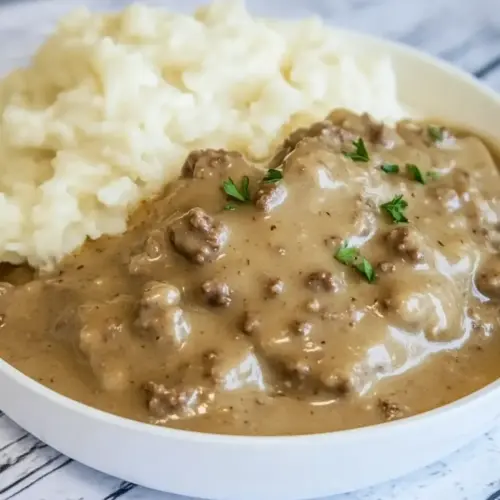
Easy Hamburger Gravy Recipe
Easy Hamburger Gravy Recipe is a creamy, savory, and easy weeknight dinner that combines browned ground beef with a silky milk based gravy. Rich with umami from beef bouillon and Worcestershire sauce, this comforting stovetop dish comes together fast and pairs perfectly with mashed potatoes or noodles, making it a go to choice when you want a hearty, crowd pleasing meal.
Equipment
- nonstick skillet
- Wooden Spoon
Ingredients
- 1 pound lean ground beef Brown thoroughly to develop deep flavor and provide the savory base for the gravy; break into small pieces while cooking and render some fat to help form the sauce. Season as it cooks and ensure it reaches a safe internal temperature before adding other components. Use lean ground beef to minimize excess grease while retaining meaty richness.
- 1/2 medium onion, diced Sauté gently until translucent to add sweetness and aromatic depth to the gravy; dice finely so it melts into the sauce and distributes flavor evenly. Cook with the beef early so the onion can caramelize slightly and contribute savory complexity without becoming raw. Adjust cooking time to reach tender, flavorful pieces.
- 1/2 teaspoon garlic powder Season lightly to add a concentrated garlic note without moisture or texture; sprinkle in with dried spices to layer flavor. Dissolve into the sauce as it simmers to provide background savoriness that complements the fresh aromatics. Use measured amounts to avoid overpowering the dish.
- 1/2 teaspoon onion powder Enhance savory umami with a dry onion flavor that supports the diced onion and deepens overall profile; sprinkle during cooking to incorporate evenly. Provide steady background flavor that melds into the gravy and helps emulate slow-cooked depth. Keep quantity modest to prevent sharpness.
- 1/4 teaspoon Italian seasoning Add a restrained herbaceous blend to introduce subtle Mediterranean notes and complexity; crumble if needed and stir in while cooking. Complement beef and onion flavors without dominating, contributing a gentle aromatic lift to the gravy. Use sparingly to maintain balance.
- 1 tablespoon Worcestershire sauce Introduce a tangy, savory boost that deepens meaty flavor and brightens the sauce; stir in near the start of simmering to meld with other seasonings. Provide umami and slight acidity that enhance overall richness and round out the gravy's profile. Adjust slightly for personal taste.
- 2 teaspoons beef bouillon paste Concentrate beef flavor and add a salty, savory backbone to the gravy; dissolve thoroughly into liquids to distribute richness evenly. Control saltiness by measuring carefully, since bouillon paste can be potent. Complement the ground beef while amplifying depth.
- 1 tablespoon butter Incorporate richness and smooth mouthfeel while helping to cook the flour for a roux; melt gently before adding flour to avoid burning. Contribute buttery flavor that rounds out the sauce and aids in achieving a glossy consistency. Use whole butter for best texture.
- 3 tablespoons all-purpose flour Create a roux to thicken the sauce and provide a nutty base flavor; cook with butter until bubbly and lightly golden to eliminate raw flour taste. Whisk continuously to ensure a smooth paste before gradually adding milk, which prevents lumps and yields silky gravy. Adjust cooking time for desired color and flavor.
- 2 to 2 1/2 cups whole milk Thin or thicken the gravy to desired consistency and supply creamy richness; add gradually while whisking to prevent lumps and achieve smooth texture. Use within the recommended range to control thickness based on preference or serving needs, and simmer gently to meld flavors. Choose whole milk for best body and flavor.
- salt and pepper Season to taste and balance flavors by adding salt and freshly ground pepper; use sparingly at first since bouillon paste and Worcestershire add sodium. Adjust incrementally during cooking and after simmering to achieve optimal seasoning without over-salting. Pepper adds mild heat and aromatic lift.
- chopped fresh parsley, optional Garnish sparingly to add fresh color and a bright, herbaceous finish; chop finely and sprinkle just before serving to preserve freshness. Provide a mild grassy note that contrasts the rich, savory gravy and enhances visual appeal. Use optionality to suit presentation preferences.
Instructions
- Add ground beef to a large nonstick skillet over medium-high heat. Break it apart with a wooden spoon and then add the onion.: As soon as the ground beef hits the hot skillet you should hear an immediate sizzle, a satisfying sound that tells you flavor is being locked in. The beef will start to brown along the edges and begin releasing juices, which are essential for the gravy base. The aroma will shift from raw meat to a toasty, meaty smell within a few minutes, and the diced onion will start to soften and turn translucent, adding a sweet undertone. Use the wooden spoon to break the meat into small, even pieces so it cooks uniformly and those tiny browned bits distribute through the sauce. If the pan is overcrowded, the beef will steam instead of brown, so avoid packing too much at once which would lead to a weaker flavor. A common mistake here is moving the meat too often; let it sit long enough to develop color. If you see excess fat pooling and you used very fatty meat, spoon some off to keep the gravy from becoming greasy.
- When beef is no longer pink, add the garlic powder, onion powder, Italian seasoning, Worcestershire sauce, beef bouillon, butter and flour. Stir and cook for 1 minute.: At this point the meat should be mostly cooked through and you will notice the skillet filled with savory steam. Adding the dry seasonings and the Worcestershire sauce quickly builds layered flavor, while the butter and flour start the roux that thickens the gravy. Stir constantly so the flour absorbs fat and toasts lightly, losing that raw flour bite. The smell will shift to a richer, toasted aroma as the flour cooks; this small toasting step is essential because uncooked flour can leave a pasty texture. Watch carefully, because flour can darken quickly; one minute is usually enough to develop the right nutty scent. A common error is undercooking the flour which leaves a chalky mouthfeel, so don’t rush this stage.
- Gradually stir in 2 cups of milk.: When you begin to add the whole milk , pour slowly and whisk or stir steadily so the roux blends smoothly without lumps. The mixture will transition from a paste to a glossy liquid, and you should notice it smoothing out as the milk incorporates. The steam will carry a creamy aroma and the sauce will begin to coat the back of a spoon, an important visual cue that you are on track. Adding milk too quickly often causes clumping, so patience here ensures a silky gravy. If lumps form, take the edge of a spoon and press them against the pan to break them up, or add a splash more milk and whisk vigorously. Resist the urge to crank up the heat, because a gentle simmer helps the sauce even out.
- Simmer for about 5 minutes. Season to taste with salt and pepper. If too thick, add up to 1/2 cup of additional milk.: As the gravy simmers, it will thicken and become velvety. You should see gentle bubbles across the surface and notice the sauce pulling slightly away from the pan edges, signaling the desired consistency. The simmer time allows the flavors from the bouillon and Worcestershire sauce to bloom into the dairy, creating a cohesive sauce rather than separate flavors. Taste it as it cooks, because this is when the seasoning settles and you can adjust. A common mistake is letting the simmer become a boil, which can break the texture and make the milk curdle; keep the heat moderate and stir occasionally so nothing sticks. If the gravy becomes too thick, add up to 1/2 cup additional milk to loosen it while maintaining a creamy mouthfeel.
- Season to taste with salt and pepper. If too thick, add up to 1/2 cup of additional milk: Final seasoning transforms the gravy from good to great. Because the beef bouillon paste and Worcestershire sauce include salt, add salt slowly and taste between additions so it does not become over salted. Freshly cracked pepper will add a bright bite that cuts through the creaminess. If you prefer a thinner pour for drizzling over mashed potatoes or rice, stir in more milk until you reach the desired texture, noting that it will relax slightly as it cools. A typical pitfall here is over-salting, so always err on the side of less and adjust at the table if needed. Optionally finish with chopped fresh parsley for color and a fresh note.
Notes
- Make it milder by reducing the Italian seasoning and using a touch less Worcestershire sauce, which softens the savory edge for kids.
- Thinner gravy is easy, simply stir in extra warm milk one tablespoon at a time until you reach the desired pourable consistency.
- More umami can be achieved by increasing the beef bouillon paste slightly, but add small amounts and taste to avoid over salting.
- Add fresh herbs at the end, like a handful of chopped fresh parsley, to brighten the sauce and add color right before serving.
- Make ahead by cooling the gravy, storing it in the fridge, and gently reheating over low heat with a splash of milk to restore creaminess.