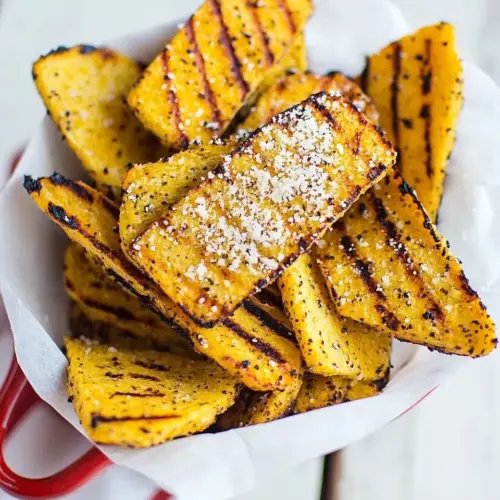
Easy Grilled Parmesan Polenta Chips
Easy Grilled Parmesan Polenta Chips are crispy on the outside and tender inside, offering a savory, cheesy bite perfect for easy weeknight dinners or casual gatherings. These grilled rounds deliver toasty parmesan flavor and a crunchy finish that pairs beautifully with bold dips, making them an irresistible snack to make again and again.
Equipment
- Grill
- Grill pan
- Tongs
- Brush
Ingredients
- 2 ounce tubes polenta removed from plastic, cut into 1/4-1/2-inch slices, 8 Sliced into thin rounds, provides the firm, corn-based base for the chips and crisps up nicely on the grill; assembling uniform 1/4–1/2-inch pieces ensures even browning and a tender interior contrasted with a crisp exterior.
- 2 tablespoons olive oil Drizzled over the polenta before grilling, helps promote browning and prevents sticking while adding a subtle fruity richness; using just enough oil yields a golden crust without making the chips greasy.
- 6 ounces parmesan cheese grated (swap with nutritional yeast for a vegan version) Grated finely and sprinkled before or after grilling, creates a savory, salty crust that intensifies flavor and encourages caramelization; substituting nutritional yeast will provide a similar cheesy, umami note for a vegan variation.
- salt + pepper for sprinkling Sprinkled lightly to taste, seasons the polenta chips and balances the richness of oil and cheese while enhancing overall flavor; applying sparingly lets the natural corn sweetness remain noticeable.
- gorgonzola or blue cheese for serving (optional) Served on the side as an optional accompaniment, adds a tangy, creamy contrast for dipping or spreading and elevates the chips into a more indulgent appetizer; offering it optional keeps the recipe flexible for different palates.
Instructions
- Heat a grill or grill pan to medium-high heat and lightly rub your grill with olive oil.: You will immediately notice the faint, metallic hiss as the metal heats, and when the grill reaches the correct temperature it gives off a dry warmth that crisps surfaces quickly. Heating to medium high ensures the polenta gets nice sear marks without needing excessive time that would dry the interior. Rubbing the grill with olive oil creates a thin nonstick layer, preventing sticking and promoting even browning. If your grill is too cool the polenta will warm slowly and stick, and if it is too hot the outside can char before the center warms. A common mistake is skipping the oil which leads to tearing when you flip the pieces.
- Brush both sides of the polenta cakes with the olive oil. Sprinkle both sides with parmesan, salt and pepper.: As you brush each round, the oil will glisten on the surface and help the parmesan adhere. The oil also helps create a toasty, golden crust by transmitting heat and encouraging the Maillard reaction. Work quickly so the oil does not pool, and apply a thin, even coat for consistent results. Smell the oil warm slightly as it meets the heated surface and expect a subtle fruity aroma. Overbrushing can cause flare ups and greasy patches, so avoid excess.
- Lay the polenta rounds in one layer on the grill, and grill for 5 minutes on each side or until both sides are golden and crunchy and have grill marks.: When you dust the grated parmesan onto the oiled rounds, the cheese clings and forms a textured layer that browns beautifully on the grill. The salt and pepper season through to the center as the pieces warm, balancing the corn flavor. Press the cheese lightly so it sticks, and take note of the grainy look as it readies to melt then toast. If cheese is too loosely applied it may fall through grill grates or burn quickly, producing a bitter taste.
- Remove the cakes from the grill and place on a large plate to cool. Serve warm or at room temperature. I love serving these with blue cheese, salsa or guacamole or simply snacking on them plain!: As the rounds meet the hot metal you will hear a soft sizzle that signals exterior moisture evaporating and the crust forming. After the first few minutes lift a corner to check for a deep golden color and clear grill marks, then flip carefully with tongs to avoid splintering. The aroma will shift to toasted cheese and warm corn, and the surface should feel firmer when touched. If you try to flip too early they will stick and tear, and if you leave them too long the cheese may blacken. Aim for evenly golden surfaces that are crunchy to the touch.
- Remove the cakes from the grill and place on a large plate to cool: Pull the chips off when they are uniformly golden and give them a moment to set; the exterior crisps further as they rest, while the center retains creamy texture. Arrange them on a plate so air circulates and they don’t steam each other. The warm, nutty perfume of toasted parmesan will be most pronounced right away, and cooling slightly makes them easier to handle. A pitfall is stacking them while very hot, which traps steam and softens the crust, so spread them out instead.
- Serve warm or at room temperature: These chips are convivial because they work hot or cooled, and the flavor shifts subtly as they sit, with the cheese note mellowing and the texture holding firm. I often offer small spoons of gorgonzola , salsa, or guacamole for dipping, which adds contrast to the savory crispness. If you refrigerate leftovers, reheat briefly on a grill pan to restore crunch. Do not microwave if you want to keep the crisp texture, as that tends to make them gummy.
Notes
- Choose firm polenta tubes: They hold their shape on the grill and develop a creamy interior while staying intact, which makes flipping simple and reliable.
- Grate your parmesan fresh: Pre grated cheese often contains anti clumping agents and does not toast as cleanly, so freshly grated parmesan yields a better crust and flavor.
- Brush, do not soak: Apply a thin, even coat of olive oil to both sides to promote browning without creating oily patches that can cause flare ups or uneven charring.
- Use a hot but controlled grill: Medium high heat gives clear grill marks and crunch in about five minutes per side, avoid extremes that burn or undercook the rounds.
- Offer bold condiments separately: Serve small portions of gorgonzola, salsa, or other accompaniments so guests can choose, preserving the chips' texture and letting flavors contrast.
- Reheat gently for leftovers: Warm briefly on a grill pan to restore crispness, instead of using the microwave which makes them soft.