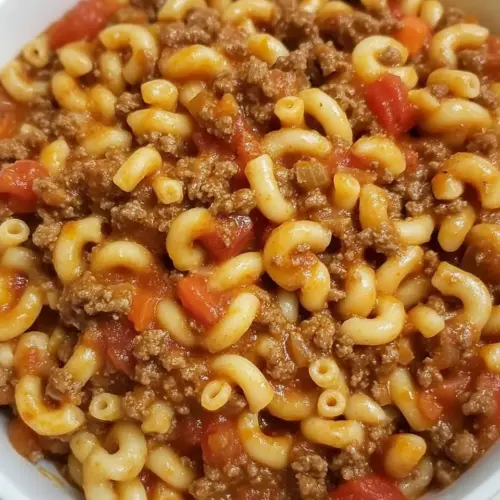
Easy Goulash Recipe
Easy Goulash Recipe is a hearty, saucy skillet meal with rich ground beef, tangy tomato sauce, and tender macaroni. This easy weeknight dinner is savory, comforting, and built for busy nights when you need a satisfying family favorite. Make it ahead or freeze the sauce for quick reheats, and top with cheddar cheese for melty goodness.
Equipment
- Large Skillet
- Wooden Spoon
- Can opener
- Colander
Ingredients
- 2 pounds ground beef, 80 percent lean/20 percent fat Brown thoroughly to develop savory flavor and render fat; use high heat to create browned bits that enrich the sauce. Break into small pieces while cooking to ensure even texture throughout the goulash.
- 3 teaspoons minced garlic Mince finely and sauté briefly to release pungent, aromatic oils that deepen the overall flavor profile. Add near the beginning of cooking to prevent burning while allowing mellowing into the sauce.
- 3 cups water, or beef broth Simmer to create a flavorful base and adjust consistency; use beef broth for extra richness or water to keep it neutral. Add gradually and taste as you cook to reach the desired sauce thickness.
- 2 (15-ounce) cans tomato sauce Pour in to provide a smooth, concentrated tomato base that gives body and tang to the dish. Stir well to combine and simmer to meld flavors into the meat and pasta.
- 2 (14.5-ounce) cans diced tomatoes Add for chunks of tomato texture and bright acidity that contrast the sauce’s smoothness. Drain if preferred for a thicker sauce, or include juices for extra liquid and flavor.
- 3 tablespoons soy sauce Stir in to contribute umami depth and a subtle salty-sweet background that enhances the meatiness. Add gradually and adjust to taste to avoid overpowering other seasonings.
- 2 tablespoons Italian seasoning Sprinkle to introduce a blend of Mediterranean herbs that add savory, aromatic notes and complexity. Crush slightly between fingers before adding to release essential oils.
- 1 teaspoon seasoned salt Season generously to bring balanced savory and slightly spicy undertones; it helps round out the overall taste. Use sparingly at first and adjust after the sauce has simmered to avoid oversalting.
- 3 bay leaves Tuck in whole to impart warm, slightly floral aroma during simmering and then remove before serving. Keep intact to prevent overpowering textures while still releasing subtle bitterness.
- 2 cups elbow macaroni, or penne or shell pasta Boil until tender to provide the main starchy component that makes the dish hearty and filling. Choose elbow macaroni, penne, or shells based on preferred bite and stir into sauce so pasta absorbs flavor.
- 1 cup shredded cheddar cheese, optional topping Sprinkle on top as an optional finishing touch to introduce creamy, sharp richness and a molten, melty layer. Add just before serving and allow to melt slightly for a comforting finish.
Instructions
- In a large skillet over medium-high heat, sauté ground beef until cooked, 8-10 minutes, then drain off excess fat.: The kitchen fills with a satisfying savory aroma as the ground beef sizzles, and you should see it turn from pink to a rich brown with small crisped edges. Browning produces caramelized fond, which contributes depth to the final sauce, so resist stirring constantly and allow the meat to develop color. A common mistake is overcrowding the pan, which causes the meat to steam instead of brown, so use a wide skillet or cook in batches. After the beef is browned, draining off excess fat prevents the final dish from feeling greasy, and it helps the sauce cling better to the pasta.
- Add garlic and sauté for about 2-3 minutes. Add water, tomato sauce, diced tomatoes, soy sauce, Italian seasoning, seasoned salt and bay leaves. Stir, cover and cook for 15-20 minutes.: A quick burst of garlic sizzling in the hot pan releases its sweet, pungent aroma that signals flavor building, and you will notice a fragrant lift almost immediately. Keep the heat at medium so the garlic softens without charring, stirring frequently to prevent blackened bits which taste bitter. This brief sauté mellows the raw sharpness and allows the garlic to integrate with the beef. If you smell a burnt scent, reduce the heat and add a splash of the liquid to calm the pan and salvage the base.
- Add macaroni to the skillet, stir well and cover. Simmer for about 15 minutes. Turn off the heat, remove the bay leaves, and cheese right before serving.: As you add the liquids and seasonings, steam rises and the mixture starts to bubble softly, blending the savory, acidic, and herbaceous elements together. The tomato sauce provides body while the diced tomatoes give textural contrast and fresh tomato bursts. Soy sauce layers in umami to deepen the overall profile, and the Italian seasoning and seasoned salt round out aromatic notes. Nestle in the bay leaves to slowly infuse a subtle floral lift as it simmers. Stir to combine, then cover and let it cook so flavors marry; if the sauce tastes one dimensional, a short simmer will develop complexity. A misstep here is under-simmering, which leaves the sauce thin and lacking depth, so give it enough time to soften the tomatoes and meld the flavors.
- Stir, cover and cook for 15 to 20 minutes: During this gentle simmer, the sauce will thicken slightly and the aromas in your kitchen will intensify, with tangy tomato and savory beef notes becoming more cohesive. You may notice small pockets of bubbling and a reduction in volume as moisture evaporates, concentrating flavors. Stir occasionally to prevent sticking, especially toward the end of the interval, and taste to adjust seasoning for balance. One troubleshooting tip is to keep the heat low enough that it simmers, not roils, because vigorous boiling can break down tomatoes unevenly and make the sauce grainy.
- Add macaroni to the skillet, stir well and cover: When you add the dry macaroni directly to the sauce, you will see the pasta begin to absorb the liquid, and the pot will take on a comforting pasta and tomato scent. Stirring ensures the pieces remain separate and are evenly coated. Covering traps steam so the pasta cooks through in the sauce, allowing it to soak up flavor rather than staying plain. A typical mistake is adding too much pasta for the liquid, which leaves the pasta undercooked, so monitor and add a splash more water or broth if it looks thirsty.
- Simmer for about 15 minutes: As the pasta softens, the texture of the dish transitions from soupy to thick and cohesive, and the sauce clings lovingly to each noodle. You will hear a quiet simmer and see the surface turn glossy, with the pasta swelling as it soaks up sauce. Stir occasionally to prevent sticking to the bottom, and check pasta for doneness a couple minutes before the time is up to avoid mushiness. Overcooking is the most common issue here, so aim for tender but slightly firm, since residual heat will continue to soften the pasta after turning off the heat.
- Turn off the heat, remove the bay leaves, and cheese right before serving: At this final stage the sizzling subsides and the aromas settle into a reassuring homey fragrance. Removing the bay leaves prevents an unpleasant bite and lets the final seasoning profile shine. If you choose the optional shredded cheddar cheese , sprinkling it on immediately before serving creates melty ribbons that add creamy contrast. A common oversight is leaving bay leaves in the pot, so double check before plating, and if the sauce needs a final lift, a quick taste and tiny adjustment of salt or seasoning will finish it beautifully.
Notes
- Brown for depth Browning the ground beef without crowding yields caramelized bits that boost flavor, so use a large skillet or work in batches.
- Control fat Drain excess fat after browning to prevent a greasy mouthfeel, especially important with 80 percent lean meat.
- Watch the garlic Sauté garlic briefly on medium heat to release aroma without burning, which would add bitterness.
- Layer liquids If you have beef broth on hand, use it instead of water for a richer base, but adjust salt after adding soy sauce.
- Simmer gently Keep the sauce at a low simmer so it reduces slowly and flavors concentrate, avoiding a broken or grainy texture.
- Reserve cheese Add shredded cheddar cheese just before serving for the best melt and creaminess, rather than stirring it too early.
- Freeze smart Freeze the sauce without pasta for longer storage, then add freshly cooked noodles when reheating for better texture.