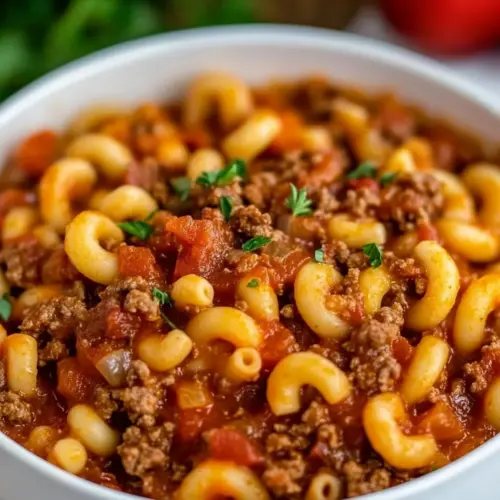
Easy Goulash Recipe
Easy Goulash Recipe is a hearty, creamy and comforting one pot meal with tender macaroni noodles, savory ground beef, and a rich tomato based sauce. This easy weeknight dinner combines pantry staples for a crowd pleasing dish that reheats beautifully, perfect for family meals and busy evenings when you want big flavors with minimal fuss.
Equipment
- Large Pot
- Spoon
- Colander
Ingredients
- 1 tbsp olive oil Sauté briefly to provide a neutral, fruity cooking fat that helps brown other ingredients and prevents sticking while adding subtle richness to the dish.
- 1 cup onion, diced Dice finely and cook until translucent to add sweet, aromatic depth and a soft texture that forms the flavor base for the goulash.
- 1 green bell pepper, diced Chop and soften to contribute a fresh, slightly bitter vegetal note and crunchy texture that balances the richness of the meat and tomatoes.
- 2 lb ground beef, lean Brown thoroughly to develop savory, meaty flavors and provide the primary protein and hearty texture that make the goulash substantial and filling.
- 3 tsp garlic, minced Mince and add during cooking to impart pungent, aromatic warmth and a savory boost that enhances the overall flavor complexity.
- 15 oz can tomato sauce Pour in and simmer to create a smooth, concentrated tomato backbone that binds flavors together and provides saucy body to the dish.
- 15 oz can petite diced tomatoes Stir in with juices to offer bright, acidic tomato chunks and additional texture that lighten the sauce and add variation in each bite.
- 3 cups beef broth Pour and simmer to dilute and meld flavors, supplying a savory liquid base that controls sauce consistency and deepens the beefy taste.
- 3 tbsp Worcestershire Sauce Add for a tangy, umami-rich kick that enhances savory notes and adds complexity with a slightly sweet, fermented flavor profile.
- 2 tsp seasoned salt Season liberally during cooking to introduce a balanced mix of salt and spices that elevates overall taste and complements the meat and tomatoes.
- 2 tbsp Italian Seasoning Sprinkle to infuse the sauce with a fragrant, herby Mediterranean blend that brightens the dish and layers aromatic complexity.
- 3 bay leaves Tuck in whole and simmer to impart subtle herbal bitterness and aromatic depth, then remove before serving to avoid overpowering the sauce.
- 2 cups macaroni noodles, uncooked Stir in uncooked to absorb flavors and liquids, providing tender, chewy pasta that makes the goulash hearty and satisfying once cooked.
- 1 cup cheddar cheese, shredded Top or stir in at the end to add creamy, salty richness and a gooey finish that enhances mouthfeel and ties flavors together.
Instructions
- Add olive oil to large pot over medium-high heat. Add in the onion, bell pepper and ground beef then cook until beef is no longer pink. Drain any excess fat and return pot to stove top. Add in garlic and stir until fragrant (about 30 seconds).: The moment you add olive oil you'll notice a slight shimmer across the pot, signaling it's hot enough to sizzle. Let it heat for a few seconds until it moves fluidly, this helps the onion and bell pepper begin to soften instead of sticking. Listen for a gentle hiss when the vegetables hit the pan, and watch for the edges of the onion to turn translucent, not brown. If your oil smokes, the pan is too hot, so lower the heat; burned oil will impart bitterness to the dish and ruin the aromatic base.
- Pour in the tomato sauce, diced tomatoes, beef broth, Worcestershire sauce, seasoned salt, Italian seasoning, bay leaves and dried macaroni noodles. Stir and bring mixture to a boil. Reduce heat to a light boil and stir occasionally until the pasta is tender, about 20 minutes.: As you add the vegetables and ground beef , you'll hear a lively sizzle and smell a rising meaty aroma. Break the meat apart with a spoon so it browns evenly, creating little browned bits that carry deep flavor into the sauce. Stir so the onion softens and the bell pepper becomes tender, and keep an eye on color changes in the beef . If the meat steams instead of browns, your pan could be overcrowded, which prevents proper caramelization. Remove excess liquid or brown in batches if needed to avoid that pitfall.
- Remove the bay leaves and stir in the cheddar cheese just before serving. Enjoy!: After the ground beef is cooked through, draining helps the sauce maintain a clean texture instead of feeling greasy. Use a heat safe colander or tilt the pot carefully and spoon out fat, then return the pot to medium heat. Once drained, you should hear a quieter simmer rather than a sizzle of fat. Leaving too much fat will make the final sauce slick, while over draining will remove some flavor, so aim for moderate trimming rather than total removal.
- Add in garlic and stir until fragrant about 30 seconds: When you add the garlic , the kitchen will fill with a bright, savory scent almost immediately. Stir constantly and watch closely, because garlic goes from fragrant to bitter quickly if it burns. The brief cook time releases oils that deepen the overall flavor, so keep it moving in the pot. A typical mistake is letting it sit, which causes over browning; keep your spoon active for the whole thirty seconds.
- Pour in the tomato sauce, diced tomatoes, beef broth, Worcestershire sauce, seasoned salt, Italian seasoning, bay leaves and dried macaroni noodles: As you pour in the liquids and seasonings, the aroma evolves into a cozy, tomato forward fragrance. The macaroni noodles will begin to hydrate in the hot liquid and the overall surface will ripple as it heats. Stir thoroughly to distribute the seasonings and to keep the pasta from settling. If you notice the pasta clumping at the bottom, give it a gentle scrape with a spoon to free any stuck pieces. Overcrowding the pot with too many dry noodles at once can prevent even cooking, so ensure the liquid covers them.
- Stir and bring mixture to a boil: Bringing the pot to a boil will raise steam and create rolling bubbles across the surface, which you can visually track to know it's reached high heat. Once boiling, reduce to a light boil or simmer so the pasta cooks through while the flavor melds. Vigorous boiling can break the pasta and cause splatter, so lower the heat as soon as the surface forms steady bubbles. If your sauce splatters too much, partially cover the pot to contain it while keeping some steam escape.
- Reduce heat to a light boil and stir occasionally until the pasta is tender about 20 minutes: During this simmer, you'll want to stir every few minutes to check texture and prevent sticking. The aroma will deepen, and you will see the sauce thicken and cling to the pasta as starch releases. Test a noodle for tenderness; it should be al dente to slightly tender because it will continue to mellow off heat. A common mistake is leaving it unattended, which can lead to uneven cooking or a gummy texture, so mark time and stir gently on schedule.
- Remove the bay leaves: Pulling out the bay leaves cleans the flavor profile while preserving the subtle aromatic lift they provided during simmering. You can fish them out with tongs or a spoon, and you should no longer detect the faint herbal edge once removed. Forgetting them is the main issue here, because biting into a bay leaf is unpleasant; take a moment to ensure they are all gone before the final steps.
- Stir in the cheddar cheese just before serving: When you add the shredded cheddar cheese , you will see it melt into ribbons that thicken the sauce and add a creamy gloss. Stir until it is fully incorporated, producing a smooth finish and a richer mouthfeel. Do this off the heat or on very low heat to prevent the cheese from becoming stringy or separating. Adding it too early or over heating after adding cheese can cause oil to separate, so fold it in gently right before plating.
- Enjoy: The final moment is tasting a spoonful to confirm seasoning, and then serving bowls that steam softly while the cheese still offers a gentle pull. Note the warm tomato aroma, the tender pasta texture, and the balanced savory notes from the ground beef and seasonings. If the dish tastes slightly flat, a small pinch of salt can brighten it, but avoid over salting as canned ingredients can already carry sodium. The biggest mistake at this stage is serving too hot, which can mute flavors and burn mouths, so let it rest for a minute before dishing up.
Notes
- Swap the pasta shape Try small shells or penne to change the texture and how the sauce clings, creating a different mouthfeel while keeping cooking method identical.
- Adjust herb intensity Increase or decrease the Italian Seasoning to shift the herbal profile, remembering that dried herbs concentrate flavor more than fresh ones.
- Control sodium Use low sodium beef broth and taste before adding extra seasoned salt to avoid oversalting when using canned tomatoes.
- Make it chunkier or smoother Use crushed tomatoes instead of diced for a smoother sauce, or keep diced for added texture and bursts of tomato.
- Cheese finish Experiment with mixing cheddar cheese and a milder melting cheese for a creamier finish that still melts well.