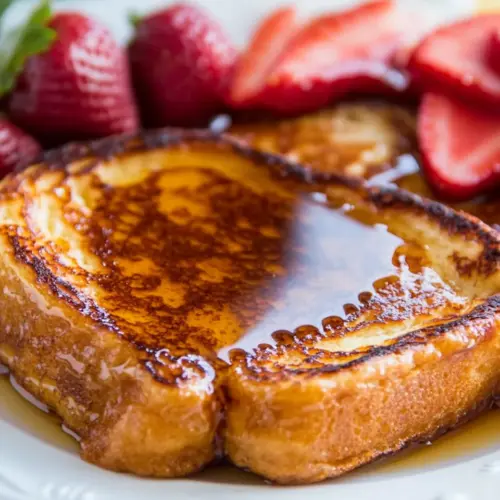
Easy French Toast Recipe
Easy French Toast Recipe delivers a creamy interior and crispy golden exterior using simple pantry staples like eggs, milk, and cinnamon. This comforting, easy to make breakfast is perfect for an easy weeknight breakfast or relaxed weekend brunch, offering rich flavor and a tender, custardy center. Make it to transform ordinary bread into a memorable meal.
Equipment
- Skillet
- Wire Rack
- Baking Sheet
- Medium Bowl
- Casserole Dish
Ingredients
- 6 large eggs Whisk thoroughly to create the egg base that provides structure, richness, and a custardy interior for the soaked bread; contribute moisture and help bind the coating to each slice.
- 2 large egg yolks Fold gently into the egg mixture to increase richness and creaminess, contributing extra yolk fat that deepens flavor and produces a silkier custard texture in the soak.
- 1 cup whole milk Incorporate evenly to thin the egg mixture for better soaking, adding creaminess and a tender mouthfeel while balancing richness for a softer, custardy result.
- 1/4 tsp salt Season lightly to enhance overall flavor and balance sweetness, helping to bring out the vanilla and cinnamon while preventing the custard from tasting flat.
- 2 tsp vanilla extract Flavor intensely to add aromatic sweetness and depth; combine with cinnamon to elevate the classic French toast profile and complement the eggs and milk.
- 1 tsp ground cinnamon Spice subtly to impart warm, fragrant notes that pair with vanilla and honey, enhancing aroma and delivering the characteristic flavor associated with traditional French toast.
- 1 tbsp warm honey Sweeten gently to provide a natural floral honey note and a touch of sweetness that melds with cinnamon and vanilla while helping to caramelize during cooking.
- 1 lb bread such as Challah, Brioche, or Texas Toast, (about 8-10, 3/4”-thick slices) Provide the main body and texture as thick-sliced bread soaks up the custard; choose a rich, sturdy loaf like Challah, Brioche, or Texas Toast for optimal absorption and a tender interior with a crisp exterior.
- 3 tbsp unsalted butter, to saute toasts Melt slowly to brown the soaked slices and create a golden, slightly crisp exterior; use unsalted butter to control seasoning and contribute a rich, buttery finish while sautéing the toasts.
Instructions
- Slice your bread about 3/4" thick, and arrange on a wire rack for 1-2 hours if time permits to dry out the bread slightly. Preheat the oven to 275˚F.: The air drying firms the crumb so the bread soaks up custard without collapsing, giving a tender interior and avoiding sogginess. You will notice the surface becoming less glossy and slightly stiff, which helps it hold shape when dipped. If you are short on time the step is optional, but faster soaking may lead to a softer center, so keep soaking times a bit shorter. A common mistake is slicing too thin which can lead to overcooked, rubbery pieces; aim for that three quarter inch thickness. When you set the oven to 275˚F the low heat keeps finished slices warm without continuing to brown them significantly, which is perfect for staging plates.
- In a medium bowl, whisk together eggs, yolks, milk, salt, vanilla, cinnamon, and warm honey until well blended and honey has dissolved. Pour into a casserole dish that fits 4 pieces of toast at a time, or as many as will fit your skillet at a time.: As you whisk you'll see the custard become glossy and slightly frothy, and the cinnamon will float in fine specks. The dissolved honey should leave no sticky strings, ensuring even sweetness. This smooth texture is essential because it helps the mixture coat the bread uniformly, preventing pockets of egg that can cook too quickly. A typical error is under whisking, which leaves uneven color and spots of undissolved honey; whisk until you have a uniform pale mixture. Use a shallow dish so the bread soaks evenly; deep bowls can trap pockets and cause over soaking at the edges.
- Preheat your skillet over medium-low heat and melt in 2 Tbsp butter.: The skillet should feel warm but not smoking when you add the butter . You want the butter to foam and give off a gentle nutty scent, not brown immediately. This moderate heat allows the surface of the bread to caramelize without burning, creating the desirable golden color. If your pan is too hot, the crust will darken before the interior cooks, resulting in a cold or under set center. A common trap is rushing the heat up to finish faster; take a moment to test with a small scrap of bread first to gauge sizzling intensity.
- Dip 4 pieces of bread into the egg mixture at a time and soak for 30-40 seconds per side depending on the thickness of the bread. Remove bread slices from egg wash letting excess drip back into the dish then place the bread slices into the hot skillet and saute for 3-4 minutes per side until golden brown.: When you dip the bread you should see the custard absorb and darken slightly, and a quick lift should show even coating. As the slices hit the skillet you will hear a steady gentle sizzle, and soon the edges will firm and a golden crust will appear. Flip when the underside releases easily and displays a deep amber color. This step controls the balance between a set interior and crispy exterior. A frequent mistake is soaking too long which yields a heavy, soggy interior; if your slices feel limp, press gently to release excess before cooking. While sauteing, watch for too aggressive browning which means the heat is high, so lower it to avoid burnt spots.
- Transfer to a baking sheet and place in the oven to keep warm at 275˚F. Repeat step 4 with the remaining toast, adding more butter as needed. Once all are sauteed, keep them in the oven for another 10-15 minutes for the custard center to fully set then serve warm with your favorite toppings.: The oven keeps temperature even and allows the custard to finish cooking gently, giving a uniformly set center without extra browning. You will notice the aroma deepen as they rest, and the texture firms up so slices slice cleanly. Add fresh butter in small amounts between batches so the pan maintains that gentle sizzle and avoids sticking, but avoid excess which can make the crust greasy. Avoid stacking slices while hot on the sheet as trapped steam can soften the crust; arrange them in a single layer. The final resting period is crucial for a perfect mouthfeel, because residual heat completes coagulation and produces that classic custardy interior.
Notes
- Choose enriched breads: When I want a rich, tender interior I reach for challah or brioche, because their higher fat content yields a silkier custard and more luxurious mouthfeel.
- Adjust soak time: Thicker slices need longer soaking, but if the bread is fresh reduce soak time to avoid a soggy center; test with one slice first.
- Keep batches warm: Use a 275˚F oven to hold finished slices while you finish the rest, this keeps texture consistent and frees you to cook without rushing.
- Butter management: Wipe the pan between batches if browned bits build up, then add a bit more butter to maintain even browning and prevent sticking.
- Flavor tweaks: Small additions like a touch more cinnamon or a pinch of salt can sharpen flavors, but tweak sparingly so the custard remains balanced.