Easy French Strawberry Cake
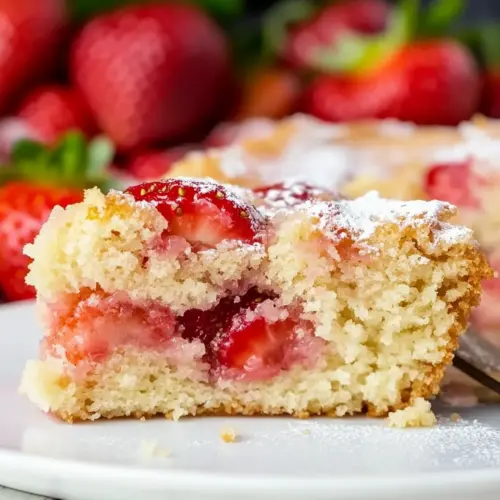
Easy French Strawberry Cake is a tender, slightly custardy berry studded cake that balances creamy plain greek yogurt with sweet roasted strawberries. This easy to make, fruity dessert works for brunch or an easy weeknight treat, offering bright berry flavor and a golden top that makes it irresistible.
Equipment
- Large Mixing Bowl
- Hand Mixer
- Spatula
- 11x7 baking dish
- Measuring Cups
Ingredients
- 1 stick salted butter (room temperature) Softened to room temperature and creamed for lightness, balances sweetness and provides richness and moisture to the cake batter. Encourages tender crumb and adds a subtle savory note that complements the strawberries. Helps create a smooth emulsion with sugar and eggs for even rise.
- 1 1/4 cups sugar (dived) Granulated sugar divided between steps to both sweeten and aerate; creamed with butter to incorporate air and folded later to balance moisture. Adds structure by interacting with eggs and flour while affecting texture and browning. Sprinkled timing controls sweetness intensity and caramelization of the crust.
- 2 large eggs Beaten until just combined to incorporate air and provide structure, binding the batter while contributing to leavening through steam. Contributes richness and a tender crumb while helping to emulsify fats and liquids. Adds volume and stability during baking.
- 1 tsp vanilla extract Added for aromatic flavor, enhancing the cake with warm vanilla notes that complement the strawberries without overpowering. Supports the perception of sweetness and rounds out the overall flavor profile. Small quantity still noticeably improves aroma.
- 1 1/3 cup all purpose flour Measured and sifted into the batter to form the structural base; combines with liquids to create gluten which provides texture and body. Balances with leavening and fat to determine crumb density and chew. Proper measuring ensures consistent results.
- 1 1/4 tsp baking powder Leavening agent blended into the dry ingredients to provide lift and a light, tender crumb by releasing gas during baking. Balances acidity from yogurt and reacts with other components for proper rise. Measured precisely to avoid metallic or bitter aftertastes.
- 1/4 tsp salt Added in a small amount to enhance flavor balance and strengthen gluten slightly, controlling the overall taste and preventing blandness. Counters sweetness and accentuates other flavors like vanilla and strawberries. Helps with proper chemical reactions during baking.
- 6 oz plain greek yogurt Folded into the batter to add moisture, tangy flavor, and richness without extra fat; contributes to tenderness and a slightly denser, creamy texture. Reacts with baking powder to aid lift and creates a pleasant crumb. Also helps retain moisture during storage.
- 2 1/2 cups fresh strawberries (chopped) Chopped and folded in for fresh fruity bursts, providing bright acidity, natural sweetness, and texture contrast to the soft cake. Adds color, flavor complexity, and visual appeal while contributing moisture that influences baking time. Best used fresh to preserve vibrant taste.
Instructions
- Add 1 cup sugar and butter to a large mixing bowl. Use a hand mixer to cream together.: The bowl will soon smell sweet and buttery as the sugar and butter combine; you should see the mixture lighten to a pale, creamy color and form soft peaks if you lift the beaters. This aeration is why creaming matters, it traps tiny air bubbles that expand in the oven and help with rise. A common mistake is starting with butter that is too cold, which prevents full incorporation, or too warm, which can look oily. If your mixture looks grainy, keep mixing briefly until smooth, but avoid overbeating which can collapse the structure.
- Add eggs in one at a time, continue to mix until incorporated.: You will notice the texture become silkier as each egg is incorporated, and the batter gains body and sheen. Adding them one at a time prevents the batter from splitting and ensures an even emulsion. If the batter looks curdled after adding an egg , it likely needed a bit more mixing at low speed, or the ingredients were at different temperatures. To avoid curdling, ensure the eggs are room temperature before you start.
- Add vanilla and mix together well.: As you stir in the vanilla, a warm, aromatic note will lift the batter; this small addition deepens the overall flavor and complements the strawberries . Vanilla also helps bridge the dairy richness with the fruitiness. Avoid adding artificial flavoring if you can, because it can sometimes taste flat compared to real vanilla.
- In a separate mixing bowl mix together your dry ingredients. Add 1/2 of the dry ingredients to the wet mixture and use the hand mixer to incorporate. Add 1/2 of the greek yogurt and mix with the hand mixer to incorporate. Repeat.: The dry mix will look uniform and pale, and folding it in gradually prevents overworking the batter. Alternating with the plain greek yogurt keeps the batter smooth and prevents lumps while maintaining a tender crumb. If you add all the dry at once, you risk overmixing and developing too much gluten, which leads to toughness. Watch for a batter that looks cohesive and slightly thickened before moving to the next addition.
- Dump in 2 cups chopped / cut fresh strawberries. Use a spatula to fold together gently.: When you fold in the fresh strawberries , you will hear a soft, muffled swoosh and see pockets of red appear. Folding gently preserves the berry shape and prevents the batter from turning uniformly pink, which would mean bruising the fruit. The aroma will brighten with strawberry perfume. A common error is stirring too vigorously, which releases too much juice and can make the batter runny; fold just until distributed.
- Spray an 11×7 baking dish with cooking spray. Add your batter to the baking dish. Top with the remaining 1/2 cup of fresh strawberries.: The pan should look glossy from the coating, ensuring the cake releases cleanly when cooled. Spoon the batter so it spreads evenly, then scatter the remaining strawberries on top; they will roast and create a jewel like crown that caramelizes slightly. If your batter is uneven in the pan, it can bake non uniformly, so smooth it gently. Using a different sized pan will change the bake time and thickness, so stick to the specified size when possible.
- Sprinkle 1/4 cup sugar over the top of the batter and fresh strawberries.: The sugar shower will melt into the fruit during baking, forming a lightly crunchy, sweet crust that contrasts with the tender crumb. As the cake bakes, you will see the sugar shimmer and caramelize slightly, adding visual appeal and a textural counterpoint. A usual slip up is adding too much sugar on top which can burn, so measure carefully and spread it evenly.
- Preheat your oven to 350°. Bake in the oven for 35-45 minutes, or until golden brown and set up. (Mine wasn’t 100% set up in the middle, when I put a knife in the middle it came out with a little bit of gooey batter on it. That’s what you want. This isn’t a traditional cake. It will continue to set up after you take it out of the oven to cool.: As the cake bakes, the kitchen will fill with a warm, fruity aroma and the top will turn a golden brown. You want the edges to pull back slightly from the pan and the center to be mostly set while remaining slightly tender. The butter and sugar will caramelize, and the strawberries will bubble gently. A common mistake is overbaking until completely dry; this cake is meant to keep a little gooey center that firms as it cools. Use visual cues more than exact time because ovens vary.
- Let cool in the baking dish for 30 minutes.: Allowing the cake to rest will let the residual heat finish the setting process, and the juices will redistribute rather than running out when sliced. You will notice the aroma mellowing into a more integrated scent as it cools. Cutting too soon will cause it to crumble or ooze excessively, so patience here improves texture and presentation.
- Serve with your favorite vanilla ice cream or whipped cream.: A scoop of cold ice cream or a dollop of whipped cream introduces a creamy contrast to the warm, tender cake and accentuates the fruity notes. The temperature contrast heightens perceived sweetness and creates a classic pairing. Avoid adding a wet topping that soaks the cake too quickly, as that can make slices fall apart.
Notes
- Extra berry boost: Fold an additional 1/4 cup of finely chopped fresh strawberries into the batter for more fruit pockets and intensified berry flavor.
- Yogurt swap: Use the same amount of plain greek yogurt for a tangier, creamier crumb, which also helps the cake stay moist longer.
- Crunch on top: After sprinkling the 1/4 cup sugar, add a light scattering of raw sugar for a subtle crunchy top that contrasts the tender interior.
- Smaller portions: Bake in a muffin tin for individual servings, adjusting bake time down and checking for a set top and golden edges.
- Make ahead: Bake the cake, cool completely, then wrap and refrigerate for up to two days; bring to room temperature before serving to restore tenderness.