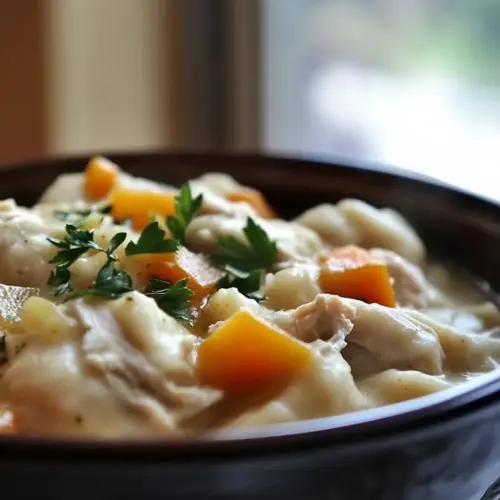
Easy Crockpot Chicken and Dumplings
Easy Crockpot Chicken and Dumplings delivers creamy, comforting bowls of tender chicken and pillowy dumplings, perfect for an easy weeknight dinner or a cozy winter supper. The slow cooker does the heavy lifting so you can enjoy a rich, silky broth with minimal hands on time. Make it when you want a simple, soulful meal that feeds a family and warms the table.
Equipment
- Crockpot
- Small Saucepan
- Mixing Bowl
- Forks or kitchen tongs
Ingredients
- 1 sweet onion, diced Dice finely to create a sweet, aromatic base that softens and melds with other flavors during long, slow cooking.
- 1 cup chopped carrots Chop uniformly to add tender texture and natural sweetness that complements the savory broth and chicken.
- 2 garlic cloves, minced Mince finely to release pungent, savory oils that brighten the overall flavor and balance the richness of the dish.
- 2.5 pounds boneless, skinless chicken breasts Trim and add whole to the slow cooker so it cooks through, becomes tender, and can be shredded to absorb the broth.
- 1/2 teaspoons salt Measure precisely to season the chicken and vegetables; adjust to taste to control overall saltiness in the finished stew.
- 1/2 teaspoon flour Stir in lightly to help thicken the broth when cooking, providing a slight body to the sauce before adding richer thickeners.
- 56 ounces low-sodium chicken stock Pour as the primary liquid to simmer the chicken and vegetables slowly, infusing the dish with savory, low-sodium flavor.
- 2 tablespoons butter Melt into the base to add a rich, creamy mouthfeel and help carry fat-soluble flavors throughout the finished dish.
- 2 tablespoons flour Whisk in to create a roux or slurry that thickens the cooking liquid, giving the stew a velvety consistency.
- 1/2 cup half and half Add to enrich the finished dumpling dough and to provide a creamy, slightly sweet dairy flavor to the batter.
- 1 1/8 cups all-purpose flour Combine as the main dry component of the dumpling dough, supplying structure and chew when mixed with liquid and leavening.
- 1 1/2 teaspoons baking powder Fold in to the flour to introduce lift and lightness to the dumplings so they expand and become tender when steamed.
- 1 teaspoon granulated sugar Sprinkle to add a touch of sweetness that balances savory flavors and enhances the browning and taste of the dumplings.
- 1/2 teaspoons salt Measure carefully to season the dumpling dough; it helps enhance overall flavor while blending with other spices.
- 1/4 teaspoon pepper Crack and add to the seasoning mix to introduce a subtle heat and depth that complements the savory components.
- 2 tablespoons cold butter, cut into small pieces Cut cold into the flour to create small pockets of fat that melt during cooking, producing tender, flaky dumplings.
- 1/2 cup milk, whole, 2% or 1% Pour into the dough to hydrate the flour, bind ingredients, and contribute richness and tenderness to the dumplings.
Instructions
- In the bottom of your crockpot, layer onions, carrots and garlic. Season chicken breasts with salt and pepper then lay them on top.: The aroma of softening onion and sizzling garlic is comforting immediately, even though you re only prepping. You should notice the diced onion becoming glossy and fragrant as it sits beneath the chicken , and the carrots will start to release a faint sweet scent that mingles with the raw garlic . This layering lets the flavors mingle gently during the long cook, ensuring that savory juices wick up into the vegetables. A common mistake is overcrowding the crockpot which can prevent even cooking, so give the chicken room to sit atop the vegetables for proper heat circulation. If your onion still smells sharp after a few hours, it usually means the cooker was at a lower temperature than expected.
- Heat a small saucepan over medium heat and add butter. Once sizzling, whisk in flour and cook for 2-3 minutes to create a roux, until it’s golden in color. Add in 2 cups of chicken stock and mix well, bringing to a boil. Cook for 4-5 minutes, stirring, then remove from heat and pour over the chicken and vegetables. Add remaining chicken stock, put the lid on and cook on low for 6 hours.: As the butter melts you ll hear a soft sizzle and catch a nutty, creamy smell. This stage is crucial because the butter carries flavor and helps the flour cook evenly. Use a pan that conducts heat well to avoid hot spots that scorch the fat. Watch closely; burnt butter gives a bitter note that will affect the whole dish. If you see browning too quickly, lower the heat, and stir to stabilize the color and aroma.
- After 6 hours, turn the crockpot heat onto high. Using forks or kitchen tongs, lightly shred the chicken breasts. (This should be easy since they have cooked so long.) Stir half and half into the crockpot, then recover while you make the dumplings. In a bowl, combine flour, sugar, baking powder, salt and pepper. Crumble in butter with your fingers and rub into the flour until evenly dispersed and coarse crumbs form. Add in milk, stirring well just until a sticky dough forms. Use a tablespoon measure and add small scoops of the dough into the crockpot, starting by placing them around the outside first, then the inside. Cover and cook for another 1-1.5 hours, until dumplings are cooked but soft and not longer raw in the middle. Taste and season additionally if desired.: The roux will thicken and develop a light toasted scent as you whisk, taking on a golden hue. This short cooking time removes the raw flour taste while building a mellow, nutty flavor that will lend body to the broth. You want a smooth paste, not lumps, so whisk continuously and scrape the pan s surface. A common error is undercooking the roux which leaves a pasty mouthfeel, so ensure the raw smell has dissipated before proceeding.
- Serve immediately!: When the stock hits the roux you ll hear a gentle bubbling and see the mixture thicken into a velvety sauce. The boiling helps the starch in the flour fully gelatinize, creating a stable base for the remaining liquid. Stir vigorously to keep the texture uniform and avoid sticking, and notice how the aroma deepens as the broth concentrates. If the sauce seems grainy, it often means the roux was not fully blended, so whisk more vigorously until smooth.
- Cook for 4 to 5 minutes stirring then remove from heat and pour over the chicken and vegetables: Keep stirring so the sauce reduces slightly and develops a glossy sheen, signaling that the starches have fully activated. Pouring it over the layered chicken and vegetables allows the thickened mixture to coat and infuse them, creating a richer mouthfeel in the final pot. A common slip is pouring too quickly, which can displace ingredients, so pour slowly and evenly. If you notice clumps when pouring, whisk the sauce a bit more to smooth it first.
- Add remaining chicken stock put the lid on and cook on low for 6 hours: As the pot simmers for hours, the scent of the combined ingredients becomes deeper and more savory, and the chicken releases juices that enrich the broth. Low and slow is key here, it breaks down the connective tissue in the chicken for tender shredding while preserving moisture. Avoid lifting the lid too often, which drops the internal temperature and extends cooking time. If the broth seems thin after cooking, it usually benefits from the next step where we thicken and add creaminess.
- After 6 hours turn the crockpot heat onto high: The temperature rise will raise steam and make the surface of the broth gently bubble, which helps the dumplings set when added. You ll see the pot transition from a low simmer to a livelier heat, and this is the moment I usually get ready for shredding the chicken . Be mindful of steam when you remove the lid, and avoid leaning over the pot. If the liquid is boiling too vigorously you can lower to a medium high setting to keep it steady.
- Using forks or kitchen tongs lightly shred the chicken breasts: Shredding yields tender strands that soak up the broth, and you should notice a moist, fibrous texture rather than dry chunks. The sound is quiet tearing, and visually you ll see strands that flake apart easily. This technique matters for mouthfeel, allowing the chicken to integrate rather than sitting as dense pieces. A common mistake is shredding too finely which can make the texture pasty, so aim for medium sized shreds.
- Stir half and half into the crockpot then recover while you make the dumplings: Adding the half and half softens the broth s edge and adds a silkiness you can both see and taste, a pale creaminess that lightens the color slightly. Stir gently to incorporate, and you ll notice the aroma turn rounder and more indulgent. Recovering the pot keeps heat steady while you prepare the dumpling dough, preserving the temperature required for proper rising. If the mixture curdles, it usually means the liquid was boiling too hard, reduce the heat and stir to reincorporate.
- In a bowl combine flour sugar baking powder salt and pepper: When you mix these dry ingredients, you ll detect a neutral, clean flour scent with faint sweetness from the sugar. Even distribution is crucial so the dumplings rise uniformly and have balanced seasoning, which affects every bite. I like to whisk gently to aerate the mixture and ensure the leavening is spread. A frequent oversight is uneven mixing which leads to pockets of baking powder, causing uneven texture during cooking.
- Crumble in butter with your fingers and rub into the flour until evenly dispersed and coarse crumbs form: Rubbing the cold butter creates small visible flakes in the flour that will steam as the dumplings cook, leaving tender, layered bites. The tactile feedback is important, you should feel small pea sized bits rather than a paste. Keeping the butter cold prevents it from fully incorporating, which gives better lift. Overworking the mixture will warm the butter and result in dense dumplings, so stop when coarse crumbs form.
- Add in milk stirring well just until a sticky dough forms: As the milk hydrates the flour, the dough gathers into a tacky, cohesive mass with a faint creamy smell. Stir only until it comes together to avoid activating too much gluten which makes dumplings tough. The dough should be soft and slightly sticky but not runny. If it becomes too wet, sprinkle a touch more flour; if too dry, add a teaspoon of milk at a time.
- Use a tablespoon measure and add small scoops of the dough into the crockpot starting by placing them around the outside first then the inside: When you drop the dough in, you ll hear a gentle plop and see the dumplings bob on the surface, absorbing heat. Placing them around the edge first ensures even cooking because the outer ring gets the most consistent heat. The texture should set to soft and pillowy rather than dense. Avoid dropping huge scoops that stay raw in the center, which is a common error; keep the portions modest for even cooking.
- Cover and cook for another 1 to 1.5 hours until dumplings are cooked but soft and not longer raw in the middle: During this final cook the dumplings will swell and the surface will look set, with a tender interior. You ll notice a faint increase in steam and a richer aroma as the dumplings finish absorbing the broth. Test one by inserting a toothpick to ensure no raw dough remains. If the tops seem too wet but centers are done, briefly uncover to let moisture escape; overcooking can make them gummy, so monitor closely.
- Taste and season additionally if desired: At the end, the broth should be rounded and balanced. Taste for salt and adjust gently; the low sodium stock means small additions can elevate the profile. The final seasoning is your chance to personalize the dish, and a quick stir integrates any adjustments. A common misstep is over salting at the start, so I recommend fine tuning only after the full flavors have developed.
- Serve immediately: When you ladle out portions the steam and aroma will be at their peak, and visually you should see tender chicken and plump dumplings in a creamy broth. Serve hot so the dumplings keep their soft texture. A mistake to avoid is letting the pot sit too long uncovered, which can dry the dumplings and change their texture, so enjoy promptly.
Notes
- Measure your flours precisely, especially for the dumpling dough, because small deviations can change the hydration and texture, so spoon and level if possible.
- Keep butter cold for dumplings, cut into small pieces and mixed quickly so that when steamed they create flaky pockets rather than melting into the dough.
- Stir the roux constantly as it cooks for a few minutes so the raw flour taste disappears and you end with a smooth, golden thickener that integrates easily into the stock.
- Use low sodium stock to control final seasoning, adding salt at the end to taste so you don t over season during the long cook.
- Test dumplings with a toothpick near the end of the cook to ensure they are set through the center, avoiding raw spots while preserving a soft interior.
- Plan for leftovers, because this dish re heats beautifully and often tastes even better the next day as flavors continue to meld in the fridge.