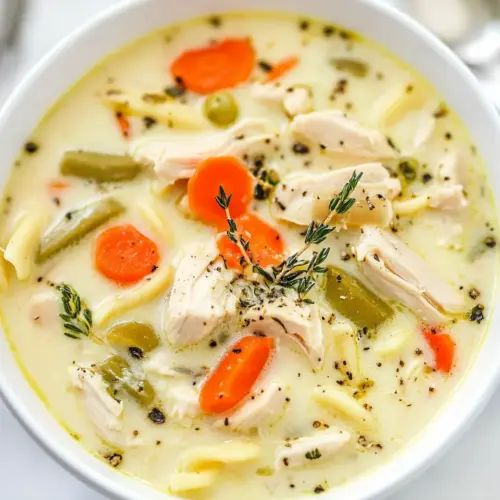
Easy Creamy Chicken Noodle Soup
Easy Creamy Chicken Noodle Soup is a creamy, comforting bowl with tender chicken, al dente noodles, and a rich broth that feels like home. This easy weeknight dinner brings savory browned chicken, sweet vegetables, and a silky finish from heavy cream for a crowd pleasing, cozy meal. It’s simple to make and perfect when you need a soothing, flavorful dinner.
Equipment
- Large pot with lid
- Instant read thermometer
- Knife
- Cutting Board
- Wooden Spoon
Ingredients
- 2 medium (about 1 pound) boneless skinless chicken breasts Poach gently and cook through to provide lean protein and body to the soup; slice or shred after resting to distribute tender chicken throughout the broth. Season before cooking to build savory depth and prevent blandness, and use cooking liquid as part of the soup base for added flavor.
- Salt and pepper Season liberally to enhance and balance flavors throughout the soup; use to taste during cooking and adjust at the end to prevent over-salting. Add black pepper for mild heat and aromatic warmth that complements the creamy broth.
- Cooking spray or olive oil Sear or coat the pot lightly to prevent sticking and develop a flavorful fond on the bottom of the pan; choose cooking spray for low-fat cooking or olive oil for richer flavor. Use at the start when sautéing aromatics to help soften onions and release aromatics from garlic.
- Filtered water Hydrate and simmer ingredients when broth needs stretching or to poach chicken while keeping flavors clean; filtered water prevents off-flavors from tap minerals. Add gradually if the soup becomes too concentrated to reach the desired consistency without diluting taste abruptly.
- 1 tablespoon (14 g) butter Melt gently to enrich the base, add a silky mouthfeel, and help sauté vegetables until translucent; butter also contributes subtle sweetness and richness. Incorporate at the beginning with aromatics or finish with cream for a glossy, cohesive texture.
- 1/2 large onion diced (about 3/4 cup) Sweat until soft and translucent to create a sweet, savory foundation and build depth in the soup; diced size helps even cooking and blending with other vegetables. Caramelize lightly if desired to increase sweetness and complexity without overpowering the broth.
- 2 large cloves garlic minced or pressed Crush or mince finely to release intense, aromatic flavor that brightens the broth and complements the vegetables; add toward the end of sautéing to prevent burning. Use pressed garlic to maximize surface area and integrate savory notes throughout the soup.
- 2 large carrots peeled and sliced Simmer until tender to add natural sweetness, texture, and color; sliced carrots also contribute nutritional value like beta-carotene. Add earlier in cooking for softer pieces or later for firmer bite, depending on preferred mouthfeel.
- 2 celery ribs sliced Cook until softened to provide subtle aromatic crunch and a fresh, savory backdrop that rounds out the vegetable base; sliced celery balances sweetness from carrots and onions. Include early in the sauté to allow its flavors to meld into the broth.
- 8 cups chicken broth Simmer steadily to create a rich, savory liquid that carries all flavors and acts as the primary cooking medium for the soup; choose a quality chicken broth for depth. Adjust reduced broth with water or additional seasoning to achieve the desired intensity.
- 1 1/2 cups (about 4 oz) uncooked pasta Boil until al dente to give the soup body and comforting texture while absorbing flavorful broth; measure uncooked pasta to avoid overcooking into mush. Add near the end of simmering to prevent excessive starch release and maintain distinct noodle integrity.
- 1/4 heaping teaspoon dried oregano Sprinkle to add warm, slightly bitter herbal notes and a hint of earthiness that complements the tomato-free, creamy profile of the soup. Use sparingly to avoid overpowering delicate flavors and to contribute subtle Mediterranean character.
- 1/4 heaping teaspoon dried basil Dust lightly to provide sweet, slightly peppery herbal aroma that pairs with oregano and enhances the overall bouquet of the soup. Add in small amounts to avoid making the broth taste overly green or medicinal.
- 1/2 cup heavy cream Stir in at the end to impart a luxurious, velvety mouthfeel and mellow richness that harmonizes with the broth and vegetables; heat gently to prevent curdling. Use to finish the soup for a creamy texture without overwhelming the lighter flavors.
Instructions
- Generously salt and pepper both sides of your chicken breasts.: The moment you season the chicken you'll notice the surface begin to draw in the salt, which helps develop a savory crust when it hits the hot pan. Do not under salt here, because the seasoning is foundational and will carry into the broth. A common mistake is adding salt only at the end, which leaves the meat tasting flat. If your chicken is uneven, pat it dry first to ensure even browning.
- Heat a large pot with a lid over medium-high heat. Grease with cooking spray or a light drizzle of olive oil. Place chicken breasts in the pan and cook for 2 to 3 minutes, until well-browned. Flip chicken and repeat. Once both sides are browned, add about 1/2-inch of filtered water to the bottom of the pot (it doesn’t need to be exact). Cover the pot and turn heat down to medium.: When the pot is hot you will hear a brief sizzle as you add the fat, and that sound tells you the surface is ready for good contact so the chicken browns properly. Grease with cooking spray or a light drizzle of olive oil, then place the chicken in the pan and cook for 2 to 3 minutes, until well browned. Flip and repeat. Browning creates Maillard notes that deepen the soup, so resist the urge to crowd the pan which would steam the meat instead. If you crowd the pan, the chicken will not brown and the flavor will be less developed.
- Cook for 8 to 10 minutes, until chicken is cooked through and an instant-read thermometer inserted into the center of the breasts reads 165°F (170°F if you’re going to shred the chicken). Check occasionally to make sure the water hasn’t all evaporated, adding more if necessary. Larger breasts will take longer to cook, so be sure to check for doneness before removing from heat.: This small amount of water will sizzle briefly and then create steam once you cover the pot, which finishes cooking the chicken gently while preserving those browned flavors. Cover and turn heat down to medium. If you add too much liquid, you dilute the fond and lose intensity, so keep it modest. Watch that the water does not evaporate completely, topping up if necessary.
- Transfer chicken and any liquid left in the pot to a plate or bowl (the liquid has a ton of extra flavor).: As the chicken simmers you will smell the concentrated roasted notes and the meat will firm up. An instant-read thermometer should read 165°F, or 170°F if you plan to shred the chicken . Overcooking dries the meat, while undercooking is unsafe, so check near the lower time range to avoid toughness. Larger breasts may need more time, so test early rather than assuming.
- Return pot to the stove and melt butter over medium heat. Add onions and cook for 3 to 5 minutes, until edges begin to turn translucent. Add garlic and cook for 30 seconds, until it just begins to turn golden.: The cooking liquid is flavored and valuable, so set it aside with the chicken rather than discarding it. You will notice a concentrated, savory perfume in that liquid which will return to the soup later. A common slip here is draining and discarding juices, which wastes flavor.
- Add carrots, celery, and broth. Bring to a simmer and cook for 20 minutes.: When the butter foam subsides you will see a glossy sheen signaling readiness, then add onions and cook for 3 to 5 minutes until edges become translucent. The onion will release sweetness as it softens. Add garlic and cook for about 30 seconds until it just begins to turn golden; the aroma will lift the kitchen. Burnt garlic tastes acrid, so add it only once the onion has softened and remove quickly after it colors.
- Add noodles and spices and cook according to noodle package instructions, until noodles are just al dente.: When the vegetables hit the pot you will hear a gentle shimmering as they meet the hot butter and onion, and the broth will lift those fond bits off the bottom. Bring to a simmer and cook for 20 minutes so the carrots soften and the flavors meld. If the simmer is too aggressive, you risk breaking down the vegetables into mush, so maintain a gentle simmer.
- While your noodles cook, dice or shred the chicken. Once noodles are al dente, add chicken and any juices back to the pot along with the heavy cream. Add more salt and pepper to taste.: Stir in the noodles , oregano, and basil, then cook according to the noodle package until just al dente. Cooking the noodles in the broth lets them soak up savory flavor, but overcooking leads to soggy texture. Reserve a little broth if you think the soup may get too thick as it rests.
- Bring to a simmer and cook for 1 minute, until chicken is reheated.: Working with warm but not piping hot chicken keeps the meat juicy and makes shredding or dicing easier. As you cut you will notice the meat fibers separate cleanly if the breast was cooked properly. If the chicken feels dry, consider slicing thinner pieces so they blend into the soup more easily.
- Serve and enjoy!: The moment you add the reserved juices the broth will deepen in aroma, and the heavy cream will swirl into the hot liquid, thickening it slightly and creating a silky mouthfeel. Taste and add more salt and pepper as needed. If you add the cream over very high heat it can separate, so bring the soup to a gentle simmer instead of a boil.
- Bring to a simmer and cook for 1 minute, until chicken is reheated: This brief finish warms the chicken through without overcooking it further, and it lets the flavors marry. You will see tiny ripples on the surface and a soft steam; that’s your cue. Avoid prolonged boiling which can change the texture of the cream and make the noodles absorb too much liquid.
- Serve and enjoy: Ladle into bowls while the soup is steaming; the aroma and heat make it inviting. Garnish if you like, then taste a spoonful for final seasoning. A common oversight is not tasting at the end, which can leave the soup underseasoned, so always adjust salt and pepper to your preference.
Notes
- For a lighter soup use less heavy cream or omit it and finish with a splash of milk if you want a thinner broth while maintaining some creaminess.
- To deepen flavor sear the chicken a bit longer until the crust is richly browned, and scrape the fond into the broth when deglazing with the reserved water.
- If you prefer shredded chicken cook the breasts to 170°F then shred with two forks for a softer texture that blends easily into the broth.
- Make-ahead option store the soup without the noodles in the fridge up to three days, then cook the noodles fresh when reheating to avoid mushiness.
- Adjust noodle timing by checking the package and pulling them a minute or two before the suggested time for a firmer bite, remembering they will soften slightly in the hot broth.