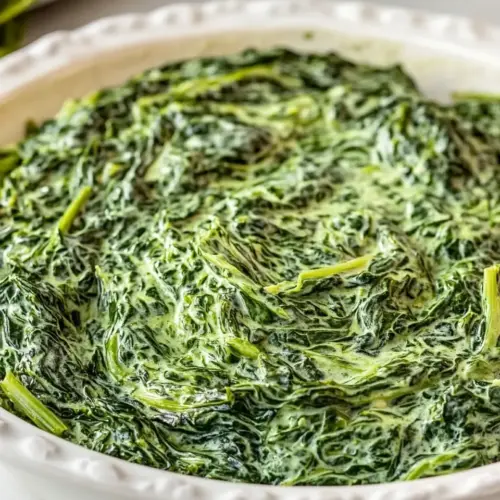
Easy Creamed Spinach Recipe
Easy Creamed Spinach Recipe is a creamy, savory side that comes together quickly with frozen spinach, butter, cream and parmesan. This indulgent yet simple dish makes a perfect easy weeknight dinner accompaniment or a comforting holiday side, delivering silky texture and gentle heat. It is quick to prepare and crowd friendly, so give it a try for a no fuss, flavorful green addition to any meal.
Equipment
- Large Skillet
- Spoon or spatula
Ingredients
- 4 tbsp butter Melted evenly to provide a rich, silky base and help sauté aromatics; contributes buttery flavor and mouthfeel that enriches the creamed sauce.
- 36 oz frozen chopped spinach Frozen and thawed to supply bulk and vibrant green color; drained well it offers concentrated spinach flavor and tender texture throughout the dish.
- 2 tsp minced garlic Minced finely to release robust aroma and pungent garlic flavor; sautéed briefly in butter it infuses the cream sauce with savory depth.
- 1/4 cup all purpose flour Whisked into the fat to create a roux that thickens the cream; cooks slightly to remove raw flour taste and gives the sauce body and sheen.
- 1 1/2 - 2 cups heavy cream, or half and half Poured gradually to form the creamy liquid component that makes the sauce luscious; amount adjusted for desired thickness and richness.
- 1 tsp onion powder Sprinkled for a mild, savory oniony background note; helps round out flavors without adding texture or moisture.
- 3/4 cup parmesan cheese Grated and stirred in to add salty, umami complexity and a nutty finish; helps thicken and bind the sauce while enhancing overall savory profile.
- 1 tsp salt Dissolved to season the entire dish and bring out natural spinach flavors; balances richness and rounds the palate.
- 1/2 tsp black pepper Cracked and added to provide subtle warmth and a slight bite; enhances other seasonings and prevents the dish from tasting flat.
- 1/4 tsp crushed red pepper Sprinkled sparingly to introduce a touch of heat and brightness; elevates flavor complexity without overwhelming the creamy base.
Instructions
- Heat a large skillet over medium-high heat and add the butter. Once melted add in the frozen chopped spinach (no need to defrost prior). Stir, until heated through and no longer frozen.: The moment the butter melts you will notice a soft, slightly nutty aroma that signals the beginning of the build. Listen for a gentle shimmer across the surface rather than aggressive bubbling, which tells you the pan is at a good medium high. If the butter starts to brown quickly, reduce the heat right away, because browned butter will change the finished flavor and can make the sauce taste more toasted than creamy. A common misstep is cranking the heat to rush things, which leads to uneven cooking of the spinach once added.
- Add in the minced garlic and cook until fragrant. Stir in the all purpose flour and cook an additional 2 to 3 minutes, until no flour is visible. Gradually stir in 1 1/2 cups heavy cream and reduce heat to medium.: As you pour in the frozen spinach you will hear a soft sizzle and see steam rise, and the block will quickly lose its icy sheen. Stir continuously so the leaves separate and heat evenly, watching for a uniform deep green color that shows the spinach is warmed through. If excess liquid collects, tilt the pan and spoon off a little to prevent a watery sauce, because too much released water will thin the roux later. Avoid pressing the spinach flat right away, which can squeeze out juices prematurely.
- Stir in the parmesan cheese, onion powder, salt, pepper and crushed red pepper. If needed, add in up to 1/2 cup more heavy cream until desired creaminess is reached. Serve right away and enjoy!: When the spinach is pliable and steaming, its texture shifts to tender and the aroma becomes vegetal and sweet. Continue stirring so pockets of ice do not remain, and aim for a uniformly heated mass. If you stop stirring, some clumps may remain colder and create uneven sauce consistency later. The mistake many make here is assuming visual thaw equals fully warmed, so touch a small piece to confirm warmth.
- Add in the minced garlic and cook until fragrant: Once the pan is back to a gentle sizzle, add the minced garlic and breathe in the immediate fragrant pop as it releases its oils. That scent usually lasts only a minute, so stir briskly and watch for a translucent, toasty note rather than dark brown bits. Burnt garlic becomes bitter and will dominate the sauce, so as soon as you smell it, move to the next step. If you accidentally scorch the garlic , remove the pan from heat briefly and scrape out the burned pieces.
- Stir in the all purpose flour and cook an additional 2 to 3 minutes, until no flour is visible: The flour will create a bonding matrix for the cream, and as you stir you should see the raw powder disappear and the mixture bubble gently. The aroma will shift to a lightly toasted, bready note which means the flour is cooked and will not carry a raw taste. Stir continuously to prevent clumping, and if small lumps form, press them against the pan with your spoon to smooth them out. Rushing this step can leave behind a pasty aftertaste in the final sauce.
- Gradually stir in 1 1/2 cups heavy cream and reduce heat to medium: Pour the heavy cream slowly while stirring to integrate the liquid without shocking the roux, and you will notice the sauce begin to thicken and gloss over the spinach . Reducing to medium heat prevents rapid boiling that can separate the cream, and the surface should show slow, even bubbling. If the sauce seems too thin, simmer gently and whisk until it reaches the silkiness you want. Adding all the cream at once can create pockets of unincorporated liquid that make emulsification harder.
- Stir in the parmesan cheese, onion powder, salt, pepper and crushed red pepper: As the parmesan cheese melts into the warm sauce it will create a slightly grainy, savory layer that rounds the taste. Mix in the onion powder , salt , black pepper , and crushed red pepper for balanced seasoning. Taste and adjust carefully because the parmesan cheese brings saltiness that accumulates. A frequent error is over seasoning before the cheese melts, so always re taste after the cheese is fully incorporated.
- If needed, add in up to 1/2 cup more heavy cream until desired creaminess is reached: Texture is personal, so add extra heavy cream incrementally and stir to judge thickness. Each addition will soften the sauce and make it silkier, and you should aim for a coating consistency where the sauce clings but does not puddle. If you overshoot and it becomes too thin, simmer gently to reduce and concentrate. A common mistake is adding cold cream in large quantities, which can temporarily cool the pan and slow melting, so warm the cream slightly if possible.
- Serve right away and enjoy: The final dish should glisten and give off a warm, savory aroma with hints of garlic and parmesan cheese . Serve immediately so the texture remains creamy and the flavors are most vivid. If held too long on gentle heat, the sauce may thicken or separate slightly, so if you must hold it, give a quick stir with a splash of cream before plating. Reheating briskly over low heat with a touch more liquid helps restore silkiness.
Notes
- Try half and half for a lighter finish — Replace some or all of the heavy cream with half and half if you want a slightly lighter texture, knowing the sauce will be less decadent but still creamy.
- Grate fresh parmesan cheese — Freshly grated parmesan cheese melts more smoothly and delivers brighter umami than pre grated varieties, improving both texture and flavor.
- Adjust the heat to taste — Increase or decrease the crushed red pepper to control the spice level, adding sparingly so it enhances rather than overwhelms.
- Drain excess liquid early — If the thawed spinach releases a lot of water, drain or press out the extra to prevent a watery sauce and ensure the roux thickens properly.
- Finish with a pat of butter — Stirring in an extra teaspoon of butter off heat gives the sauce a glossy sheen and rounds the flavor before serving.