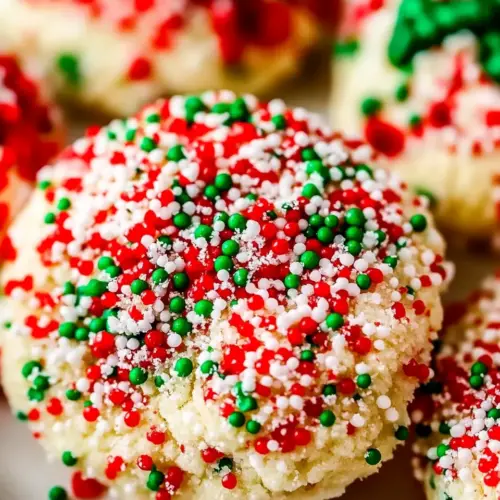
Easy Christmas Cookies Recipe
Easy Christmas Cookies Recipe is a quick, festive cookie made from boxed vanilla cake mix, giving a soft, tender crumb and bright sprinkles. This easy holiday treat is perfect for cookie swaps and last minute gatherings, delivering consistent results with minimal effort. Make a batch for a cheerful, colorful addition to your holiday spread and you will have guests asking for the simple secret.
Equipment
- Mixing Bowl
- Wooden Spoon
- Baking Sheet
- Parchment paper or silicone baking mat
- Cooling rack
- Tablespoon scoop
Ingredients
- 15.25 oz Vanilla Cake Mix, or similar size Provides a sweet, finely textured base that supplies flour, sugar, and leavening to create light, tender cookies; choose a standard 15.25 oz vanilla cake mix for consistent results. Enhances flavor and color while simplifying measurements compared to mixing dry ingredients from scratch.
- 2 large eggs Adds structure and stability by binding the batter together while contributing moisture and richness; use large eggs at room temperature for better incorporation. Also helps with leavening and gives cookies a tender crumb and slightly puffed appearance.
- 1/2 cup vegetable oil Contributes moisture and fat to produce a soft, chewy texture while aiding in mixing and mouthfeel; measure 1/2 cup vegetable oil for a neutral flavor. Helps keep cookies tender and extends shelf life compared with butter-based versions.
- 1 tsp vanilla extract Enhances and deepens the vanilla flavor already present in the cake mix; add 1 teaspoon of vanilla extract for aromatic complexity. Balances sweetness and rounds out the overall cookie flavor profile.
- 1 1/2 cups cake sprinkles Provides colorful visual appeal and a festive crunch when folded into or sprinkled atop the dough; use 1 1/2 cups cake sprinkles for an unmistakably holiday look. Does not affect structure significantly but boosts texture and presentation.
Instructions
- Preheat oven to 350 degrees F. Line a baking sheet with parchment paper or a silicone baking mat.: As the oven warms, you will feel the room relax and smell a faint toasty warmth if the oven has recently been used; this preheating ensures even baking and predictable browning of the cookie edges. Always line your baking sheet with parchment paper or a silicone baking mat to prevent sticking, which also makes cleanup easier. A common mistake is not waiting for full preheat, which can lead to uneven spreading and underbaked centers. If your oven runs hot, check temperature with an oven thermometer to avoid over browning.
- Combine the cake mix powder, eggs, vegetable oil and vanilla extract in a large bowl with a sturdy wooden spoon until a soft dough forms. If desired, stir in 1/4 cup sprinkles.: When you first stir, the dry cake mix will puff and swirl, then quickly come together into a cohesive dough; you should see a uniform color with no streaks of dry powder. The dough will feel slightly tacky but manageable, and a wooden spoon gives good leverage so you do not overwork it. Stir in up to 1/4 cup of sprinkles if you like, watching how the colors dot the mixture. Avoid over mixing, which can make the cookies dense instead of tender. If the dough seems too wet, let it rest five minutes; the mix will hydrate and firm up.
- Scoop 1 tbsp of dough and roll into a ball, then roll in sprinkles until coated. Place on baking sheet 2 inches apart.: Using a tablespoon scoop produces uniformly sized cookies that bake evenly, and when you roll the dough into a ball, you should feel a soft, slightly springy texture. Rolling each ball in additional cake sprinkles gives a charming exterior, and you will notice sprinkles clinging and creating a colorful shell. Place each ball on the lined baking sheet about 2 inches apart so they have room to spread a touch. A frequent error is making the portions inconsistent, which results in uneven bake times, so I recommend using a scoop for accuracy.
- Bake for 9 to 10 minutes, until set and then let cool for 2 to 3 minutes on baking sheet before transferring to a cooling rack to cool completely. Enjoy!: When arranging the dough, you can visually estimate spacing, allowing the cookies to puff and settle without crowding. Good spacing promotes airflow and ensures the edges become lightly golden while the center stays tender. If cookies are too close, they may bake together; if too far, they will brown differently across the tray. If your sheet is dark colored, reduce temperature by 5 degrees to avoid overbrowning the bottoms.
- Bake for 9 to 10 minutes, until set and then let cool for 2 to 3 minutes on baking sheet before transferring to a cooling rack to cool completely: During baking you will see the tops lose their sheen and small cracks may form, signaling they are set. The smell will shift to warm vanilla and baked sugar, and the edges will develop a subtle golden tint. Letting them rest on the hot sheet for a couple of minutes helps them finish cooking gently, creating a soft interior and slightly firmer exterior. A typical mistake is moving them too soon, which can cause them to break apart; wait the recommended minutes before transferring. Use a thin spatula to lift; if cookies seem too soft, give them an extra minute on the sheet.
- Enjoy: After cooling, you should notice a tender crumb and cheerful sprinkle pockets with a delicate crisp on the edge. Serve at room temperature to appreciate the texture fully. Store in an airtight container to keep them soft for several days, and avoid stacking too many layers without parchment to prevent sticking. Resist the urge to refrigerate, which can dry them out.
Notes
- Color swap Replace the cake sprinkles with a single color to match party themes, which creates a coordinated look without altering taste.
- Extra sprinkle coating Roll each dough ball in additional cake sprinkles for an intense, showy exterior that makes the cookies stand out at exchanges.
- Mix in sparingly Stir in up to 1/4 cup of cake sprinkles into the dough for pockets of color, while keeping most sprinkles for the outer roll to retain visual contrast.
- Make ahead Form the dough balls and freeze them on a tray, which lets you bake fresh cookies straight from frozen by adding a minute or two to the bake time.
- Presentation After cooling, arrange cookies in stacked tins with parchment between layers for gifting, keeping them fresh and neat for transport.