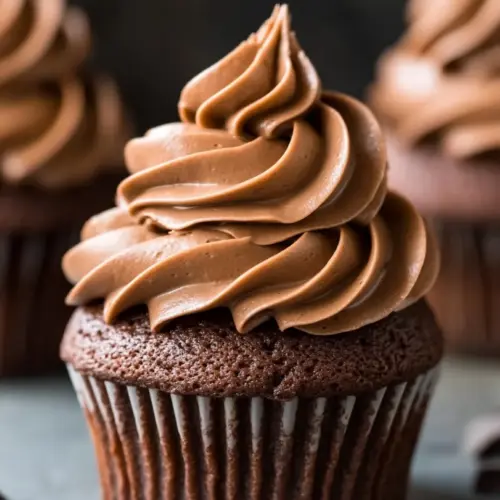
Easy Chocolate Cupcakes
Easy Chocolate Cupcakes are a moist, tender chocolate treat with rich cocoa flavor and a hint of warm coffee. This easy recipe delivers consistent results for casual weeknight gatherings or small celebrations, and it doubles as a reliable make ahead dessert. Simple pantry ingredients and a short bake time make it a perfect choice when you want a crowd pleasing dessert fast.
Equipment
- Mixing Bowl
- Whisk
- 12 count muffin tin
- cupcake liners
- Ice Cream Scoop
- Cooling rack
Ingredients
- 1 1/2 cups all-purpose flour, measured correctly Provides structure and bulk to the cupcake batter by forming gluten when mixed with liquids; sifts for lighter texture and measure correctly by spooning into a cup and leveling to avoid dense cupcakes. Adds mild flavor and helps trap air during mixing for tender crumb, especially important in single-layer cupcake recipes.
- 1 cup granulated sugar Adds sweetness and helps tenderize the crumb by interfering with gluten formation; dissolves into the wet ingredients to create a smooth batter and promotes browning during baking. Also contributes to moisture retention, keeping cupcakes soft for days when stored properly.
- 1/3 cup natural unsweetened cocoa powder Delivers concentrated cocoa flavor and deep chocolate color while remaining unsweetened, allowing control over overall sweetness; natural cocoa reacts with baking soda to assist leavening when an acidic component is present. Sift to remove lumps and distribute evenly for consistent chocolate intensity in each cupcake.
- 1 tsp baking soda Provides chemical leavening by producing carbon dioxide when combined with acid and moisture, helping cupcakes rise and become light; measure accurately to avoid soapy or metallic taste. Works best when evenly distributed through dry ingredients prior to adding liquids to ensure uniform lift.
- 1/2 tsp salt Enhances and balances flavor by accentuating sweetness and rounding out chocolate notes, while also strengthening the dough slightly; small amounts are sufficient, so precise measuring is important. Helps to control yeast or baking soda reactions in recipes that require acid–base balance.
- 1 cup warm coffee, or substitute with room temperature buttermilk Contributes liquid to hydrate dry ingredients and develop texture; warm coffee enhances chocolate flavor and deepens the overall taste, while buttermilk provides acidity that reacts with baking soda for better rise and tang. Choose warm coffee for intensified chocolate notes or buttermilk for a softer, slightly tangy crumb.
- 1 tbsp white distilled vinegar Creates an acidic environment that reacts with baking soda to produce carbon dioxide for leavening; also can subtly affect flavor profile by adding a hint of brightness. Stir into the liquid component to activate chemical leaveners at the right time and ensure proper rise.
- 1/3 cup light olive oil, or vegetable oil Supplies fat for moistness, tenderness, and mouthfeel while aiding in emulsifying liquids and fats together for a smooth batter; light olive oil has a mild flavor but vegetable oil can be substituted for a neutral profile. Measure accurately to maintain proper batter consistency and prevent greasy texture.
- 1 large egg, room temperature Binds ingredients together and adds richness, contributing to structure and a tender crumb when beaten into the batter; room temperature egg incorporates more easily for an even emulsion. Also helps with leavening slightly as it traps air when mixed, improving cupcake lift.
- 2 tsp vanilla extract Adds aromatic sweetness and rounds out flavors, enhancing the chocolate profile and masking any bitter cocoa notes; stir into wet ingredients toward the end to preserve delicate aroma. Use pure vanilla extract for best flavor clarity and consistency across batches.
Instructions
- Quick prep– Preheat oven to 350˚F with the rack in the center of the oven. Fill a 12-count muffin tin with cupcake liners.: The first scent that hits you is warm air as the oven reaches temperature, and placing the rack in the center ensures even heat so the cupcakes rise uniformly. Preheating matters because batter that goes into a hot oven gets an immediate lift; skipping this will give you flatter tops. A common mistake is not lining the tin, which makes removal harder and can cause cupcakes to stick.
- Mix dry ingredients– In a large mixing bowl, thoroughly whisk together dry ingredients: flour, sugar, cocoa powder, baking soda, and salt. Break up any larger cocoa clumps with your whisk.: You will notice the cocoa powder giving the bowl a rich color and a dry chocolate aroma, and whisking eliminates lumps so the batter bakes evenly. This step builds the base texture, and thorough mixing of the dry ingredients ensures even distribution of leavening. Avoid using a spoon that does not incorporate air, and watch out for undissolved cocoa clumps that create pockets of bitter flavor.
- Mix wet ingredients– In a second mixing bowl, add the wet ingredients: coffee, vinegar, oil, egg, and vanilla, and whisk until well blended.: As you whisk the warm coffee with oil and egg , the mixture will steam slightly and smell roasted and fragrant due to the coffee and vanilla. Whisking creates a velvety, slightly glossy liquid that will blend smoothly with the dry mix. The warmth helps dissolve sugar and bloom the vanilla, which improves flavor. If you under whisk, the oil may not integrate fully, leaving pockets of oil in the batter.
- Combine batter– Pour wet ingredients over dry ingredients and whisk just until the ingredients come together and no dry streaks remain. The batter will be a little loose and lumpy.: When you pour the wet into the dry, you will see the batter transform from dusty to shiny, and small lumps are normal. The slightly loose texture is intentional, resulting in a tender crumb once baked. Overmixing develops gluten and yields dense cupcakes, so stop when dry streaks vanish. A frequent error is continuing to beat until perfectly smooth, which compromises tenderness.
- Fill and bake– Use an ice cream scoop to portion batter, filling each cup 2/3 full (do not over-fill). Bake 18-22 min (20 minutes was perfect), until a toothpick inserted in the center comes out clean. Don't overbake. Cool 5 minutes in the pan, then transfer to a rack to cool completely to room temperature before frosting.: Scooping creates uniformly sized cupcakes that bake evenly, and the 2 to 3 full visual cue helps avoid overflow. While baking you will smell the chocolate intensifying and notice the tops spring back slightly when touched. The toothpick test is a reliable cue for doneness, and pulling them at the right moment keeps them moist. A common pitfall is leaving cupcakes in the pan too long which can cause residual heat to overcook them; move them to a rack after 5 minutes to finish cooling.
Notes
- Room temperature ingredients: Having the egg and warm coffee at similar temperatures helps them combine smoothly, producing a batter with consistent texture and smaller air pockets.
- Accurate flour measurement: Spoon and level your all purpose flour rather than scooping, to prevent a dry, heavy crumb that comes from too much flour.
- Do not overmix: Stop mixing when no dry streaks remain to protect tenderness; overmixing builds gluten which yields firmer cupcakes.
- Test for doneness early: Begin checking at the shorter end of the bake time to avoid drying, and use a toothpick for a reliable cue.
- Cool properly before frosting: Allow cupcakes to reach room temperature to prevent frosting from sliding off or melting into the crumb.