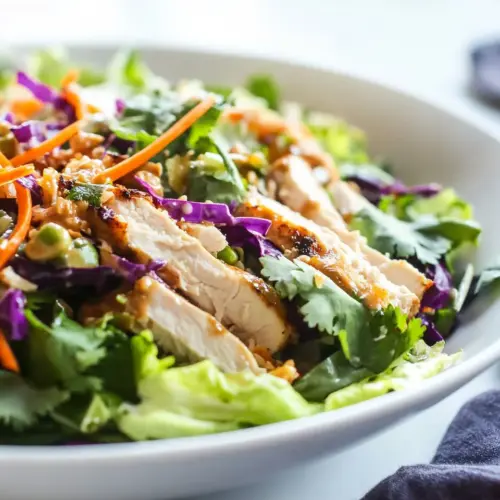
Easy Chicken Salad with Peanut Dressing
Easy Chicken Salad with Peanut Dressing is a creamy yet crunchy mix of tender chicken, crisp romaine, shredded red cabbage, and a nutty, tangy peanut dressing. This easy weeknight dinner delivers bright lime, toasty peanuts, and a hint of heat for a satisfying and balanced meal that comes together quickly, perfect for lunches, casual dinners, or make ahead meals.
Equipment
- 12-inch heavy-bottomed skillet
- Small food processor
- Large salad bowl
Ingredients
- 1 pound boneless skinless chicken breasts Cook gently and thoroughly to provide lean protein and a hearty base for the salad; season and slice after resting to retain juices and achieve even texture across servings.
- Sea salt & black pepper Season simply to enhance overall flavor balance; sprinkle sparingly and taste as you go to avoid overpowering the dressing's sweetness and acidity.
- 1 tablespoon olive oil Sauté lightly to brown and prevent sticking while adding a subtle fruity richness; use just enough to coat the pan and help cook the chicken evenly.
- 2 hearts of romaine about 6 cups, thinly sliced Chop finely to create a crisp, leafy backbone for the salad; thin slicing increases surface area for dressing to cling and adds refreshing crunch.
- 2 cups finely shredded red cabbage about 1/4 head Shred thinly to add vivid color, crunch, and slightly bitter contrast; finely shredded cabbage mixes easily with other components and holds dressing well.
- 2 large carrots cut into matchsticks Julienne into matchsticks to provide sweet, crunchy texture and bright orange color; uniform sticks ensure pleasant bites and quick, raw tenderness.
- 3 scallions about 1 cup, thinly sliced Slice thinly on a bias to contribute mild oniony flavor and a tender crunch; scallions add fragrant green notes that complement the peanut dressing.
- 1/2 cup unsalted peanuts Toast briefly or use as-is for a buttery crunch and nutty finish; unsalted peanuts supply textural contrast and rich peanut flavor without extra salt.
- 1/4 cup creamy natural peanut butter Whisk until smooth to create a creamy, nut-forward base for the dressing; natural peanut butter adds body, richness, and authentic peanut flavor.
- 1 tablespoon honey Incorporate for a touch of sweetness that balances savory and acidic components; honey also helps thin the peanut butter for a smoother dressing.
- 1 tablespoon gluten-free tamari Stir in to bring savory, umami depth and a gluten-free salty note; tamari enhances overall complexity while keeping the dressing gluten-free friendly.
- 1 lime halved Squeeze over to add bright, acidic citrus that awakens flavors and balances richness; halved lime is convenient for juicing directly into the dressing.
- Pinch of cayenne pepper or sriracha Sprinkle minimally to introduce warmth and gentle heat that lifts the dressing; cayenne or sriracha can be adjusted to personal spice preference.
- 1 lime for serving, cut into wedges Serve alongside as optional bright acid to squeeze over the plated salad; lime wedges let diners add extra citrus bite to taste.
Instructions
- Set a 12-inch heavy-bottomed skillet over a medium-high flame. Season the chicken with sea salt and pepper. Add the olive oil to the pan, followed by the chicken breasts. Cook until golden brown and firm, about 8 minutes per side. Remove to a plate to rest for 10 minutes.: You will notice the pan warming and a light shimmer appearing on the oil as it comes up to temperature, which is your cue that it is ready. This even, steady heat is vital for developing a golden sear on the chicken , creating those browned bits that carry deep flavor. The sizzle when the meat hits the pan should be immediate and lively, not frantic, and keep an eye on smoke points to avoid burning the oil. A common mistake is adding cold chicken straight from the fridge, which can cool the pan and lead to uneven browning, so let the meat come close to room temperature for a few minutes if possible.
- Meanwhile, toss the romaine, cabbage, carrots and scallions in a large salad bowl.: When you season, press the salt and pepper into the surface so it adheres, which helps build a seasoned crust while cooking. The aroma of the cracked black pepper will become more pronounced as the meat cooks, contributing to the overall savory profile. Seasoning too far in advance can draw out moisture, so avoid salting the night before unless you intend to brine. A common slip is under seasoning, which results in a bland center even when the exterior is nicely browned.
- In a small food processor, pulse the peanuts until coarsely chopped. Transfer to a small bowl and set aside.: Tilt the pan so the oil coats the surface evenly, then lay the chicken away from you to prevent splatter. As the breasts hit the hot oil you should hear a clean sizzle, and after a minute you will see the edges begin to turn opaque. This controlled contact ensures a caramelized exterior while keeping the inside juicy. Overcrowding the pan reduces heat and causes steaming, so cook in batches if needed.
- Add the peanut butter, honey, tamari, juice of half a lime, and cayenne to the processor and puree until smooth, adding up to 1/4 cup water to get the dressing thin enough to drizzle. (Alternatively, you can chop the peanuts and whisk the dressing by hand).: Watch the chicken develop an even, deep golden color, and the sizzling will calm as moisture reduces. The meat should feel firm but springy when pressed, a tactile clue it is near done. If it browns too fast, lower the heat briefly to allow the center to catch up without burning the outside. A pitfall is relying solely on time instead of feel or internal temperature, so consider using a thermometer if unsure.
- Slice the chicken into thin strips and arrange on top of the romaine. Drizzle with the dressing and gently toss to coat.: Resting is where the magic happens, as the juices redistribute and the chicken firms up slightly for clean slicing. The meat will give off a subtle steam and the residual heat will continue to finish the interior. If you slice immediately, the juices will run out and the pieces will be drier, which is the most common mistake here. Tent loosely with foil if you want to keep it warm without trapping steam.
- To serve, divide the salad between 4 plates and sprinkle with the chopped peanuts, and garnish with the remaining half a lime, cut into quarters.: As you mix, the salad releases a fresh vegetal scent and the colors mingle, creating visual appeal. Tossing by hand distributes textures so each bite contains a balance of crisp leaves and shredded veg. Over dressing at this stage can wilt the greens, so it is best to hold off until the dressing is ready. A frequent misstep is chopping unevenly, which leads to inconsistent bites.
- In a small food processor, pulse the peanuts until coarsely chopped: Pulsing gives you control over the nut texture, and the roasted peanut aroma becomes noticeable as oils release. Stop before you reach peanut butter unless you want a very smooth crunchless topping. Saving a bit of coarser nut provides a satisfying contrast. Avoid overprocessing which turns crunchy peanuts into paste.
- Transfer to a small bowl and set aside: Keeping the chopped peanuts separate preserves their crispness until plating, preventing them from absorbing moisture. Their toasty scent will linger, signaling freshness. If mixed too early into the dressing, they will soften and lose crunch, which diminishes the texture balance of the finished salad.
- Add the peanut butter, honey, tamari, juice of half a lime, and cayenne to the processor and puree until smooth: As you puree, the dressing will turn glossy and the aroma will shift to a nutty, tangy perfume. The smooth emulsion clings better to leaves and vegetables, creating a cohesive bite. If it seems too thick, add up to 1/4 cup water gradually to reach a drizzleable consistency. Over thinning will dilute flavor, so add water cautiously. Another common error is skipping the citrus which results in a heavy tasting dressing.
- Slice the chicken into thin strips and arrange on top of the romaine: Slicing against the grain yields tender ribbons of chicken , and the exposed surfaces release a savory scent that mingles with the greens. Lay the strips across the salad so each forkful can snag meat and veg. Cutting too thick makes the meat feel clunky in a salad, so aim for uniform thinness for best texture integration.
- Drizzle with the dressing and gently toss to coat: The dressing should glide over the leaves and settle into crevices, taking on a slightly glossy sheen. Toss gently to avoid bruising the romaine while ensuring even coverage. If you overdress, the salad will be soggy, so err on the side of less and offer extra on the side. A typical oversight is vigorous tossing which bruises delicate leaves.
- To serve, divide the salad between 4 plates and sprinkle with the chopped peanuts: The final sprinkling adds that crackle of texture and a toasty aroma just before serving. Arrange the lime quarters as a bright garnish so diners can squeeze fresh juice to their taste. Serving too long after adding nuts may soften them, so garnish right before presenting for maximum crunch.
Notes
- Swap the greens Use romaine for crunch, but try butter lettuce for a softer mouthfeel if you prefer a gentler texture and a more delicate presentation.
- Make it spicier Add more cayenne or a touch of the suggested sriracha to the dressing to bring forward heat that contrasts the peanut sweetness.
- Boost the crunch Toast the peanuts in a dry skillet for a few minutes until fragrant, then pulse, which intensifies their aroma and gives the salad a deeper toasted note.
- Adjust the dressing consistency If the dressing is too thick, add water a tablespoon at a time until it reaches a drizzleable texture that coats without pooling.
- Sweetness balance Tweak the honey to taste; a touch more will round the tamari, while less keeps the dressing savory forward.