Easy Carrot Cake Recipe
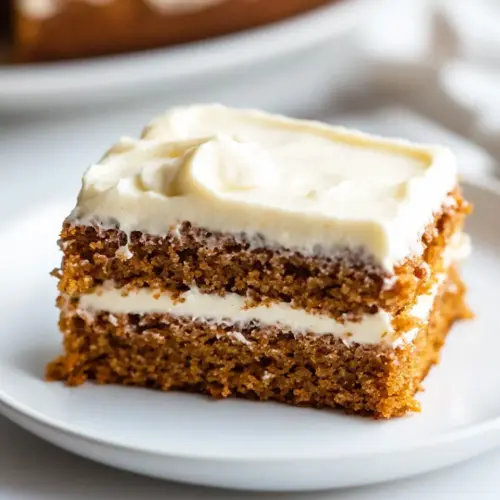
Easy Carrot Cake Recipe is a moist, spiced sheet cake topped with silky cream cheese frosting. The texture is tender and the warm notes of cinnamon and allspice pair beautifully with grated carrots. Perfect for gatherings or an easy weekend bake, it delivers comforting flavors and simple technique, making it a recipe you'll return to again and again.
Equipment
- 9 x 13 inch baking dish
- Mixing Bowls
- Wooden Spoon
- Rubber spatula
- Box grater
- Mixer
Ingredients
- 2 cups (240 g) all-purpose flour Provide structure and bulk to the cake batter, contributing to crumb and texture; sift beforehand to remove lumps and ensure even mixing. Combine with dry leavening agents to create the framework that traps air during baking for a tender cake.
- 2 teaspoons baking powder Promote leavening and lift by reacting with wet ingredients to produce carbon dioxide; distribute evenly in the dry mix to avoid uneven rising. Measure precisely to balance rise without creating a bitter taste or collapsing structure.
- 2 teaspoons cinnamon Add warm, sweet-spicy aroma and flavor that complements the carrots; incorporate into the dry ingredients to infuse the entire cake with cinnamon’s signature taste. Pair with other spices to build depth and a cozy flavor profile.
- 2 teaspoons allspice Impart warm, slightly peppery notes and depth to the spice blend; blend with cinnamon for a layered, aromatic cake flavor. Use sparingly to avoid overwhelming the other spices while enhancing overall complexity.
- 1/2 teaspoon salt Enhance and balance the sweetness by moderating flavor and strengthening gluten structure slightly; dissolve evenly with the dry ingredients to ensure consistent seasoning. Prevents the cake from tasting flat and helps round out the spice profile.
- 4 large eggs Bind ingredients together while contributing moisture and richness; beat until combined to incorporate air for a lighter crumb. Provide structure and protein that sets during baking, helping the cake hold its shape.
- 2 cups (400 g) granulated sugar Sweeten and tenderize the cake while assisting in moisture retention; dissolve into the wet mixture to ensure even sweetness. Contribute to browning and flavor depth through caramelization during baking.
- 1 1/4 cups vegetable oil Add moistness and richness without dairy, yielding a tender crumb and a moist texture; whisk into the wet ingredients to form a cohesive batter. Carry flavor and help dissolve sugar and spices for even distribution.
- 3 cups loosely packed peeled and grated carrots Provide natural sweetness, moisture, and texture with slight body from the shredded fibers; fold into the batter to maintain airiness and avoid overmixing. Supply color and nutritional elements like beta-carotene while keeping the cake moist.
- 8 ounces cream cheese softened Create a smooth, tangy component for the frosting that balances sweetness; beat until creamy to remove lumps and achieve a silky texture. Contribute to flavor complexity and a spreadable consistency when combined with butter and sugar.
- 1/2 cup (4 oz) salted butter softened Introduce creaminess, richness, and a slightly salty counterpoint to sweet frosting; beat with cream cheese to form a stable, smooth base. Help achieve the desired frosting texture and mouthfeel while enhancing flavor depth.
- 1 teaspoon vanilla extract Add aromatic sweetness and round out the cream cheese frosting’s flavor; stir in small amounts to taste to avoid overpowering. Complement both the cheese and butter for a harmonious, well-rounded frosting profile.
- 3 3/4 cups (116-ounce box) powdered sugar sifted Provide concentrated sweetness and structure to the frosting while smoothing texture when sifted; add gradually and beat until fully incorporated for a fluffy consistency. Control sweetness level and thickness to achieve spreadable frosting that holds peaks.
Instructions
- Preheat your oven to 325°F and lightly grease a 9 x 13-inch baking dish.: You will feel the kitchen warm as the oven comes to temperature, and a light sheen of oil on the pan prevents sticking, allowing the cake to release cleanly. Preheating is essential for even rise, because a cold oven will cause uneven baking. A common mistake is under greasing, so take a moment to coat the corners thoroughly.
- In a medium bowl, whisk together flour, baking powder, cinnamon, allspice, and salt.: As you whisk, the dry mixture will look uniform and slightly aromatic from the cinnamon and allspice . This step helps distribute leavening and spices so each bite tastes balanced. If you skip thorough mixing, you can get pockets of spice or uneven rise, so whisk until you see consistent color.
- To a large bowl, add eggs and whisk until lightly beaten. Add sugar and vegetable oil and beat until well-mixed. Add flour mixture and use a wooden spoon to stir until just mixed.: The initial whisking of the eggs introduces air, and when the sugar and vegetable oil join, the batter will shine slightly and feel fluid. When you fold in the dry mix with a wooden spoon, aim for a smooth batter without streaks of flour. Overmixing at this stage can develop too much gluten, producing a tougher cake, so stop when no dry streaks remain.
- Add carrots and stir until evenly distributed, scraping the sides and bottom of the bowl with a rubber spatula to make sure all of the batter is mixed.: As you fold in the grated carrots , you will see orange flecks throughout the batter and feel a slight increase in thickness. Scraping the bowl ensures no pockets of flour hide on the sides, and it promotes an even crumb. A common error is adding the carrots too early or mixing them aggressively, which can make the batter gummy, so fold gently.
- Pour batter into prepared baking dish and smooth the top. Bake for about 50 minutes to 1 hour, until the center of the cake looks set and a toothpick or cake tester inserted into the center of the cake comes out clean.: Pouring the batter will create a glossy surface that you can smooth with a spatula. As the cake bakes, you will notice a warm, spiced aroma filling the kitchen and the edges pulling slightly away from the pan. Watch for a light golden color on top, and test with a toothpick; if it comes out clean, the cake is done. A frequent mistake is underbaking; if the center is wobbly, give it another 5 to 10 minutes.
- Cool cake in the pan until completely cool.: Cooling is when the crumb firms up and is essential before frosting to prevent melting. The cake will stop releasing steam and will feel room temperature to the touch when ready. Rushing to frost a warm cake causes the frosting to slide; patience here is rewarded.
- In a large bowl, beat cream cheese, butter, and vanilla until well-combined and smooth. Slowly add sifted powdered sugar and beat until all the sugar is incorporated and frosting is smooth and creamy.: When you beat the cream cheese and salted butter , the mixture will go from lumpy to silky, emitting a rich dairy aroma. Adding the sifted powdered sugar gradually prevents a gritty texture and helps you control sweetness. If the frosting seems too soft, chill briefly and rewhip; a common slip is overbeating after adding the sugar, which can introduce too much air.
- Spread frosting over the top of the cake. Chill before serving if desired, and enjoy!: Spreading the frosting should feel creamy under your spatula, and the cake will look polished and inviting. Chilling firms the frosting for cleaner slices and lets flavors meld. Avoid serving immediately from the fridge without letting the cake sit for a few minutes, because ice cold frosting can mask flavor nuances.
Notes
- Reduce allspice: If you prefer a milder spice, halve the allspice or omit it; the cake will still be warmly spiced from the cinnamon.
- Adjust sweetness: If you find the frosting too sweet, use slightly less sifted powdered sugar and increase the cream cheese by an ounce to keep balance.
- Oil swap considerations: If you use a different neutral oil than vegetable oil, pick one with a neutral flavor so the spices and carrots remain the star.
- Baking time tweaks: Ovens vary, so if your oven runs hot, check the cake 10 minutes earlier than the minimum time and adjust accordingly.
- Make ahead: You can bake a day ahead and frost the next day after refrigerating the cooled cake, which makes serving easier for gatherings.