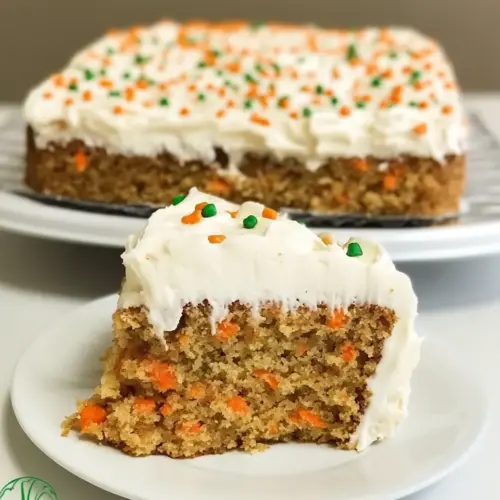
Easy Carrot Cake From Cake Mix
Easy Carrot Cake From Cake Mix combines a tender yellow cake mix base with moist shredded carrots, crushed pineapple, and warm cinnamon for a flavorful, quick dessert. Topped with a tangy cream cheese frosting, this cake is moist, comforting, and ideal for easy weeknight baking or last minute gatherings. Try it when you want a crowd pleasing, time saving sweet that still tastes homemade.
Equipment
- Large Bowl
- Spatula
- Electric Mixer
- 9x13-inch Baking Pan
- Cooling rack
- Box grater
Ingredients
- 1 box Yellow cake mix, (13.25 oz-15.25 oz.) Provides a ready-made cake base and structure with leavening agents, sugar, and flour to simplify batter preparation; contributes sweetness, crumb, and volume while reducing prep time. Enhances overall texture and balances added moist ingredients like oil, milk, and pineapple; choose specified box size to maintain correct proportions.
- 3 large eggs Adds richness, moisture, and protein that help bind the batter and contribute to a tender crumb; beaten slightly before adding to incorporate air for lift. Contributes color and emulsification that improves the cake’s structure and mouthfeel when combined with oil and milk.
- 1/2 c vegetable oil, canola oil will work too Supplies fat to tenderize the crumb, retain moisture, and carry flavor throughout the cake; vegetable or canola oil keeps the cake soft and prevents dryness. Helps create a consistent, moist texture and extends shelf life compared with butter in boxed-mix preparations.
- 1 c whole milk Provides liquid to hydrate the dry mix and activate leaveners while contributing creaminess and body to the batter; whole milk adds fat for richer flavor. Helps achieve the correct batter consistency and improves mouthfeel compared with lower-fat liquids.
- 1/2 c sour cream Contributes tang and extra moisture that brighten flavor and tenderize the crumb; sour cream also adds a slight acidity that reacts with leaveners for subtle lift. Enhances richness and keeps the cake moist, helping balance sweetness from the mix and frosting.
- 1 tsp vanilla Delivers aromatic depth and rounds out sweetness with a warm, familiar flavor; vanilla enhances other ingredients and brings a cohesive baking aroma. A small amount significantly improves perceived flavor complexity in the finished cake.
- 2 – 2 1/2 tsp cinnamon Adds warm, spicy notes and classic carrot cake flavor; cinnamon deepens the taste profile and complements carrots and nuts. Quantity range allows adjusting spice intensity to personal preference while maintaining traditional flavor.
- 1/2 tsp nutmeg Provides warm, slightly sweet and nutty undertones that support the spice blend; nutmeg adds complexity without overpowering other flavors. Use sparingly to avoid bitterness and to balance cinnamon and orange zest if included.
- 2 cups shredded carrots, well packed Supplies natural sweetness, moisture, and texture with tender shreds that disperse through the batter; packed carrots ensure even distribution and consistent moisture. Adds subtle vegetable flavor and color, contributing to the cake’s characteristic density and mouthfeel.
- 1/2 c chopped pecans Adds crunch, toasty flavor, and nutty richness that contrast the soft cake crumb; chopped pecans also contribute visual interest and a buttery note. Can be folded into batter or used as a garnish to provide textural variety.
- 2/3 c crushed pineapple, in juices Contributes extra moisture, mild sweetness, and a tropical tang that complements carrots and spices; using pineapple in its juice reduces dryness risk. Drain slightly if desired to control batter consistency while retaining flavorful juice.
- optional: 1 tsp orange zest Offers bright citrus aroma and a fresh, zesty accent that lifts the cake’s sweetness; orange zest enhances flavors without adding liquid. Optional use allows customization for a fresher, more complex profile that pairs well with spices and cream cheese frosting.
- 1 container cream cheese frosting, (16 oz.) Provides a ready-to-spread sweet cream cheese topping that brings tanginess and creamy sweetness to finish the cake; container frosting saves time and ensures consistent texture. Serves as the main decorative and flavor element, balancing the cake’s spices and sweetness.
- 6 oz softened cream cheese Adds extra tang and velvety richness to the frosting when softened and beaten in, enhancing cream cheese flavor and creating a silkier texture. Helps adjust sweetness and stability of the frosting, making it smoother and more luscious when combined.
- 2 T light brown sugar Contributes subtle molasses flavor and gentle caramel sweetness that can be blended into frosting or used to sweeten a cream cheese glaze; light brown sugar also adds moisture. Helps round out tartness from cream cheese and intensify overall flavor depth.
Instructions
- Preheat oven to 350°F. Add the cake mix, eggs, milk, oil, sour cream, cinnamon and nutmeg to a large bowl.: As you preheat, notice the kitchen warming and the faint hint of readiness in the air, which primes the oven to deliver an even rise and proper crumb structure. Preheating ensures that when the batter goes in, the immediate heat jump helps the leaveners activate correctly, producing a tender interior. A common mistake is putting the cake into a cool oven which can lead to a dense center and uneven baking, so always wait until the oven reaches 350°F .
- Stir the ingredients vigorously for about 2 minutes. You could opt to use an electric hand mixer if desired.: When you combine these wet and dry components, you will sense the batter taking on a smooth, glossy texture, punctuated by flecks of cinnamon and nutmeg . The reason we mix all these wet ingredients with the cake mix at once is to hydrate the dry matrix evenly, which creates an even crumb and prevents pockets of dry mix. Avoid over measuring the milk or oil , since too much liquid can collapse the batter and too little leaves it dry.
- Fold in the pineapple (with juices), shredded carrots and pecans or other add ins to the bowl.: As you work the batter, listen to the soft whoosh of the spoon or beaters, and watch the mixture become uniform and slightly thickened. Stirring thoroughly develops just enough structure for the cake to hold air without becoming leathery. If you use an electric hand mixer, you will see a few small bubbles appear, indicating aeration. The main pitfall is over mixing which can make the cake tough, so stick to about 2 minutes unless using a low speed setting on a mixer.
- Transfer the mixture to a well greased 9×13 inch baking pan. If you prefer to use different size or shaped pans, follow package directions for bake times.: Folding preserves the air you incorporated while evenly distributing texture from the crushed pineapple , shredded carrots , and pecans . You should feel a slightly denser, moist batter as the fruit and nuts integrate, with tiny strands of carrot visible. The 'why' here is moisture and texture balance; the pineapple juices keep the crumb supple and the carrots add body. A common slip is stirring too aggressively, which can squeeze out juices and make the batter watery, so fold gently until just combined.
- Bake the carrot cake for 27-32 minutes or until a toothpick comes up mostly clean from the middle. Cool on a cooling rack completely before icing.: As you pour the batter, note how it spreads and levels with minimal coaxing; a well greased pan prevents sticking and helps achieve clean edges. Using a spatula to smooth the top gives an even surface for uniform browning. If you change pan shape or size, you must adapt bake times as the batter depth changes, which is why package directions are useful. Avoid over filling the pan which can cause batter to spill or bake unevenly.
- Once the cake cools completely, in a medium bowl, combine the entire container of cream cheese frosting along with brown sugar and softened cream cheese. Use an electric mixer to beat until smooth and creamy.: During baking, you will smell the spices blooming and notice the cake edges pulling slightly from the pan, signs of doneness. The surface will be golden and spring back lightly when touched. The internal temperature should climb steadily, and a toothpick with a few moist crumbs indicates perfect moistness. The danger is over baking, which yields a dry crumb, so begin checking at the lower end of the bake window.
- Spread frosting over cake and chill until ready to serve or dig right in! We love to add green and orange sprinkles over top and also some shredded coconut at times. Store frosted cake in the refrigerator for up to 5 days.: Cooling is crucial because if you ice a warm cake, the frosting will slide and melt into the crumb. On the rack you will see steam cease rising and the cake firm up, which signals readiness for frosting. Cooling also lets flavors settle and prevents condensation under the frosting. A frequent mistake is rushing this step, ending with a runny, unevenly set frosting, so be patient until the cake is completely cool.
- Combine the entire container of cream cheese frosting along with brown sugar and softened cream cheese in a medium bowl: When you mix the frostings and softened cream cheese , the aroma turns tangy and sweet, and the texture becomes luxuriously smooth and spreadable. The brown sugar adds depth and mellows the tang. The 'why' is balance; blending these elements yields a stable, flavorful topping. If the cream cheese is not softened, lumps can remain, so always ensure it is pliable but not melted.
- Use an electric mixer to beat until smooth and creamy: Beating incorporates air and produces a silky mouthfeel, giving the frosting body that holds shape when spread. You will hear the mixer hum and see the mixture lighten in color and thicken slightly. Over beating can make the frosting too loose or grainy, so stop when the texture is cohesive and glossy.
- Spread frosting over cake and chill until ready to serve or dig right in: As you spread, the frosting should glide and hold peaks, providing a smooth finish. Chilling firms the frosting and melds flavors so slices cut cleanly. If you plan to decorate, chilling first creates a stable surface. Avoid leaving the frosted cake at room temperature for extended periods, as the dairy based cream cheese frosting benefits from refrigeration for safety and texture.
Notes
- Swap nuts for texture Use toasted chopped pecans or walnuts for added crunch, or omit nuts for a nut free version that is family friendly.
- Adjust spice levels Increase to 2 1/2 teaspoons of cinnamon for a bolder spiced profile, or reduce to 2 teaspoons for a subtler warmth.
- Add citrus brightness Stir in 1 teaspoon of orange zest to the batter to brighten the flavor and pair beautifully with the cream cheese frosting.
- Swap canned frosting Blend the container of cream cheese frosting with the additional softened cream cheese and a bit of brown sugar for a fresher, less sweet finish.
- Change pan shape Use the box directions to transform this into a layer cake, adjusting bake time according to pan depth so you avoid under or over baking.
- Freeze smartly Freeze unfrosted slices wrapped tightly in plastic wrap and foil for up to three months, thawing in the refrigerator overnight before frosting.