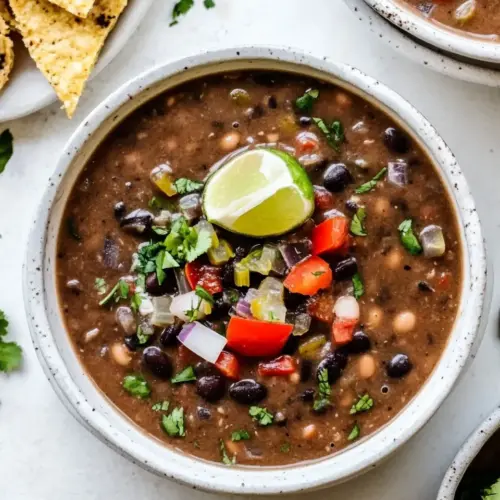
Easy Black Bean Soup
Easy Black Bean Soup is a creamy, hearty bowl full of savory black beans, warm ground cumin, and bright lime juice. Perfect for an easy weeknight dinner, it balances rich, comforting texture with fresh herb notes and budget friendly pantry staples. Make it for cozy lunches or to feed a crowd, this soup is reliable, flavorful, and satisfying every time.
Equipment
- Large Pot
- Immersion Blender
Ingredients
- 1 tablespoon olive oil Sauté to provide a rich, fruity base and help cook aromatics; olive oil also adds healthy monounsaturated fats and helps prevent sticking during the initial vegetables softening stage.
- 1 large yellow onion, chopped Chop finely to contribute sweetness and savory depth; yellow onion softens and caramelizes to build a flavorful foundation for the soup’s broth and overall aroma.
- 1 large carrot, chopped Dice and simmer until tender to add mild sweetness and body; carrot balances acidity and enriches the texture while contributing natural sugars that deepen the soup’s flavor.
- 1 celery rib, chopped Mince and cook down to contribute subtle savory, aromatic notes; celery lends a gentle herbal bitterness and structural crunch when lightly sautéed before simmering.
- 1 red bell pepper, stemmed, seeded, and chopped Stem, seed, and chop to provide bright, sweet pepper flavor and color; red bell pepper adds a fruity accent and additional vitamin content when softened into the base.
- 4 cloves garlic, minced Mince and briefly sauté to release pungent, aromatic oils; garlic intensifies savory depth and enhances the overall umami profile of the soup without overpowering other spices.
- 60 oz (4 cans) black beans, rinsed and drained Rinse, drain, and add to supply hearty protein, fiber, and creamy texture; black beans are the primary body of the soup and contribute an earthy, satisfying taste when simmered.
- 32 oz vegetable broth Pour and simmer as the liquid medium to meld flavors and adjust soup consistency; vegetable broth adds savory stock notes and helps hydrate the beans and vegetables.
- 1 tablespoon ground cumin Measure and stir in to introduce warm, earthy spice and a slightly smoky note; ground cumin complements the beans and peppers while enhancing overall seasoning complexity.
- 1/2 teaspoon dried oregano Sprinkle in dried form to contribute subtle Mediterranean herb character and mild floral notes; oregano supports the savory profile and pairs well with cumin and garlic.
- 1 bay leaf Tuck into the simmering pot to infuse a subtle, woodsy background flavor; bay leaf rounds out the aroma and is removed before serving to avoid sharp edges.
- Kosher salt and black pepper, to taste Season sparingly to taste for overall balance and to enhance natural flavors; kosher salt brightens ingredients while black pepper provides gentle heat and complexity.
- 1 tablespoon fresh lime juice Squeeze in at the end to add bright acidity and lift the flavors; fresh lime juice cuts through richness and brightens the soup for a fresher finish.
- 1/4 cup chopped cilantro Chop and sprinkle to introduce fresh herbal brightness and a slightly citrusy, peppery edge; cilantro adds color and a lively contrast when stirred in or used as garnish.
- Garnish options: avocado, cilantro, shredded cheese, plain Greek yogurt or sour cream, sliced green onion Offer as optional toppings to customize texture and richness at serving; avocado, cilantro, shredded cheese, plain Greek yogurt or sour cream, and sliced green onion provide creamy, tangy, and fresh finishing touches.
Instructions
- In a large pot, heat the olive oil over medium high heat. Add the onion, carrot, celery, and red pepper. Cook until vegetables are tender, stirring occasionally, about 5 minutes. Add the garlic and cook for 2 minutes.: Warmth should radiate from the pan and the oil will shimmer, not smoke. This step primes the pan so the onion and other aromatics soften rather than stick. You should hear a gentle sizzle when you add vegetables; if the oil smokes, lower the heat immediately to prevent a bitter taste. A common mistake is starting too hot and burning the oil, which ruins the base aroma.
- Stir in the black beans, vegetable broth, cumin, oregano, bay leaf, salt, and pepper. Turn the soup to low and let simmer for 25 minutes.: As these vegetables hit the pan they should hiss softly and begin to soften within a few minutes. Stir occasionally so each piece sweats evenly and releases its natural sugars. Visually you want the onion to go translucent and the carrot to lose its raw sheen. If pieces brown too quickly, reduce the heat a bit, because you want tenderness, not a charred flavor.
- Remove the bay leaf. If you want to thicken the soup, use an immersion blender to purée some of the soup for a thicker consistency but don’t blend it completely, just a little to thicken it up. If you don’t have an immersion blender, you can carefully transfer 2 to 3 cups of the soup to a blender and blend until smooth. Stir the pureed soup back into the pot.: Tender means the carrot yields to a fork and the onion is soft and slightly glossy. The aroma will shift from raw sharpness to warm sweetness, a key cue that flavors are developing. Avoid rushing this step, as undercooked veg will give the soup a raw edge and uneven texture.
- Stir in the cilantro and fresh lime juice. Ladle the soup into bowls and serve warm with desired toppings.: When you add the garlic the air will fill with its savory scent, but it can go from aromatic to bitter very quickly. Two minutes at medium heat is enough to bloom the flavor. Stir constantly and watch for any darkening; if the garlic browns, it will taste burnt and acrid.
- Stir in the black beans vegetable broth cumin oregano bay leaf salt and pepper: The pot will transform as the broth brings everything together, steam rising and spices punctuating the aroma. The black beans provide heft while the spices start to knit into the liquid. Make sure to scrape any fond from the bottom to incorporate flavor. A common oversight is not tasting now to balance seasoning before the long simmer.
- Turn the soup to low and let simmer for 25 minutes: During the simmer you will see small bubbles and the surface will gently undulate, a sign the flavors are melding. Simmering allows the spices to infuse and the vegetables to soften fully. Avoid boiling hard, as that can break down the beans too aggressively and make the texture mushy. If the liquid reduces too much, add a splash of extra vegetable broth .
- Remove the bay leaf: This quiet action clears the pot of astringent leaf notes that are no longer needed. After removing it, pause to smell and taste; you should notice a rounder profile. Forgetting to remove the leaf risks someone biting into it, which is unpleasant, so double check the pot before serving.
- If you want to thicken the soup use an immersion blender to purée some of the soup for a thicker consistency but don’t blend it completely just a little to thicken it up: Puréeing a portion creates a luscious, velvety mouthfeel while retaining whole beans for texture contrast. The sound will change to a quieter whir as chunks break down and the soup will visually become creamier. Avoid over blending, since a fully smooth soup loses the satisfying bean bites that make this version special.
- If you don’t have an immersion blender you can carefully transfer 2 to 3 cups of the soup to a blender and blend until smooth: When transferring hot liquid, leave the blender lid slightly ajar and cover with a towel to let steam escape safely. The blended portion should be silky and integrate back into the pot to thicken without dominating. A frequent mistake is filling the blender too full, which can cause hot splashes, so process in small batches.
- Stir the pureed soup back into the pot: As the puréed portion folds into the whole pot you will see the broth take on a richer, more unified body. Stir gently to distribute thickness evenly and check seasoning once more, since blending can mute some flavors. If the texture becomes too thick, loosen with a little extra vegetable broth and adjust seasoning.
- Stir in the cilantro and fresh lime juice: Adding cilantro and fresh lime juice at the end brightens the whole bowl, introducing herbal and citrus notes that cut through the bean richness. The aroma will lift instantly and the color contrast makes the soup visually appealing. Avoid cooking the lime for long, as heat will dissipate its vibrancy.
- Ladle the soup into bowls and serve warm with desired toppings: Serve piping warm so the garnishes, like avocado or a dollop of plain Greek yogurt , create temperature contrast. The steam should carry the scent of cumin and lime, tempting the first spoonful. A common serving misstep is letting the soup cool too much, which dulls the aroma and mouthfeel, so serve promptly for best results.
Notes
- Smoky touch: Stir in a tiny pinch of smoked paprika or toasted cumin to introduce a warm, campfire like undertone without overpowering the dish.
- Extra creaminess: Blend a bit more of the soup or swirl in mashed avocado for a luscious texture and gentle richness that feels indulgent but fresh.
- Herb forward: Increase the chopped cilantro and add a few thinly sliced scallions at the end for an herbaceous punch that brightens each spoonful.
- Spice level: If you like heat, add a pinch of crushed red pepper or a small diced jalapeño while sautéing the vegetables for a controlled kick.
- Thicker bowl: For a stew like finish, mash some beans against the pot with a spoon instead of blending, giving you texture and body without a blender.
- Make ahead: The soup holds up well refrigerated for a few days, and often tastes better the next day once flavors have married; reheat gently on the stovetop with a splash of broth if it becomes too thick.