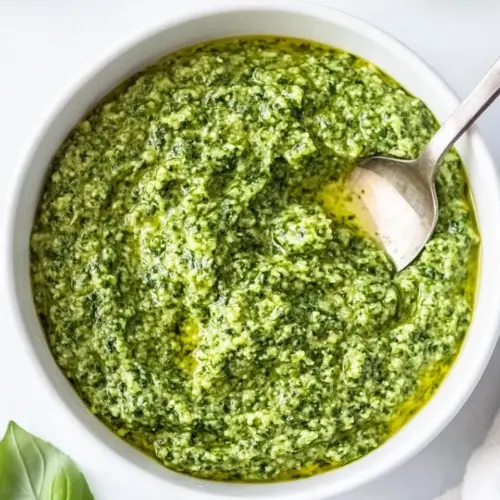
Easy Basil Pesto
Easy Basil Pesto is a creamy, herb forward sauce that combines toasted pine nuts, fresh basil, lemon, and grated parmesan for an easy weeknight dinner boost. Bright citrus and nutty depth create a silky, versatile pesto that clings to pasta or crowns roasted vegetables. Make it for quick meals, last minute guests, or to keep on hand for flavorful finishing touches.
Equipment
- Hexclad pots and pans set
- KitchenAid 13 Cup Food Processor
Ingredients
- 4 oz pine nuts about 1/2 cup Toast until fragrant to deepen the nutty flavor; pulse into the pesto for body and a creamy, slightly crunchy texture. Use sparingly if substituting for cost or allergy reasons, as pine nuts give a distinctive richness.
- 2 tbsp lemon juice fresh Squeeze freshly for bright acidity that balances the basil's herbal oils and the cheese's richness; stir in gradually to taste. Add enough to lift flavors without overpowering the mixture, and adjust after seasoning.
- 1/2 lemon zest Grate finely to add a concentrated citrus aroma that enhances freshness and brightness in the sauce; fold into the pesto for a subtle lift. Use the zest sparingly to avoid bitter pith, applying only the yellow outer layer.
- 1/2 tsp garlic salt Season lightly to provide savory depth and a hint of garlic flavor without overpowering the basil; sprinkle before blending and adjust to taste. Choose low-sodium garlic salt if watching sodium intake, and combine with pepper for balance.
- 1/4 tsp black pepper freshly ground Grind freshly to contribute sharp, warming undertones that cut through the oil and cheese; add during blending and finish with a small adjustment. Taste as you go so pepper enhances rather than dominates the delicate basil.
- 2 cups basil leaves fresh Pick fresh and pack lightly to provide the herbaceous backbone and primary flavor of the pesto; wash and dry thoroughly to avoid watering down the sauce. Add leaves gradually to achieve a vibrant green color and intense basil aroma.
- 1/4 cup olive oil extra virgin Pour slowly while blending to emulsify the mixture and create a silky, spreadable consistency; use extra virgin for its fruity, peppery character. Adjust quantity to control thickness, adding more oil for a looser pesto or less for a firmer paste.
- 1/4 cup parmesan cheese freshly grated Grate finely to bring salty, umami richness and creamy mouthfeel that binds the pesto together; stir in at the end of blending for optimal texture. Use freshly grated for best melting and integration into the sauce.
Instructions
- In a small pan over medium-low heat, toast the pine nuts for 2-3 minutes (don’t add any oil or butter), stirring regularly until lightly browned. Be careful not to burn them.: Warm, nutty aromas should start to rise almost immediately, and you will hear a faint soft pop as the nuts release their oils; this is the cue they are approaching readiness. Visually, you want even, light golden flecks across the nuts, not deep brown edges, since overbrowning brings bitter notes. The toasting concentrates flavor, making the pesto richer, and it also gives a pleasant textural contrast to the otherwise silky sauce. A common mistake is leaving the pan unattended, which can turn a perfectly toasted batch into a smoky one, so stir constantly and pull the pan off the heat as soon as you see the color change. Transfer them to a cool plate to stop cooking and preserve the bright flavor.
- In a food processor, combine the toasted pine nuts, lemon juice and zest, garlic salt, and black pepper. Pulse a few times to rough chop the mixture.: You will smell citrus and toasted nuts mingling as soon as you pulse, and the mixture should look coarsely broken down with small flecks of zest dispersed throughout. Those initial pulses create a base texture that allows the later addition of basil and olive oil to blend evenly. This step matters because it breaks down the nuts enough to avoid large gritty pieces while preserving slight nuttiness. Avoid overprocessing here, which can make the mixture pasty and difficult to emulsify later; short bursts are best. If the bits seem stuck to the blade, stop and use a spatula to nudge them toward the center.
- Scrape down the sides of the food processor with a spatula, then add the basil leaves. Pulse until everything is combined.: Scraping ensures no large pieces remain stuck to the bowl, which helps the basil incorporate uniformly. As you pulse, the bright green color will become more prominent and the aroma will turn herbaceous and forward. The visual cue you want is a cohesive mixture where the basil appears fully folded in, not a heap of whole leaves. This technique prevents uneven texture, and it helps the oil to later form a smooth emulsion. A common slip is overfilling the processor, which leads to uneven chopping; if it feels crowded, process in two quick batches.
- With the food processor running on low, gradually drizzle in the extra virgin olive oil. Once incorporated, turn off the machine and scrape down the sides.: As the olive oil streams in, you will see the mixture turn glossy and more homogenized, and the sound of the motor may change as the texture smooths. Drizzling slowly is crucial because it allows the oil to emulsify with the nut and cheese particles, creating a silky, clingy pesto that coats pasta evenly. If you pour too quickly, the oil may separate or pool rather than blend, leaving the sauce oily rather than creamy. If separation occurs, pulse briefly or add a spoonful more of processed solids to help rebind the emulsion. Scraping afterward ensures all ingredients are mixed and none remain matted to the sides.
- Add the grated Parmesan cheese to the food processor and pulse until well combined. If the pesto is too thick, you can add an additional tablespoon of olive oil to thin it out.: When you add the parmesan cheese , the mixture gains savory weight and becomes more cohesive; the aroma shifts subtly toward nutty and cheesy. Pulse until the cheese is evenly dispersed but not completely pureed into dust, so you retain some texture. If the final consistency feels dense, a tablespoon of olive oil loosens it without diluting flavor. The why here is texture and mouthfeel, cheese helps the sauce bind and cling. A typical error is adding too much oil at once to thin it, which waters down flavor; add small increments and taste as you go.
- To serve with pasta, toss warm, freshly cooked (to al dente) pasta in a large bowl with the pesto. Avoid cooking the pesto in a hot pan, as it may alter the flavor and consistency. If using chilled pesto from the fridge, consider adding melted butter to help thin it out, if desired.: The heat from just cooked pasta gently loosens the pesto, releasing steam that lifts the aromas; this is when the sauce bonds to the noodles and creates glossy strands. Use pasta that is cooked to al dente texture so the bite pairs well with the creamy pesto. Avoid high heat which can cook the basil and dull its brightness, leading to a flatter flavor; stirring in the sauce off direct heat preserves that fresh profile. If you are working with chilled pesto, the cold can firm the oils, so a small knob of melted butter or a splash of warm pasta water will help reincorporate the sauce smoothly. A common mistake is adding very hot pan heat to the pesto, which will change the flavor and can make the sauce grainy, so always toss off heat.
Notes
- Choose fresh basil. Fresh, vibrant leaves give the cleanest herbal aroma and a bright green color that makes the pesto feel lively; if the leaves are slightly damp, pat them dry to avoid watering down the sauce.
- Pulse don’t puree. Short pulses build texture and prevent overheating the basil, which preserves its color and fresh taste; long continuous processing can turn the mixture pasty and warm the herbs too much.
- Control salt wisely. Because garlic salt and parmesan cheese both contribute sodium, add a portion, taste, and only then finish seasoning to avoid overly salty pesto.
- Emulsify with patience. Drizzling olive oil slowly while the processor runs encourages a glossy, stable emulsion that clings to pasta or bread without separating.
- Keep it cool for storage. Refrigerate pesto in an airtight container with a thin film of oil on top to prevent browning, and use within a week for peak freshness.