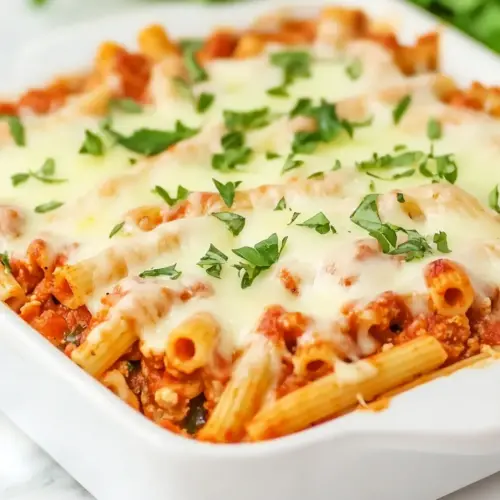
Easy Baked Ziti
Easy Baked Ziti is a creamy, cheesy pasta casserole with savory browned beef and Italian sausage, perfect for an easy weeknight dinner or feeding a crowd. Tender ziti is enveloped in a silky tomato cream sauce and topped with bubbling mozzarella, creating a comforting, crowd pleasing meal you will want to make again and again.
Equipment
- 9×13 baking dish
Ingredients
- 1 (16-ounce) package ziti Boil until al dente to provide a sturdy base that holds sauce and cheese without becoming mushy; drain and toss with sauce to evenly distribute flavors before baking.
- 1/2 pound ground beef, 80% lean / 20% fat Brown thoroughly to render fat and develop savory depth; crumble while cooking to create bite-sized pieces that meld into the sauce and enhance the dish's meatiness.
- 1/2 pound mild Italian sausage Cook until browned and fully cooked, removing casings if necessary, to add herb-forward savory richness; combine with ground beef for a well-rounded meaty texture and flavor.
- 1 1/2 - 2 cups marinara sauce, (we love Rao’s) Pour or stir into the meat and pasta mixture to add tangy, savory tomato flavor and help bind components; choose the upper amount for a saucier, more cohesive bake.
- 1 (14.5-ounce) can diced tomatoes Drain or add with juices to introduce bright tomato chunks and extra acidity; stir into the sauce for texture contrast and a fresh tomato note throughout the casserole.
- 4 ounces cream cheese, softened Soften and mix into the cheese layer to lend creaminess and a slightly tangy richness; helps create a silky filling that keeps the dish moist during baking.
- 1/2 cup sour cream Blend with cream cheese to add a cool, tangy, smooth element that lightens the richness of the cheeses and balances the tomato sauce's acidity.
- 1 teaspoon garlic salt with parsley flakes Season the dish while cooking to infuse garlicky and herby savory notes; sprinkle into the sauce mixture to enhance overall flavor with consistent seasoning.
- 1 teaspoon Italian seasoning Sprinkle into the meat sauce or the cheese mixture to contribute aromatic Mediterranean herbs; use to round out flavors and complement the tomato and garlic profile.
- 8 ounces fresh mozzarella, sliced Layer slices across the top to melt into gooey pockets of mild, milky texture; offers a pleasing pull and fresh creaminess when baked until bubbly and golden.
- 1 cup shredded mozzarella cheese Scatter over or mix into the ziti to create gooey, stretchy cheese pull and a golden browned topping; helps bind the casserole and adds familiar mozzarella flavor.
- fresh basil, for garnish Garnish at the end to provide bright, aromatic freshness and a pop of color; tear leaves over the finished bake to elevate flavor with a sweet, herbal note.
Instructions
- Preheat the oven to 375 degrees F. Grease a 9×13 inch baking dish and set aside.: The oven warmth is the first signal that we are committing to a cozy bake, you should feel the kitchen begin to warm as the air circulates. When the oven reaches 375 degrees F , it provides steady, even heat so the casserole cooks through and the cheese browns without burning. Greasing the 9×13 baking dish prevents sticking and helps the corners release cleanly, which matters when you want neat squares to serve. Tune in to the oven's hum and avoid opening the door repeatedly, as that causes temperature dips. A common misstep here is skipping the grease, which makes serving messy and wastes edges of that lovely crust.
- Cook pasta to al dente according to package directions. Drain and set aside.: You will notice the pasta become tender but still slightly firm in the center when cooked al dente , this toothsome texture is important because the noodles will continue to soften in the oven. Taste a piece to judge doneness rather than relying solely on the clock. After draining, the ziti should glisten with a little moisture but not be sitting in water, which can dilute the sauce. Avoid overcooking in the pot, which often leads to a mushy final casserole; undercooked pasta will not absorb sauce properly and will feel chalky.
- Meanwhile, cook ground beef and Italian sausage in a large saucepan over medium heat, stirring and breaking up into small pieces, until no longer pink, 7-10 minutes. Drain fat and set saucepan aside.: As the ground beef and Italian sausage hit the hot pan you should hear a steady sizzle, and soon brown bits will form on the surface, those caramelized morsels deliver deep savory flavor. Stir and break the meat apart so it cooks evenly; this keeps large chunks from remaining underdone. When there is no visible pink and juices run clear, it is ready, usually about 7 to 10 minutes. Drain excess fat to avoid a greasy sauce, but leave a touch of fond in the pan if you want extra flavor. A frequent error is cooking at too high heat which burns the surface before the center cooks through.
- In a large pot over medium heat, combine marinara sauce, tomatoes, cream cheese, and sour cream and cook, stirring often, until well blended and cream cheese is melted.: When you warm the marinara sauce and canned diced tomatoes , steam will rise with bright tomato perfume, and that is the aroma you want. Adding softened cream cheese and sour cream introduces a velvety sheen, and as you stir the pieces should melt into a silky, homogenous sauce. Keep the heat moderate so the dairy warms gently and merges without separating; intense heat can cause curdling. The sauce should coat the back of a spoon, thick and glossy. Stirring frequently prevents hotspots and ensures a uniform texture. Avoid adding cold dairy directly to a boiling sauce, as it can create lumps.
- Add cooked pasta and sauce to the saucepan with ground beef and mix well. Add garlic salt and Italian seasoning.: When you fold the warm ziti into the sauce and meat, you will notice steam rising and a comforting amalgam of aromas. The pasta should be thoroughly coated so each tube holds sauce inside, creating pockets of flavor. Sprinkle in the garlic salt and Italian seasoning and stir to distribute those herbal and savory notes evenly. Taste and adjust lightly; the seasonings help marry the components. A common oversight is failing to fully mix, which leaves some dry pockets of pasta and inconsistent seasoning.
- Pour into the prepared pan. Top with fresh mozzarella and shredded mozzarella.: As you transfer the mixture into the greased 9×13 baking dish , press it gently to even the surface. Layer the slices of fresh mozzarella so they lie across the top and follow with the shredded mozzarella for an even melt and golden finish. The cheese will begin to soften from the residual heat and then bubble and brown in the oven, creating that irresistible pull when served. A mistake here is skimping on cheese which can lead to a dry top; cover the surface liberally for best results.
- Bake for 20 minutes, uncovered.: In the oven you will hear a low, steady bubbling as the sauce simmers and the cheese melts. After about 20 minutes the top should be melted and the edges may show light golden spots, signals that the sugars in the sauce and the proteins in the cheese have harmonized. Baking uncovered allows the top to brown and develop texture while the interior stays moist. Avoid overbaking, which dries out the pasta and makes the top overly crisp; check it a few minutes before the time is up if your oven runs hot.
- Let rest for at least 5 minutes before serving. Garnish with fresh basil.: Resting the casserole for at least 5 minutes lets residual heat settle, making slicing cleaner and letting flavors meld so each portion holds together. The surface will quiet from its bubbling chorus and the cheese will firm slightly, giving you those neat servings we all appreciate. Scatter torn fresh basil over the top right before serving for a fresh herbal scent and bright green contrast. A common slip is cutting too soon while the casserole is too hot, which causes it to fall apart.
Notes
- Cheese layering: Try distributing the fresh mozzarella slices on top and the shredded mozzarella under them for a more uniform melt and attractive browning.
- Sauce consistency: If your sauce seems thin, simmer it a few minutes to concentrate flavors before mixing with ziti, this prevents a watery casserole.
- Make ahead: Assemble the casserole without the final cheese layer, refrigerate up to two days, then top with cheese and bake when ready for perfect timing.
- Freezing: Wrap the unbaked pan tightly and freeze up to three months, thaw in the fridge overnight, then add cheese and bake to finish.
- Salt caution: Because garlic salt is already included, taste the sauce before adding extra salt to avoid over seasoning.