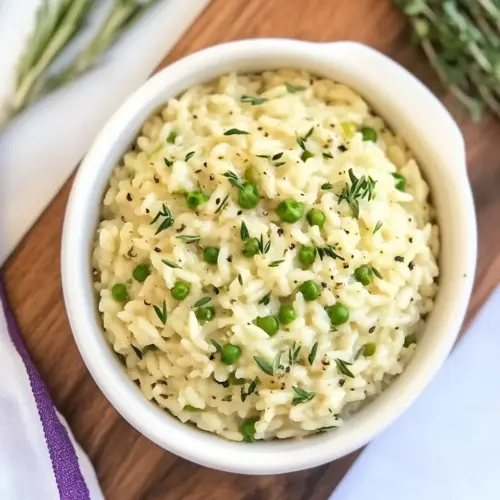
Easy Baked Risotto
Easy Baked Risotto is a creamy, comforting oven baked rice dish that delivers rich, cheesy flavor with minimal hands on time. This easy weeknight dinner uses arborio rice and savory broth to yield a silky texture, finished with Parmesan cheese and butter for indulgence. Make it for a fuss free family meal that still feels special.
Equipment
- Storage Containers
Ingredients
- 2 tablespoons olive oil Gently sauté to build the aromatic base of the risotto and provide a fruity, peppery backbone that enhances other flavors; use extra-virgin olive oil for best texture and a light sheen without overpowering the dish.
- 1 small onion (grated) Softly cook until translucent to add natural sweetness and depth; finely grating ensures quick, even incorporation so the onion melts into the rice creating a cohesive, silky mouthfeel.
- 2 cups arborio rice Absorb the cooking liquid and release starch to create the classic creamy risotto texture; choose arborio for its high starch content and round grains that swell without turning mushy.
- 1 quart reduced sodium chicken broth Simmer to supply warm, savory liquid that cooks the rice and infuses it with layered umami notes; using reduced sodium chicken broth lets you control seasoning while maintaining rich chicken flavor.
- 1 cup diced zucchini Contribute tender texture and subtle vegetal freshness that balances the richness; dicing into small, uniform pieces ensures even cooking and pleasant bites throughout the dish.
- 1/2 cup reduced sodium chicken broth (or cream or water) Moisten and finish the rice while adding either extra creaminess or a touch of looseness as needed; using a small additional amount of broth, cream, or water helps achieve desired consistency without diluting flavor.
- 1/2 cup grated Parmesan cheese Enrich and bind the finished risotto with a salty, nutty creaminess while enhancing mouthfeel; freshly grated Parmesan melts smoothly into the rice to create a glossy, savory finish.
- 1/2 cup frozen petite peas Provide pops of sweet color and bright contrast while adding light vegetal sweetness; stirring frozen petite peas in at the end preserves their texture and vivid green hue.
- 1 tablespoon butter Enrich and silk the risotto with a rounded, buttery finish while adding a hint of richness; a small knob of butter stirred in at the end helps emulsify the sauce and enhance flavor.
- Salt, pepper, and/or fresh lemon juice to taste Season and brighten the finished dish to taste with salt, pepper, or acidity; adjusting with these elements ensures the risotto is balanced and highlights the other ingredients.
Instructions
- Preheat the oven to 350 degrees F.: The kitchen should fill with a neutral warmth that signals even baking, which is essential because a steady oven temperature helps the arborio rice absorb liquid uniformly. You will not notice dramatic aromas at this point, but the consistent heat prevents hot spots that might cause uneven cooking. A common mistake is skipping preheating, which can lengthen bake time and produce unevenly cooked rice.
- Add the olive oil to an oven-safe pan set over medium-low heat on the stovetop. Add the onion and stir to coat with olive oil. Cook for 2 minutes, stirring often.: As the oil warms you will see a gentle shimmer and a faint fruity scent if using a good quality olive oil , which helps the grated onion soften without browning. The moderate temperature gives you control and keeps the onion sweet rather than caramelized. Avoid turning the heat too high, because that will brown the ingredients prematurely and change the flavor balance.
- Add the rice and stir to coat all of the grains.: The grated onion will hiss softly as it hits the warm oil, then settle and become translucent in a minute or two, releasing a mild sweet aroma. Stirring ensures even distribution so no pieces stick and crisp up. The pitfall here is rushing the step and not softening the onion enough, which leaves a sharp, raw bite.
- Add the quart of broth, raise heat to high, and bring to a boil.: During this brief cook you will notice the texture changing from raw to tender and the smell shifting to gentle sweetness. Frequent stirring keeps the onion from catching and prevents uneven cooking, which would create browned pockets. A mistake to avoid is leaving the pan unattended, which can lead to uneven color and flavor.
- Transfer pan to oven, cover with an oven-safe lid or foil, and bake for 20 minutes.: When you add the arborio rice it will look glossy as it absorbs the oil, and each grain should be thoroughly coated to promote even heat transfer and initial toasting. This step helps the rice maintain structure while it later releases starch for creaminess. Do not skip coating, because uncoated grains can cook unevenly and create textural inconsistency.
- Remove from the oven, remove the lid, and stir in the zucchini, peas, additional broth, Parmesan, and butter, until combined and creamy. Serve warm topped with additional Parmesan cheese, lemon, and fresh herbs as desired.: Pouring in the warm to room temperature reduced sodium chicken broth will create an audible simmer that builds into a steady boil, releasing savory steam that deepens the dish's aroma. Bringing it to a boil activates the liquid absorption process quickly and evenly. If you start with a cold broth and barely warm the pan, the dish will take longer and may cook unevenly, so raise the heat until you see a rolling boil.
- Transfer pan to oven, cover with an oven-safe lid or foil, and bake for 20 minutes: In the oven you will notice gentle bubbling beneath the lid, and the scent will become richer as the arborio rice hydrates and swells. The covered environment traps steam, which is the efficient mechanism that finishes the rice without constant stirring. A common error is using a pan that is not oven safe, or leaving the lid off, which causes excessive evaporation and may leave the rice undercooked.
- Remove from the oven, remove the lid, and stir in the zucchini, peas, additional broth, Parmesan, and butter, until combined and creamy: When you take off the lid warm, fragrant steam will rise, and the rice should appear plump with some remaining surface broth. Stirring at this stage releases starch and creates a glossy, cohesive texture as Parmesan cheese melts and butter emulsifies. The diced zucchini and frozen petite peas will warm through in the hot rice without turning soggy. If your risotto seems too firm, add the additional half cup of reduced sodium chicken broth or water gradually, because adding too much at once can make the texture runny. Avoid over stirring aggressively, which can break grains and become gluey. Serve warm, and adjust seasoning with salt , pepper , or a squeeze of fresh lemon juice to brighten the finish.
Notes
- Make it vegetarian: Swap the reduced sodium chicken broth for a good quality vegetable broth to keep the flavor savory while making the meal suitable for vegetarian guests.
- Use cream for extra richness: If you prefer a silkier finish, replace the half cup of additional broth with a splash of cream, stirring gently to meld it into the rice for a luxurious mouthfeel.
- Fresh herbs at the end: Stir in finely chopped parsley or basil right before serving to add a bright herbal note that balances the richness of the Parmesan cheese.
- Adjust vegetables seasonally: While the recipe lists diced zucchini and frozen petite peas, you can swap these for other small diced vegetables that cook quickly once folded in.
- Reheat gently: Warm leftovers in the microwave or on the stovetop with a splash of broth or water to restore creaminess, stirring until heated through.
- Finish with acid: A small squeeze of fresh lemon juice right before serving brightens the entire dish and cuts through the richness for a more balanced bite.