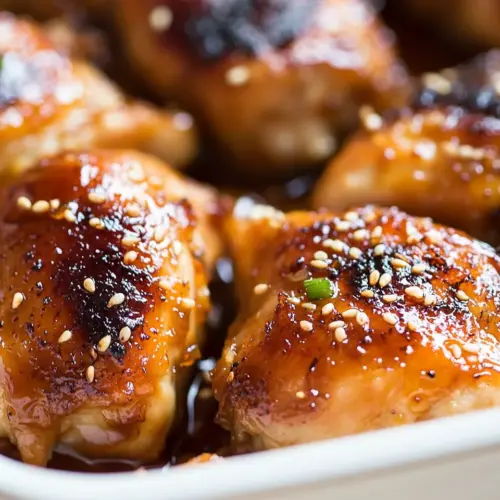
Easy Baked Honey Garlic Chicken
Easy Baked Honey Garlic Chicken glistens with a sticky, sweet glaze and bold garlic flavor. Juicy leg quarters roast to tender perfection with crisped skin and caramelized edges, making this an easy weeknight dinner that feels special. Quick to assemble and full of comforting umami, it is perfect when you want a simple, crowd pleasing main with minimal fuss.
Equipment
- Baking Dish
- Mixing Bowl
- Whisk
- Aluminum Foil
- Meat Thermometer
Ingredients
- 3 lbs chicken leg quarters, with skin (about 4 legs quarters) Provide rich, moist flavor and tender meat while crisping the skin during baking; chicken leg quarters offer a balance of dark meat and fat that absorbs marinades well, ensuring juicy results. Use skin-on pieces to develop caramelized edges and deeper savory notes as the honey-garlic glaze reduces in the oven.
- 4 cloves garlic, minced Add sharp, aromatic bite and depth by releasing essential oils when minced; garlic infuses the marinade with savory complexity and supports browning on the chicken surface. Mince finely to distribute flavor evenly and allow quick mingling with honey and soy for a cohesive glaze.
- 1/4 cup honey Contribute natural sweetness and help create a glossy, caramelized coating as it heats; honey balances the salty and acidic elements while promoting browning on the skin. Choose a runny honey for easy mixing and to help the glaze adhere to the chicken throughout baking.
- 2 tablespoons dark soy sauce Impart salty, savory umami and a dark color that complements the honey; dark soy sauce intensifies the overall savory profile and helps create a richly flavored glaze. Use measured amounts to avoid overpowering sweetness while enhancing depth and glazing properties.
- 1 tablespoon white vinegar Provide bright acidity to balance sweetness and saltiness, tenderize the meat slightly, and brighten the overall flavor profile. Add vinegar sparingly to lift the glaze and prevent cloying sweetness while helping flavors meld during marination.
Instructions
- Heat oven to 400 F degrees F. Line a baking dish with aluminum foil (optional); set aside.: When the oven reaches a steady 400 F , you will get immediate contact heat that starts rendering fat from the chicken skin, which is crucial for crisping. You should hear a faint sizzle as the hot air hits the cold meat when it goes in, and the initial burst of heat helps the glaze begin to caramelize. If the oven is not fully preheated, the skin will take longer to crisp and the meat might dry out while waiting, so always confirm the temperature before baking.
- Layer the chicken legs on the baking dish. In a small bowl combine the garlic, honey, soy, and vinegar. Whisk until fully combined. Pour mixture onto chicken legs, coating evenly.: Lining the dish with foil makes cleanup effortless and prevents sticky glaze from bonding to the pan. The foil will crinkle and reflect heat, but do not let it touch the oven elements. If you skip foil the dish will require more scrubbing later, and the glaze may become more deeply caramelized where it sticks, which can be harder to remove.
- Bake 40-45 minutes or until skin is crisp and caramelized and chicken is cooked through.: Arrange the chicken with space between pieces so hot air circulates, allowing even browning. When arranged properly you will see the skin begin to blister and brown after about 20 minutes, signaling good progress. Overcrowding causes steaming rather than roasting, which prevents the skin from crisping and yields a softer exterior.
- For dark crispy skin: Place chicken under the broiler for 3-5 minutes or until desired crispness.: Whisk these until smooth so the garlic disperses and the honey integrates with the dark soy sauce and white vinegar . The mixture should be glossy and slightly thick, which helps it cling to the chicken . If the honey is crystallized, warm it slightly before whisking; failing to fully combine can leave pockets of undissolved honey or uneven flavor distribution.
- Whisk until fully combined: A well emulsified glaze ensures even coating and consistent flavor. You should see a uniform sheen and the minced garlic suspended throughout the mix. If it looks separated, whisk longer or add a tiny pinch of warm water to help it come together. An uneven mix can lead to some bites being overly salty or overly sweet.
- Pour mixture onto chicken legs coating evenly: Pour the glaze over the arranged chicken , using a spoon or brush to spread it so every piece gets covered. The aroma of garlic and sweet honey will intensify as it hits the warm meat. Be careful not to drown the pan in liquid, as excess moisture can prevent browning; aim for a glossy coating rather than a pool in the pan.
- Bake 40-45 minutes or until skin is crisp and caramelized and chicken is cooked through: As the chicken bakes you will notice the glaze darken and thicken, and the skin will go from pale to golden to deep amber near the end. The meat should register 165 F in the thickest part, and juices should run clear. A common mistake is removing the meat too early; undercooked dark meat can be pink near the bone, so always check temperature rather than color alone.
- For dark crispy skin Place chicken under the broiler for 3-5 minutes or until desired crispness: A final broil creates blistered, almost charred edges that taste smoky and concentrated. Watch closely because the sugar in the honey can burn quickly, and you want a deep mahogany finish rather than blackened spots. If your broiler is intense, position the rack farther from the element and broil in short bursts to avoid scorching.
Notes
- Preheat fully Ensure the oven reaches a steady 400 F before you put the chicken in, this jumpstart is essential for rendering skin fat quickly and beginning caramelization right away.
- Even coating After whisking the glaze, pour it slowly and use a spoon to help the mixture adhere to all sides of the chicken, this prevents pools of sauce and ensures every bite is flavorful.
- Watch the broiler If you use the broiler for extra crispness, stay close and broil in short intervals because the honey can burn fast, making the finish bitter rather than caramelized.
- Check temperature Use an instant read thermometer to verify the thickest part of the chicken reaches 165 F, this is the safest way to confirm doneness without overcooking.
- Adjust seasoning last Because the dark soy sauce is salty, taste the glaze before adding any extra salt and adjust with vinegar or a touch more honey if it seems overly salty.
- Rest before serving Let the baked chicken rest for 5 to 10 minutes so juices settle and the meat slices cleanly, giving a juicier eating experience.