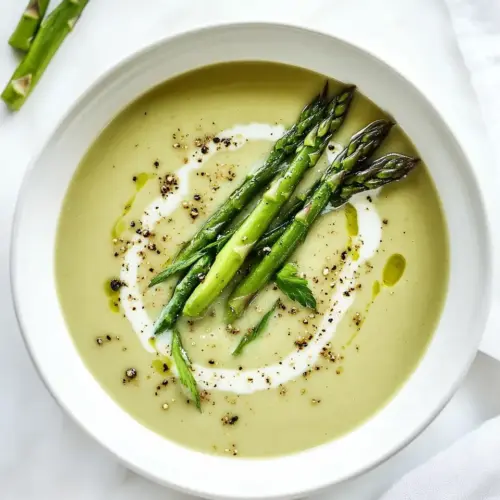
Easy Asparagus Soup
Easy Asparagus Soup is a creamy, bright spring soup that highlights tender asparagus and silky potato for body. This easy weeknight dinner or lunch offers fresh lemon lift and comforting cream for a balanced, cozy bowl you will want to make again and again.
Equipment
- Soup pot
- Immersion Blender
- Cutting Board
- Chef's Knife
Ingredients
- 1 tablespoon olive oil Sauté in a skillet until fragrant and shimmering to provide a flavorful fat base that helps soften aromatics and prevents sticking; enhances richness and brings out brightness in the finished soup.
- 1 tablespoon butter Melt over medium heat to add a creamy, savory depth and help brown the onion and celery; contributes silky mouthfeel and rounds out the olive oil's flavor profile.
- 1 medium onion chopped Chopped finely to release natural sweetness and create a tender texture; builds the aromatic foundation and provides subtle savory notes that complement the asparagus.
- 2 sticks celery chopped Chopped into small pieces to add mild, aromatic crunch that softens during cooking; supports the soup's savory backbone and layers of flavor without overpowering.
- 3 -4 cloves garlic minced Minced finely to impart sharp, pungent flavor that mellows with cooking and infuses the broth; offers aromatic lift and depth to balance the vegetables.
- 4 cups chicken or vegetable broth Simmered as the primary cooking liquid to hydrate and concentrate flavors; delivers savory backbone and determines overall soup intensity depending on chicken or vegetable choice.
- 1/2 teaspoon Italian seasoning Sprinkled in during simmering to add an herbaceous, slightly peppery blend that enhances the soup's savory profile; brings subtle Mediterranean warmth without dominating.
- 2 pounds asparagus trimmed & cut into 1" pieces, see note Trimmed and cut into one-inch pieces to offer the star vegetal flavor and vibrant green color; cooks until tender for a fresh, slightly grassy taste and textural centerpiece of the soup.
- 1 medium Russet potato peeled & diced Peeled and diced to introduce natural starch that thickens the soup and provides creamy body once cooked and blended; contributes gentle earthiness that complements asparagus.
- 1/2 tablespoon fresh lemon juice Added near the end to brighten flavors with a clean, acidic lift that balances richness; enhances overall flavor contrast and brings a subtle tang.
- 1/2 cup heavy/whipping cream see note Stirred in to introduce luxurious creaminess and smooth texture while enriching the soup's mouthfeel; adds indulgent richness and helps meld flavors together.
- Salt & pepper to taste Seasoned to taste to enhance and balance all flavors in the soup; adjusts saltiness and sharpness so the final dish achieves a pleasing, well-rounded profile.
Instructions
- Add the oil and butter to a soup pot and sauté the onion and celery over medium heat until lightly browned (about 7-10 minutes).: The pan should hiss softly when the olive oil and butter hit the surface, releasing a nutty aroma as the onion and celery begin to soften. You want the vegetables to become translucent and then take on a faint golden edge which signals caramelization and depth of flavor, not a deep brown which can taste bitter. Stir every minute or so to ensure even cooking and to collect the fond, those little browned bits that add savory complexity. A common mistake here is turning up the heat to rush the process, which can lead to uneven cooking and burned edges. If the pan starts to look dry, add a teaspoon of water to deglaze and loosen the flavorful bits stuck to the bottom. The texture should transition from crisp to tender, and the aroma should become sweet and mellow.
- Stir in the garlic and cook for 30 seconds.: Right after the onions and celery have softened, add the minced garlic . You will smell its sharp, pungent perfume immediately, and it will bloom into a warmer, golden scent as it heats. Thirty seconds is enough time for the garlic to release its flavor into the fat without burning. If it starts to brown, remove the pot from the heat briefly; burnt garlic will give a bitter note that is hard to hide. I often tilt the pan and spoon the melted butter and oil over the vegetables so the garlic cooks evenly. Once the sharpness mellows, you're ready for the next stage.
- Add in the chicken broth, Italian seasoning, asparagus, and potatoes. Increase the heat to high and bring it to a boil. Cover the pot with the lid slightly open. Reduce the heat so it's simmering. Let it cook until the potatoes are tender (about 15 minutes).: As you pour in the broth , steam will rise, carrying herbal and vegetal notes. The dried Italian seasoning will infuse the liquid, and you should hear a gentle rolling boil as the pot heats. Covering with a lid cracked two thirds closed traps heat while letting steam escape, preserving a steady simmer. Once the stew reaches a simmer, lower to maintain small, even bubbles which cook the diced potato and the chopped asparagus through without breaking them into mush. Test tenderness by piercing a potato cube with a fork; it should slide in easily. A frequent error is boiling too vigorously, which can shred the asparagus and cloud the broth, or simmering too gently so the potato remains underdone. Aim for even tenderness and a bright green color in the asparagus so the soup stays visually appealing.
- Use an immersion blender to blend the soup right in the pot, or blend it in batches using a regular blender (I would let the soup cool down for a bit first!). Stir in the lemon juice and cream. Season with salt and pepper as needed (I find this soup needs a generous amount of salt) and serve immediately.: When you start blending, the soup will transform—steam will rise, and the texture will become creamy and cohesive. If using an immersion blender, keep it moving to create a smooth, even consistency and to avoid creating hot pockets that splash. When using a countertop blender, allow the soup to cool slightly to prevent pressure build up, and blend in small batches with the lid tilted to vent. The sound will change from bubbling liquid to a steady whir as solids break down. One common pitfall is overblending to the point it becomes gummy; stop when the texture is smooth but still feels lively. The appearance should be uniform, without large chunks, and the aroma will intensify as surface area increases.
- Stir in the lemon juice and cream: After blending, the bowl needs brightness and silk. Adding the lemon juice first wakes up the flavors, giving a fresh, citrus lift that cuts through the richness. Next, gently stir in the heavy cream to soften edges and add luxurious mouthfeel. Do this off heat or on the lowest burner setting so the cream integrates without curdling; you want a glossy finish, not curds. If the soup tastes flat, a tiny additional splash of lemon can enliven it, but add in small increments. A mistake to avoid is adding the acid too early, which can mute some aromatics; finishing with lemon preserves its brightness. The final temperature should be warm and comforting, not scalding hot.
- Season with salt and pepper as needed and serve immediately: Seasoning is the final act that pulls everything together. Add salt in small increments and stir, tasting between additions, because the broth and other ingredients concentrate as they reduce. Freshly ground pepper adds a mild heat that complements the herb and citrus notes. The texture should be velvety and spoonable, with the aroma of asparagus, lemon, and butter rising with each ladle. A common oversight is under-salting; soups often need a generous hand to reach flavorful balance. Serve right away so the color stays bright and the textures remain ideal.
Notes
- Trim smartly Trim asparagus by either cutting the first inch or two off in one sweep while the bunch is tied, or snap each spear where it naturally gives. This prevents woody bits from making the texture unpleasant.
- Control the sauté Cook onion and celery until just translucent and lightly colored for maximum sweetness. Taking your time here builds depth without adding extra ingredients.
- Blend with care Use an immersion blender for convenience and safety, moving it slowly to achieve a smooth texture without splattering. If using a regular blender, cool slightly and vent the lid to avoid pressure issues.
- Adjust richness If you want a lighter bowl, omit the heavy cream or replace it with coconut milk for a dairy free alternative as the recipe notes suggest. Stir it in gently to maintain silkiness.
- Brighten at the end Add the lemon juice last to preserve freshness and to make the flavors pop. Add in small increments and taste as you go to avoid over acidifying.
- Season gradually Salt in stages and taste. Soups often need more seasoning than you expect, and the final adjustment after blending is critical for balance.
- Serve warm This soup is best served immediately to keep the color vivid and the textures ideal. If reheating, do so gently over low heat to prevent separation.