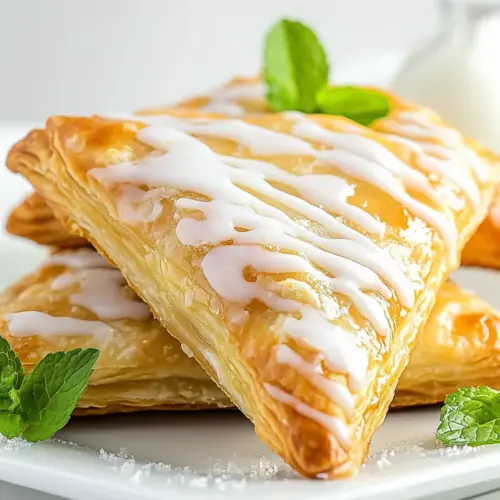
Easy Apple Turnovers
Easy Apple Turnovers are flaky, cinnamony pastries filled with tart Granny Smith apples and finished with a sweet vanilla glaze. These crispy pastries deliver warm, aromatic apple filling and a glossy finish, perfect for an easy brunch or a comforting dessert. They give bakery quality with minimal effort, making them an ideal easy weeknight dessert or special weekend treat to share.
Equipment
- Medium Saucepan
- Baking trays
- Parchment Paper
- Rolling surface
- Wire Rack
- Paring knife
Ingredients
- 2 1/2 cups Granny Smith apples (peeled, cored and chopped) Provide tartness and structural bulk when peeled, cored, and chopped; releases natural juices that combine with sugar and spices to create the turnover filling. Help balance sweetness with acidity and soften when baked to a tender texture that melds with the pastry.
- 1/3 cup granulated white sugar Add sweetness and aid in caramelization during baking; dissolves into the apple juices to create a cohesive, flavorful filling. Help preserve moisture and contribute to the glossy finish of the cooked fruit mixture.
- 1 1/2 teaspoons ground cinnamon Impart warm, aromatic spice that enhances the apple flavor; blends into the filling to provide depth and a classic apple-pie profile. Work in small amounts to avoid overpowering the fruit while rounding out sweetness.
- 2 tablespoons all purpose flour (plus a little more) Thicken filling liquids by absorbing excess moisture released by the apples; helps the filling set so it does not become soggy within the pastry. Also provides slight body to the mixture and stabilizes juices during baking.
- One 17.3-ounce package puff pastry, thawed according to package directions Provide a flaky, tender dough when thawed and used to encase the filling; puffs up in the oven to create layers and a light, crisp exterior. Offer convenience and consistent results compared to making pastry from scratch.
- 1 large egg (lightly beaten with 1 tablespoon water) Seal and glaze pastry edges while helping to adhere any decorations; creates a shiny, golden-brown finish when brushed over the dough before baking. Combined with water, provides an egg wash that promotes attractive color and slight crispness.
- 1 cup powdered sugar Create a sweet, smooth icing when mixed with vanilla and milk; drizzled over cooled turnovers to add sweetness and visual appeal. Dissolves easily to form a glossy glaze that contrasts with the flaky pastry.
- 1/2 teaspoon vanilla extract Provide a fragrant vanilla flavor to the glaze; enhances sweetness with a warm, aromatic note that complements the apples and cinnamon. Use sparingly to avoid overwhelming the delicate fruit and pastry flavors.
- 1 to 2 tablespoons milk Adjust glaze consistency to desired thickness and sheen; thins powdered sugar mixture for easier drizzling or spreading. Add gradually to achieve a smooth, pourable glaze that sets with a slight sheen on cooled turnovers.
Instructions
- To a medium saucepan, add the chopped apple, sugar, and cinnamon and stir well to coat the apple. Put the saucepan over medium heat, cover it, and cook for 5 minutes, stirring occasionally. Stir in the flour and cook 30 seconds more, stirring constantly. Cool to room temperature. You should have about 1 cup of apple filling.: The filling will begin with a soft hiss as the pan warms, releasing a sweet, cinnamony steam that fills the kitchen. As the apples heat, their fragrance becomes more pronounced, and the sugar will start to dissolve into the juices, creating a glossy sheen on the fruit. This early stage matters because even coating ensures the sugar and ground cinnamon distribute evenly, preventing any pockets of cloying sweetness or raw spice. A common mistake here is using too high heat, which can scorch the sugar, so keep the flame moderate. If pieces stick to the bottom, reduce the heat and stir gently, scraping the pan to incorporate any caramelized bits that add flavor.
- Preheat the oven to 400 degrees F. Line 2 large baking trays with parchment paper or silpat liners.: Covered cooking traps steam and softens the Granny Smith apples quickly, creating a tender interior while preserving some texture. You will hear a gentle bubbling and notice the apples becoming translucent at the edges. Stirring occasionally prevents sticking and helps the fruit cook evenly. This technique keeps the apple pieces intact rather than turning them to mush, which is important for a filling that holds shape inside the pastry. Avoid lifting the lid too often, as heat escapes and the cooking slows, prolonging the process unnecessarily.
- Unfold the puff pastry sheets, and roll them both out on a lightly floured surface to a square about 10 inches. Cut each sheet into 4 equal parts. Place 2 tablespoons of apple filling in the center of each of the 8 puff pastry squares. Lightly brush 2 adjacent sides of each pastry square with egg wash, and fold them over onto the non-egg washed edges to form triangles.: Once you add the all purpose flour , you will see the mixture thicken almost immediately, fur becoming glossy as the flour absorbs liquid. Stirring constantly for those 30 seconds prevents lumps and ensures the flour cooks through, eliminating any raw pasty flavor. This brief cook time also helps the thickened filling cling to the fruit instead of pooling in the pastry. A frequent slip up is adding too much flour which can make the filling pasty, so stick to the listed amount and whisk thoroughly.
- Arrange the pastries on the prepared baking trays. Lightly brush the tops with more egg wash. Crimp the sides of each pastry with a fork. Use a paring knife to cut 3 small slits in the top of each pastry. Bake until the pastries are puffed and golden, about 18 to 25 minutes, rotating the trays once halfway through. Cool completely before glazing.: Cooling the filling is about control, not waiting. As the mixture cools, the sugars set slightly and the filling firms so it will not ooze through the pastry. You will feel a change in texture from hot and loose to a denser, scoopable mass. Resist the urge to assemble while the filling is warm, because heat will steam the pastry and create a soggy bottom. A simple trick is to spread the filling on a plate to speed cooling, but be careful not to overexpose it so it does not dry out.
- To a medium bowl, add the powdered sugar and vanilla. While stirring with a fork, add enough milk so that it forms a glaze consistency. Transfer the pastries to a wire rack. Drizzle the glaze on top. Let the glaze set before serving.: The oven should sing with dry, consistent heat to make the puff pastry layers rise and crisp. Preheating to 400 degrees F produces a rapid burst of steam in the pastry, causing dramatic puff and flake. Place your rack in the center so the pastries brown evenly. A common error is putting pastries into an oven that is not fully preheated, which yields less rise and a denser texture. Use an oven thermometer if you suspect your oven runs cool or hot.
- Line 2 large baking trays with parchment paper or silpat liners: Lining trays prevents the bottoms from browning too quickly and makes cleanup simple. You will notice less direct contact heat and more even browning with a liner. Arrange the trays so there is room for air to circulate, which encourages even puffing. Do not overcrowd the pan, as crowded pastries can steam each other and fail to get crisp edges. If a turnover threatens to slide, give it a little space to expand.
- Unfold the puff pastry sheets, and roll them both out on a lightly floured surface to a square about 10 inches: Handling cold puff pastry is key, you should feel it cold and slightly pliable as you roll. Light flour prevents sticking while keeping the dough from warming too quickly under your hands. Rolling to about 10 inches creates a good canvas for filling and folding, and a consistent size helps the pastries bake uniformly. Overworking the pastry can dissipate the layers, so roll with gentle, even pressure.
- Cut each sheet into 4 equal parts: Cutting into equal squares keeps portion sizes consistent and ensures each turnover bakes in the same amount of time. Use a sharp knife or bench scraper to get clean edges which seal better when folded. Aim for uniform pieces so some do not puff faster than others. If pieces are different sizes, smaller ones may brown sooner while larger ones need more time, complicating baking.
- Place 2 tablespoons of apple filling in the center of each of the 8 puff pastry squares: Two tablespoons gives a balanced mound that will expand slightly while baking without forcing the seams to burst. The filling should sit like a neat scoop in the center, smelling warm and spiced. Avoid overfilling which causes leaks, and underfilling which leads to mostly pastry and little fruit. If your filling seems wetter than expected, pat the mound lightly with a spoon to remove excess liquid before folding.
- Lightly brush 2 adjacent sides of each pastry square with egg wash, and fold them over onto the non-egg washed edges to form triangles: The egg wash acts as glue and as a browning agent, so brush sparingly. Folding along the non washed edges gives a clean seal, and pressing gently helps the egg wash adhere. Once folded, press the edges so they meet firmly, which keeps the filling contained as steam forms inside. A common mistake is using too much egg wash which can create a soggy seam, so dab off excess on a paper towel.
- Arrange the pastries on the prepared baking trays: Space them so steam can escape and the air circulates, which encourages even puffing and browning. The surface should look orderly and not crowded, with room for each turnover to expand into a tall, flaky shape. If trays are overcrowded, pastries may press together and lose crispness on the sides. Take a moment to check spacing before brushing tops.
- Lightly brush the tops with more egg wash: A light coating creates that beautiful glossy, deep golden finish you want. Brush with a gentle hand so the wash does not pool in seams or slits, which can drip and burn. The color will deepen quickly in the hot oven, so even coverage helps achieve uniform browning. Over brushing can darken edges too much, so keep it thin.
- Crimp the sides of each pastry with a fork: Fork crimping seals the turnovers and makes a pleasing decorative edge. You will feel a satisfying resistance as the tines press the dough together, and the texture of the edge helps catch glaze later. If the edges are not sealed well, the filling may leak, so take care to press firmly but not tear the dough.
- Use a paring knife to cut 3 small slits in the top of each pastry: The slits let steam escape so the turnover puffs without bursting. You will hear a soft rustle as steam leaves while baking, and the controlled vents direct where the pastry will rise. Avoid cutting slits that are too large, which can cause filling to spill out. Small, tidy vents are best for a clean look.
- Bake until the pastries are puffed and golden, about 18 to 25 minutes, rotating the trays once halfway through: In the oven you will see dramatic puffing as layers separate, and the aroma of baked butter and cinnamon will deepen. Rotate the trays at the halfway mark for even browning, and watch the color transition from pale to a rich gold. Remove when fully puffed and crisp to touch. Underbaking leaves a soggy center, while overbaking risks an overly dark crust, so check early in the window if your oven runs hot.
- Cool completely before glazing: Cooling lets the pastry set so the glaze sits on top instead of melting into the layers. The texture will shift from delicate to stable, and when cooled the turnovers feel crisp rather than floppy. Glazing hot pastries causes the glaze to run off, so patience here gives a neat finish. If you are impatient, cool on a wire rack to speed airflow underneath.
- To a medium bowl, add the powdered sugar and vanilla: The powdered sugar takes on the vanilla quickly, releasing a fragrant, sweet cloud as you whisk. Mixing these dry components first ensures the flavor is dispersed evenly throughout the glaze. Use a fork or small whisk to break any lumps of powdered sugar so the final texture is silky.
- While stirring with a fork, add enough milk so that it forms a glaze consistency: Add the milk gradually until the mixture becomes smooth and spoonable, not too runny. The right consistency will drip slowly from a spoon and set into a thin shell once applied. If it is too thin it will pool; if too thick it will dollop without smoothing. Adjust slowly and test by letting a small amount fall on a plate to gauge setting time.
- Transfer the pastries to a wire rack: Placing turnovers on a wire rack ensures air circulates all around so the bottoms stay crisp. The glossy glaze will drip through if it is loose, so the rack is practical for catching drips and keeping the surface tidy. If you place them on a flat plate, the bottoms can soften from trapped steam.
- Drizzle the glaze on top: A drizzle adds a pretty, sweet finish that highlights the golden surface. Use a spoon to create delicate lines or a small piping bag for more control, letting the glaze set to a glossy sheen. The sweet contrast elevates the tart Granny Smith apples and ties the pastry together visually and flavorwise.
- Let the glaze set before serving: Give the glaze time to firm so it does not smear when handled. As it sets you will notice a slight matte sheen forming, and the turnovers become easy to pick up without sticky fingers. Serving too soon can lead to messy plates, so wait until it has cured to the touch.
Notes
- Chill the pastry before handling, this keeps the butter layers distinct so the dough puffs beautifully in the oven.
- Even apple pieces make a difference, chop the Granny Smith apples uniformly so they cook at the same rate and the filling texture is consistent.
- Test the glaze on a plate first, a single drop will tell you if you need more milk or powdered sugar to get the right pourable consistency.
- Use parchment or silpat, it prevents sticking and helps the bottoms brown without burning, plus cleanup is easier.
- Seal the edges well with a fork after brushing the egg wash, a firm seal prevents juicy leaks during baking.