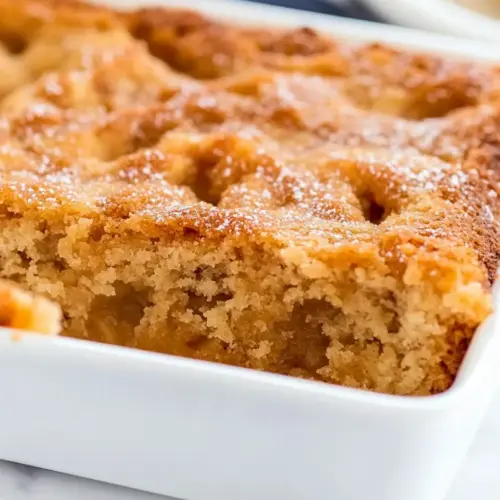
Easy Apple Cake
Easy Apple Cake is a simple, cozy dessert that blends a tender yellow cake base with spiced apple pie filling and warming cinnamon, producing a moist, comforting slice. This easy to make recipe is perfect for a quick weeknight dessert or a relaxed weekend treat, topped with ice cream and caramel for an indulgent finish. Make it when you want a fuss free, crowd pleasing dessert.
Equipment
- 9x13-inch Baking Pan
- Electric Mixer
- Mixing Bowl
- Wire Rack
Ingredients
- 1 (15.25-ounce) box yellow cake mix Provides a convenient base and structure for the cake batter, supplying flour, sugar, leavening, and flavoring to simplify preparation. Ensures consistent texture and helps the cake rise evenly during baking. Pairs well with added spices and wet ingredients to create a moist crumb.
- 2 teaspoons cinnamon Adds warm, aromatic spice and depth to the cake, complementing the sweetness of the apple filling. Enhances overall flavor profile and creates a cozy, autumn-like character. Can be adjusted slightly for a milder or stronger spice presence.
- 1/3 cup vegetable oil Contributes moisture and tenderness to the batter while helping to bind the dry ingredients together. Promotes a soft crumb and prevents the cake from drying out during baking. Allows for easy mixing and incorporation of all components.
- 3 large eggs Provides structure, moisture, and richness to the cake while helping to emulsify the batter for a uniform texture. Helps with leavening when combined with the cake mix and creates a light, tender crumb. Adds protein and stability so slices hold together when served.
- 1 (21-ounce) can apple pie filling Offers pre-sweetened, tender apple pieces and syrup that deliver fruity flavor and moisture to the finished cake. Adds texture contrast and concentrated apple taste without needing to prepare fresh apples. Can be folded into batter or layered for bursts of fruit throughout the cake.
- caramel sauce & ice cream for serving Supplies optional finishing sweetness and temperature contrast when drizzled or scooped over servings, enhancing presentation and indulgence. Caramel sauce adds rich, buttery notes while ice cream provides creaminess and cool balance to the warm cake. Elevates each slice into a more decadent dessert experience.
Instructions
- Preheat the oven to 350°F (or 325°F if using a dark-colored pan).: As you heat the oven, you should notice a slight warmth filling the kitchen, and preheating ensures the cake begins baking at the right temperature immediately, promoting even rise and a tender crumb. If your oven runs hot, use an oven thermometer to confirm accuracy, because an oven that is too hot can brown the top before the center sets. A typical pitfall is not allowing full preheat time, which can cause uneven texture and longer bake time; wait until the oven reaches the set temperature before sliding the pan in.
- Grease & flour a 9×13-inch baking pan.: Greasing and flouring creates a thin barrier that helps the cake release cleanly, and when you tap the pan after coating, you should see an even sheen and a light dusting of flour. For visual confirmation, the pan interior will look evenly coated without clumps of oil or bare spots. A common mistake is using too much grease, leading to a greasy edge, or skipping the flour which can cause sticking, so tap out excess flour for best results.
- Add the cake mix, cinnamon, oil, and eggs to a large bowl. Beat with an electric mixer until it's smooth and then hand stir in the apple pie filling (so it doesn’t get crushed by the mixer).: When you combine these dry and wet components, the batter initially looks shaggy, then smooth as you mix, releasing a warm aroma of cinnamon . Using an electric mixer on medium speed helps the batter come together quickly, and you should stop when it is smooth but still slightly thick. Overmixing can incorporate excess air, resulting in a crumbly texture, so mix just until combined. If the batter seems too stiff, a splash of milk can be used, but this recipe tends to have the right balance if measurements are accurate.
- Pour into the prepared pan and bake for 30-35 minutes, or until an inserted toothpick comes out clean. Allow it to cool.: The electric mixer gives a uniform, aerated batter that bakes evenly, while hand folding in the apple pie filling preserves the apple pieces and prevents them from turning into mush. You should see ribbons of glossy batter before folding in the filling, and once the filling is added, use a gentle folding motion so small chunks remain intact. A common error is using the mixer after adding the filling, which will break up the apples and change the cake's texture.
- When ready to serve, top with ice cream and caramel sauce.: As the cake bakes, the kitchen will fill with a sweet, spiced scent and the top will take on a golden hue. Visual cues to look for include a slightly domed top and even browning across the surface. Use a toothpick in the center to check doneness, and expect it to come out clean or with a few moist crumbs, not wet batter. A mistake here is overbaking, which dries out the cake, so start checking a few minutes before the lower end of the bake time, especially if you have a dark pan.
- Allow it to cool: Cooling lets the crumb set so the cake slices cleanly; you will notice the cake firm up and the aroma mellowing into a cohesive scent. Leave the cake in the pan on a wire rack for about 15 to 20 minutes before slicing to avoid crumbling, and if you prefer firmer slices, cool it completely. Cutting too soon can cause the cake to fall apart, so be patient and let it rest.
- When ready to serve, top with ice cream and caramel sauce: The contrast between warm cake and cold ice cream creates a delightful textural and temperature interplay, and the caramel sauce adds glossy, buttery richness. Scoop the ice cream and drizzle the caramel just before serving so the sauce remains glossy and the ice cream does not melt into a puddle. A typical misstep is topping too early, which makes the cake soggy, so add these just before plating for best presentation.
Notes
- Measure carefully, especially the cake mix and oil. Accurate measurements ensure the cake texture comes out as intended without being too dry or greasy.
- Check oven accuracy by using an oven thermometer. Ovens can vary, and confirming the true temperature helps avoid overbrowning or underbaking.
- Don’t overmix after adding the filling. Hand fold the apple pie filling to keep apple pieces intact and preserve the cake’s tender crumb.
- Adjust baking time for your pan. If you use a dark or glass pan, lower the temperature to 325°F and monitor the cake to prevent a too dark crust.
- Serve warm with cold ice cream. The contrast enhances texture and flavor, making each bite more satisfying and restaurant worthy.