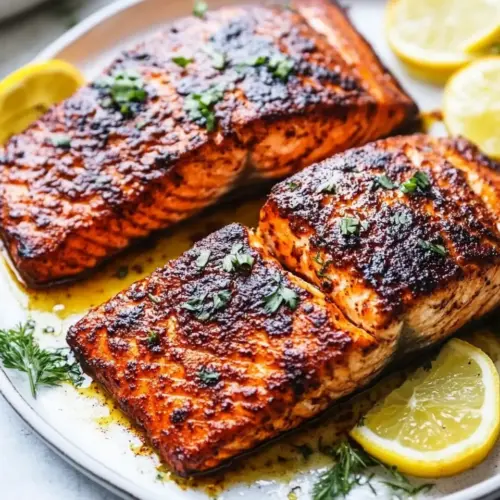
Easy and Amazing Blackened Salmon
Easy and Amazing Blackened Salmon delivers a crispy, peppery crust and a tender, flaky center, perfect for an easy weeknight dinner. This bold, fast recipe is ideal for busy evenings when you want restaurant style flavor without fuss, offering a smoky spice profile and quick pan sear method. Try it tonight for a confident, flavorful meal.
Equipment
- nonstick skillet
- Instant read thermometer
- Tongs
Ingredients
- 1 pounds salmon filets Provide a firm, oily flesh that serves as the main protein and foundation of the dish; cooks quickly and develops a crisp exterior when blackened, while remaining moist inside if not overcooked.
- 1 tablespoon olive oil Add a light, fragrant fat that helps transfer heat and promote even browning; lightly coats the fish to help the seasoning adhere and prevents sticking during high-heat searing.
- 1 tablespoon blackened seasoning Deliver intense smoky, spicy flavor that forms a dark, flavorful crust when seared; season thoroughly to balance heat and aromatics and elevate the salmon without overwhelming it.
Instructions
- Preheat a 12 or 14-inch nonstick skillet over medium-high heat.: As the pan warms, you should hear a faint hum of quiet heat and see the surface become uniformly warm, sometimes with a faint shimmer. This preheat is crucial because placing salmon into a hot pan creates an immediate sear that locks moisture inside, resulting in a crisp exterior and a silky interior. A common mistake is starting with a cold or just warm skillet, which causes the fish to release moisture and stick, producing a dull, soft crust. If you are unsure, hover your hand a few inches above the pan to sense radiating heat, or sprinkle a drop of water to see if it dances across the surface.
- Rub 1 pound salmon filets with 1 tablespoon olive oil. Rub about 1 tablespoon blackened seasoning on the salmon.: When you spread the oil across the surface, the flesh will take on a gentle sheen and the oil helps the blackened seasoning adhere. The tactile act of rubbing distributes fat and prepares the fish to brown evenly. You want a thin, even coat, not a pool of oil, because excess oil can smoke and carry burned flavors. A frequent error is over oiling which causes spattering and uneven crust formation. Patting the fish dry first ensures the oil clings where it should, promoting better texture.
- Place the salmon skin side up and cook for about 3-4 minutes. Carefully flip and cook for an additional 3-4 minutes or until the salmon is opaque and flakes easily, and reaches the internal temperature of 145 degrees Fahrenheit.: As you press the seasoning into the surface, the scent will intensify, releasing peppery and smoky notes that promise a lively crust. Even pressure ensures the spice forms a compact layer that will toast in the pan rather than slide off. Avoid piling on too much rub because burned spices can taste acrid and overpower the natural flavor of the salmon . If some seasoning falls away, tuck it back onto the fillet rather than adding more; conservation of balance is key.
- Place the salmon skin side up and cook for about 3 to 4 minutes: Upon contact, you will hear a bright sizzle and see the edges begin to color, showing the crust is forming. The top will shift from glossy to slightly matte as moisture tightens. This stage sets the crust, so resist moving the fish; flipping too soon tears the surface and prevents a proper sear. A typical slip is nudging the fillet before it has released from the pan which results in sticking and a ragged crust. Look for a sharp change at the edge where the flesh turns from translucent to opaque.
- Carefully flip and cook for an additional 3 to 4 minutes or until the salmon is opaque and flakes easily, and reaches the internal temperature of 145 degrees Fahrenheit: After flipping, the second side will make a gentler sizzle and the aroma becomes deeply toasty. You should notice the crust firming and the center giving slightly under gentle pressure. Cooking to the specified temperature ensures food safety and a flaky texture, but be mindful that carryover heat will continue to finish the fish after you remove it from the skillet. A common mistake is overcooking which yields dry flakes and dulls the seasoning; to avoid this, remove the fillet when a thermometer probes the thickest part and reads just under the target, allowing residual heat to complete the process.
Notes
- Preheat thoroughly Ensure your nonstick skillet is uniformly hot before adding the salmon, this creates the instant sear that forms the blackened crust and seals in juices.
- Dry the fish Pat the fillets very dry with paper towel before oiling, excess surface moisture prevents browning and can lead to a steamed texture instead of a crisp one.
- Use moderate oil One tablespoon of olive oil is sufficient for a pound of salmon; too much oil will pool and cause uneven browning or smoking.
- Monitor your heat If the seasoning begins to burn and smell acrid, lower the heat slightly to cook through without charring the spices.
- Check doneness with a thermometer Aim for 145 degrees Fahrenheit internal at the thickest point to ensure safe, flaky fish while avoiding dryness; remember carryover heat will raise the temperature a few degrees after resting.