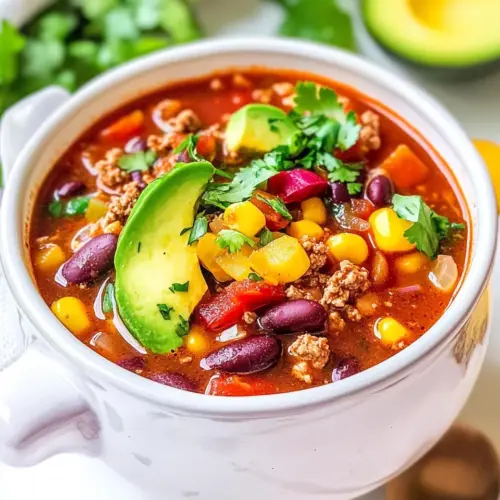
Easy 30 Minute Taco Soup
Easy 30 Minute Taco Soup is a bold, savory bowl full of browned ground beef, bright tomatoes, and warm spices that comes together quickly. This creamy textured, hearty soup makes an easy weeknight dinner or meal prep favorite with satisfying beans and corn. It reheats and freezes well, making it perfect for busy nights when you want a flavorful, comforting meal.
Equipment
- Large Dutch Oven or Heavy-Bottomed Pot
Ingredients
- 3 tablespoons olive oil Sauté in a skillet to provide a flavorful cooking fat and help brown aromatics and meat for depth in the soup.
- 1 medium yellow onion, diced small Add diced small to build savory sweetness and texture; sweat until translucent to release natural sugars that enhance the broth.
- 1 pound lean ground beef, I used 85% lean Brown thoroughly to develop rich, meaty flavor and contribute protein and hearty texture, breaking up into small pieces as it cooks.
- 1 medium red bell pepper, diced small Sauté diced small with aromatics to contribute a bright, slightly sweet pepper flavor and pleasant color contrast in the soup.
- 3 to 5 cloves garlic, finely minced or pressed Minced finely or pressed to infuse pungent, aromatic garlic flavor throughout the soup; add toward the end of sautéing to avoid bitterness.
- 1 jalapeno pepper, finely diced; optional (remove seeds to reduce the heat) Dice finely and add optionally to inject fresh heat and a bright, vegetal chili note; remove seeds to mellow spice intensity.
- 4 ounce can diced green chiles or fire-roasted green chiles, optional Stir in canned diced or fire-roasted to contribute smoky, tangy tomato-chile flavor and small tender pieces that complement the broth.
- 3 tablespoons chili powder*, See Notes Sprinkle in to deliver concentrated chili spice, warmth, and characteristic taco seasoning flavor; adjust amount to control overall heat.
- 2 teaspoons cumin Sprinkle in to introduce earthy, warm, slightly citrusy notes typical of Latin cuisines and to round out the spice profile.
- 1 teaspoon dried Mexican oregano or regular dried oregano Add to impart herbaceous, slightly bitter, and aromatic notes that echo traditional Mexican seasoning and complement cumin and chili.
- 28 ounces canned diced tomatoes Pour in canned diced tomatoes to provide body, acidity, and umami; their juices help form the base of the soup and balance spices.
- 32 ounces Zoup! Good, Really Good® Chicken Bone Broth Pour in to create a savory, collagen-rich liquid base that deepens flavor and provides a silky mouthfeel to the soup.
- two 15-ounce can black beans, drained and rinsed (I used no salt added) Drain and rinse before adding to supply creamy texture, protein, and earthy flavor while reducing excess sodium from the canning liquid.
- 2 to 4 ounces tomato paste, optional for a thicker soup (more like chili) Stir in optionally to thicken the soup and add concentrated tomato richness and a slightly tangy backbone, more like chili.
- 1 to 1 1/2 cups corn, frozen, canned and drained, or freshly shaved Fold in frozen, canned, or fresh to add sweet kernel texture and bright bursts of corn flavor, enhancing heartiness and color.
- 2 to 3 tablespoons lime juice Squeeze in to brighten flavors and add a fresh acidic lift that balances richness and enhances overall brightness of the soup.
- 1/3 cup finely minced fresh cilantro, or to taste; plus more for garnishing if desired Stir in finely minced to deliver fresh, citrusy herbal brightness and a green, slightly peppery finish; garnish with additional for freshness.
- 2 to 4 teaspoons Kosher salt, or to taste Season to taste with to enhance and elevate all flavors; add gradually and adjust based on broth and canned ingredients' saltiness.
- 1 teaspoon freshly ground black pepper, or to taste Season with freshly ground to add sharp, aromatic heat and to round out savory elements; adjust for personal preference.
- 1/2 teaspoon granulated sugar, optional Sprinkle optionally to balance acidity and round flavors with a hint of sweetness, especially if tomatoes taste sharp.
- Red onion, optional for garnishing and to taste Thinly slice or dice optionally for garnishing to add a crisp, pungent contrast and fresh bite when served atop the soup.
- Avocado, optional for garnishing Cube or slice optionally for garnishing to contribute creamy, buttery texture and cooling contrast against spicy soup flavors.
- Cotija, panela, or a shredded Mexican cheese blend, optional for garnishing Crumble or shred optionally for garnishing to add salty, tangy, and creamy dairy notes that enhance mouthfeel and flavor depth.
- Sour cream, optional for garnishing Dollop optionally for garnishing to introduce cool, creamy richness and a tangy counterpoint to spicy, savory elements.
- Tortilla strips or chips, optional for garnishing or dipping Crisp or crush optionally for garnishing or dipping to provide crunchy texture, handheld convenience, and a satisfying contrast to the soup.
Instructions
- To a large Dutch oven or similar heavy-bottomed pot, add the olive oil yellow onion, and sauté for a few minutes over medium-high heat before adding the ground beef.: The pan will smell faintly sweet as the onion softens, and you should see it become translucent with a few glossy edges, that sheen means the olive oil is carrying flavor. You want the oil hot enough that the onion sizzles gently when it hits the pot, but not so hot that it browns immediately, because gentle sweating releases sugars that mellow the base. I like to stir every 30 seconds so the pieces cook evenly and don't stick. If your onion starts to brown too quickly, lower the heat to avoid bitterness. A common mistake is rushing this step, which leaves raw onion sharpness in the final soup, so be patient to coax out sweetness.
- Brown the ground beef with the onion, stirring intermittently to ensure even cooking. Tip – Work ahead chopping and dicing the remaining veggies while beef is browning.: As the ground beef hits the pot you'll hear a satisfying sizzle and notice the beef release juices. Break it up with a spatula so it browns in small pieces, aiming for golden edges rather than steaming. This browning creates fond on the pot, those browned bits are flavor gold; scrape them up when you add liquids. Cook until no pink remains, and the beef develops a rich caramelized aroma. Avoid overcrowding the pot which steams the meat, preventing proper browning; if the pan seems crowded, cook in batches or increase heat briefly to encourage evaporation.
- Add the red pepper, garlic, optional jalapeno, optional green chiles, stir to combine, and cook for about 1 minute or until garlic is fragrant.: When you add the diced red bell pepper and minced garlic , the pan will perfume the kitchen with sweet and savory notes. Stir quickly to distribute the veggies into the hot fat so they soften but keep texture. The garlic becomes aromatic in under a minute; watch closely because it can turn bitter if it browns. If you included the jalapeno pepper or diced green chiles , they will add a fresh heat or smokiness, so seed the jalapeno to control spice. The common misstep here is overcooking the garlic, which ruins its aroma, so remove from heat or proceed to the next step as soon as it becomes fragrant.
- Evenly sprinkle the chili powder, cumin, oregano, and stir to combine.: When you add the chili powder , cumin , and oregano , the pan will release warm, toasty aromas; this is the spice bloom. Stirring briefly helps the spices coat the meat and veggies, releasing essential oils that deepen flavor. I like to let them toast for just 30 to 45 seconds, which brings out complexity without burning. If spices clip to the pot, deglaze with a splash of broth next; burning the spices will make the soup bitter, so keep the heat controlled.
- Add the tomatoes, Zoup! Good, Really Good® Chicken Bone Broth, beans, optional tomato paste (some or all of a small can), stir to combine, and bring to a boil. Allow soup to boil fairly rapidly, uncovered, for about 5 minutes.: Adding the diced tomatoes and the chicken bone broth will convert the browned bits into a flavorful liquid, and you'll see the pot come to a lively boil with steam and bubbling motion. Stir in the rinsed black beans and optional tomato paste if you want thickness, and watch how the paste dissolves to darken and enrich the broth. Boiling uncovered for about 5 minutes reduces the liquid slightly and concentrates flavors; you'll notice the aroma deepen and the surface move more vigorously. Resist covering the pot, because you want evaporation to refine texture, and monitor to prevent vigorous boil over; if it starts to spit, drop the heat slightly.
- Add the corn, stir to combine, and allow mixture to boil once again for a minute or two.: When you stir in the corn , it adds bright pops of color and a subtle sweetness that balances the savory base. The second brief boil wakes the corn through and ensures all elements are hot. Visually you'll see the kernels glisten and the mixture momentarily bubble, and the sound shifts to a steadier simmer. Overcooking frozen corn can make it mealy, so a minute or two is enough; if using fresh corn, a quick blanch before adding keeps it crisp tender.
- Turn the heat off, add the lime juice, cilantro, salt, pepper, stir to combine, and taste the soup. Make sure to add salt to taste, and likely add more if you only started with 2 teaspoons. Also consider adding additional chile powder, cumin, or oregano if you started with lesser quantities than indicated.: With the heat off, the citrus of the lime juice will pop brighter and not cook away, while fresh cilantro disperses its herbaceous lift. Season with the recommended Kosher salt and black pepper , then taste and adjust carefully. Salt is the final amplifier, and adding it at the end prevents over seasoning early on. A frequent error is salting too soon, which can concentrate and oversalt the finished dish, so add conservatively then increase to preference. I always taste a warm spoonful rather than cold to judge final seasoning correctly.
- If the soup has a "bite" so to speak, what you’re likely tasting is the acidity from the large quantity of tomatoes and other acidic ingredients. Optionally consider adding the 1/2 teaspoon sugar. It does not make the soup sweet but rather balances the flavor profile similar to how many cooks add a pinch of sugar to spaghetti or pasta sauce.: Acidity from the diced tomatoes can feel sharp on the palate; adding the small measure of granulated sugar rounds this acidity without making the soup taste sweet. Stir the sugar in and let it integrate for a minute, then taste again to see if the balance improved. This small adjustment is a classic chef trick to harmonize tomato forward dishes. Avoid adding too much sugar, which would flatten the profile instead of balancing it.
- Optionally garnish with your favorites and serve. Soup will keep airtight in the fridge for 5 to 7 days and I find tastes better as time passes as the flavors marry. Soup will keep airtight in the freezer for up to 4 months. I recommend freezing it in individual-sized freezer-safe containers and thawing on the counter and reheating gently in the microwave.: The final presentation is an opportunity to add contrast, whether with creamy avocado , tangy cotija , or crisp tortilla strips . Serve hot, and enjoy noticing how the flavors meld over time; refrigerated leftovers often taste more resolved. For freezing, portion into airtight containers leaving headspace because liquids expand, and defrost in the refrigerator overnight before gentle reheating. A common storage mistake is refreezing previously thawed soup, which can degrade texture, so portion mindfully when freezing.
Notes
- Prep mise en place: Chop all vegetables and open cans before you start to keep the cooking rhythm smooth and prevent rushed overcooking.
- Spice control: If you are sensitive to heat, start with the lower end of chili powder and add more after tasting, because you can always increase spice later.
- Browning matters: Take time to brown the ground beef well to develop caramelized flavor that becomes the backbone of the soup.
- Adjust thickness: Stir in 2 to 4 ounces of tomato paste for a thicker, chili like finish, adding it when you add the broth so it has a chance to dissolve.
- Balance acidity: If the soup tastes too bright, a 1/2 teaspoon of granulated sugar smooths acidity without sweetening the dish noticeably.
- Garnish smartly: Add fresh cilantro and a squeeze of lime juice just before serving to preserve brightness and contrast with the warm savory broth.