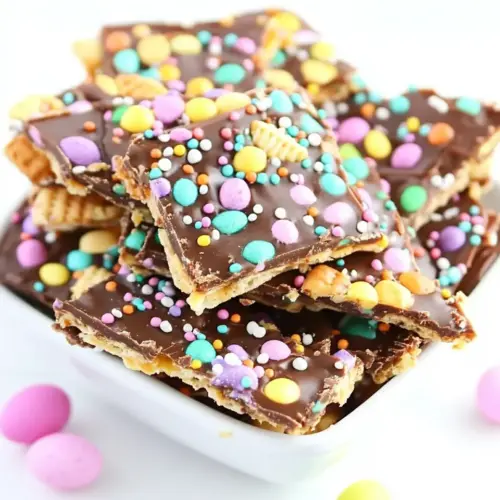
Easter Saltine Toffee
Easter Saltine Toffee is a crispy sweet and salty candy featuring crunchy saltine crackers, buttery brown sugar toffee, and a glossy chocolate topping dotted with colorful candies, perfect for easy holiday treats and bake sales. This quick make ahead candy delivers irresistible texture and festive color, ideal for sharing with friends and family.
Equipment
- Baking Sheet
- Silpat or parchment paper
- Medium Saucepan
- Spatula
Ingredients
- 40 saltine crackers Arrange in a single layer to form the crisp toffee base and provide a sturdy, salty foundation that contrasts the sweet topping; helps absorb the caramel for an even texture.
- 1 cup unsalted butter Melt gently to create the caramel-like toffee layer; contributes rich, creamy fat that blends with sugar to form a glossy, chewy coating when simmered.
- 1 cup brown sugar Dissolve with butter over heat to form the caramel toffee; supplies deep, molasses-like sweetness and moisture that balances the saltines and chocolate.
- 2 cups chocolate chips Melt over the hot toffee layer to create a smooth, glossy chocolate coating; adds a rich cocoa flavor and helps the top set into a firm, sliceable surface.
- 1 cup M&M's or other chocolate candies Scatter across melted chocolate to add colorful crunch and extra chocolatey bites; provides visual appeal and varied texture for each piece.
- Sprinkles if desired Decorate as desired to add vibrant color and extra sweetness; delivers a festive finishing touch and optional texture contrast to the finished bars.
Instructions
- Preheat oven to 350 degrees F. Line a large baking sheet with a Silpat baking mat, parchment paper, or aluminum foil. If you are using aluminum foil, spray lightly with nonstick cooking spray. Place saltine crackers in a single layer, touching, on the large baking sheet. Set aside.: Right away you will notice the warm oven smell beginning to build as it comes up to temperature, and laying out the saltine crackers in a single layer creates that uniform base you want. The visual cue is a full, edge to edge sheet of crackers leaving no gaps, which ensures the caramel coats every piece evenly. Use a baking sheet with a slight rim so the bubbling mixture does not run off. A common mistake is overlapping crackers, which leads to uneven toffee and some soggy bits, so take a moment to align each square tightly. If you use foil, grease it lightly so the candy releases cleanly and you get tidy pieces later.
- In a medium saucepan, melt butter and brown sugar together over medium-high heat. Bring butter and brown sugar mixture to a boil. Boil for 3-4 minutes, stirring constantly. Pour mixture evenly over saltine crackers. Bake for 8 minutes or until topping is bubbling.: As the butter and brown sugar combine the aroma turns toasty and caramel like, and you will see the mixture transform from grainy to glossy. Stir constantly so the sugar dissolves and you do not get burned spots, the constant motion keeps the heat distributed. When the mixture reaches a steady boil the surface will shimmer and small bubbles will appear, signaling it is ready to be poured. Pour evenly so each saltine gets coated, and listen for soft sizzling as the hot caramel hits the crackers. Baking until the topping is bubbling sets the toffee; underbake and it will remain sticky, overbake and it can darken and taste bitter. Avoid stepping away during the boiling, that is when it can scorch quickly.
- Remove the pan from the oven and immediately sprinkle chocolate chips evenly over the top of the crackers. Let the chocolate chips sit for 2 minutes so they have a chance to melt. Spread melted chocolate with a knife or rubber spatula. Sprinkle with candy and sprinkles, if using.: The contrast between warm, bubbling caramel and cold chocolate chips brings a satisfying pop in texture as the chips soften into a glossy pool. After about two minutes the chips will yield under a gentle touch, and as you spread the chocolate you should see a smooth, even sheen. The sound is quiet but tactile, a gentle sweeping motion across the surface, and the visual is a shiny, dark canvas ready for colorful accents. Add your M&M's or sprinkles immediately so they stick in the warm chocolate; waiting too long can prevent them from adhering properly. A common pitfall is spreading too vigorously and scraping through toffee, so use gentle, confident strokes.
- Let the toffee sit for about 2 hours or until the chocolate hardens. You can refrigerate the toffee for an hour, or freeze for 30 minutes. When chocolate is set up, break the toffee into pieces and serve!: As the candy cools the kitchen will fill with a sweet caramel scent and the chocolate will firm into a crisp layer, giving you that satisfying snap when you break it. Cooling at room temperature gives the best texture and avoids condensation, while chilling is useful when you need the candy ready quickly. Look for a matte finish on the chocolate as a sign it is fully set, and when you break pieces you should hear a clear crack. Avoid storing warm pieces together before fully set, because they can stick and lose their snap.
- Note-You can top the toffee with chopped pecans or almonds. You can also mix up the candy and sprinkle colors for any holiday. The toffee will keep up to 2 weeks in an airtight container in the fridge or in the freezer for up to 2 months.: The optional nuts add a roasted, savory crunch that complements the buttery caramel, and swapping candy colors is an instant way to make this treat fit any season. When storing, use airtight containers and separate layers with parchment so pieces do not clump together. Refrigeration keeps them fresh and firm, while the freezer preserves them longer; thaw gently before serving to restore optimal texture. A frequent error is letting moisture into the container, which softens the crispness, so seal tightly and keep away from humid spots.
Notes
- Swap chocolate type: Try using semi sweet or milk chocolate chips to shift the sweetness level, keeping in mind that darker chocolate will give a richer, less sweet finish.
- Add chopped nuts: Chopped pecans or almonds on top add a roasted note and extra crunch, sprinkle them while the chocolate is warm so they adhere.
- Colorful candy: Use pastel M&M's for Easter, or swap in red and green for holiday trays to create festive presentations without changing the base recipe.
- Make them bite sized: Break into smaller pieces and package individually for gifts, which is perfect for cookie exchanges or school parties.
- Speed up setting: Chill the tray in the fridge for one hour or the freezer for thirty minutes if you need the candy ready quickly, but bring to room temperature before serving for best texture.