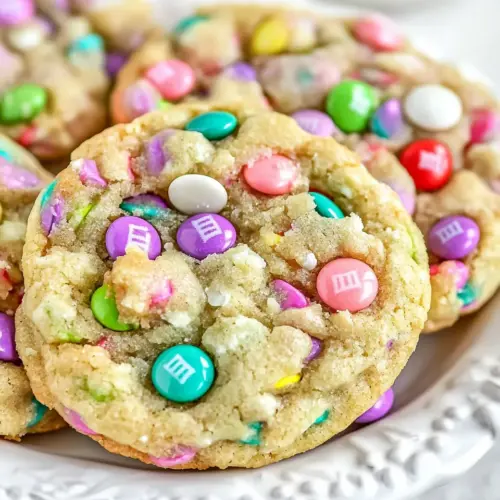
Easter M&M Cookies
Easter M&M Cookies are soft, colorful, and irresistibly chewy thanks to instant vanilla pudding and a buttery brown sugar base. These easy festive cookies are perfect for spring gatherings and make a cheerful addition to cookie exchanges. Soft centers, slightly crisp edges, and playful pastel M&Ms ensure they re a crowd pleaser, so bake a batch and watch them vanish.
Equipment
- Stand mixer
- Paddle attachment
- Hand Mixer
- Cookie Scoop
- Baking Sheet
- Parchment Paper
- Cooling rack
Ingredients
- 1/2 cup (113 g) unsalted butter, softened Cream together to provide structure and richness while incorporating air for a tender cookie crumb; softened texture ensures even mixing with sugars and prevents graininess in the dough.
- 3/4 cup (150 g) packed brown sugar Add deep, caramel-like sweetness and moisture while contributing to chewiness; packed brown sugar also helps create a slightly denser, flavorful cookie base.
- 1 teaspoon vanilla extract Impart warm, aromatic flavor and enhance other sweet elements; vanilla helps round out the overall taste and balances the pudding mix’s vanilla notes.
- 1 large egg Bind wet and dry ingredients while adding lift and moisture; the egg contributes to structure, emulsification, and tender crumb in the cookies.
- 13.4 ounces (96 g) Instant Vanilla Pudding Mix Contribute concentrated vanilla flavor and moisture-retaining starches that yield extra softness; instant vanilla pudding mix also boosts flavor complexity and chewiness.
- 1/2 teaspoon baking soda React with acidic components to create carbon dioxide for leavening and gentle rise; baking soda helps spread and browns the cookies' edges.
- 1/4 teaspoon salt Balance sweetness and enhance flavor while controlling protein interactions for proper gluten development; a pinch of salt also heightens overall taste.
- 1 1/4 cups (155 g) all purpose flour Provide bulk, structure, and gluten-forming proteins that determine texture; all-purpose flour creates the foundational matrix for the cookie dough.
- 1 cup (195 g) pastel colored M&Ms Add colorful crunch, chocolate flavor, and visual appeal while contributing small pockets of sweetness; pastel M&Ms create festive texture contrasts in each bite.
- 1/2 cup (76 g) pastel sprinkles Supply decorative color and a subtle sugary crunch to finish the cookies; pastel sprinkles enhance visual appeal and contribute a playful texture.
Instructions
- Note: This dough requires chilling.: The dough will firm up and the fats will solidify in the chill, which prevents excessive spreading during baking and produces thicker cookies with chewy centers. You should feel the dough become cooler to the touch after chilling. A common mistake is skipping this step, which leads to thin, flat cookies that lack structure.
- Cream butter and brown sugar in the bowl of a stand mixer fitted with the paddle attachment. (You can also use a hand mixer.) Mix in egg and vanilla until smooth. Add pudding mix, baking soda, and salt. Mix until combined. Mix in flour, then stir in sprinkles and M&Ms.: Expect a soft, rhythmic sound as the paddle aerates the unsalted butter and brown sugar , transforming them into a pale, pillowy mixture. The smell will turn buttery and sweet, almost caramel like. This aeration traps tiny air pockets that contribute to a lighter bite. Avoid under mixing which leaves gritty sugar, and over mixing which can over incorporate air and cause collapse later.
- Scoop 2 tablespoon balls of cookie dough onto a cookie sheet covered with parchment or a silpat baking mat. There’s no need to space them out, you’re going to chill them. Cover and chill for at least 30 minutes.: As you add the egg and vanilla, the mixture will lose some of its fluff and become glossy and cohesive. The aroma will shift as the vanilla blooms, adding warmth to the batter. If your egg is cold, the butter may seize up momentarily; let the mixture come back together on low speed. A common pitfall is adding cold egg directly which can create lumps.
- Preheat oven to 350°F. Line cookie sheets with parchment paper or silpat baking mats. Place chilled cookie dough balls 2 inches apart on cookie sheet. Bake 9-11 minutes or until the edges just start to turn brown. Cool 5 minutes on cookie sheet before transferring to a rack to cool completely. Store in an airtight container for up to 4 days or freeze for up to one month.: The dry pudding powder will absorb moisture and thicken the batter slightly, and you may notice a faint vanilla scent intensify. The baking soda will start working once hydrated, so mixing evenly is important for consistent rise. Ensure you scrape down the bowl so no pockets of dry mix remain, otherwise you might get chalky bites.
- Mix until combined: At this stage the batter should look uniform and slightly denser than a typical cookie batter because of the pudding mix. The texture will be supple and hold gentle peaks when lifted with a spatula. Over mixing after adding the dry components can develop gluten and yield tougher cookies, so stop when combined.
- Mix in flour then stir in sprinkles and M&Ms: Adding the all purpose flour builds structure, and you will see the dough transition from glossy to a more matte, pliable mass. Fold in the sprinkles and M&Ms by hand to preserve their shape, and watch the colorful bits dot the dough like confetti. If you mix too vigorously here, the candies will chip and bleed color into the dough.
- Scoop 2 tablespoon balls of cookie dough onto a cookie sheet covered with parchment or a silpat baking mat: The dough will feel slightly tacky and springy as you portion it. Use a cookie scoop for uniform sizes so baking is consistent, and if the dough sticks, wet your hands lightly. An error I see often is uneven scoops which cause varying bake times and some cookies to overbake while others remain underdone.
- There is no need to space them out you are going to chill them: When you place the dough balls close together for chilling, they will not spread into each other because the chill solidifies the fats. The surface might look tacky but will firm up in the refrigerator. If you try to bake unchilled dough placed closely, the cookies can fuse into a single large mass.
- Cover and chill for at least 30 minutes: During the chill you will notice the dough become noticeably firmer, making it easier to transfer later. The flavors also meld, offering a more rounded taste after resting. If you have more time, chilling for several hours or overnight improves texture even more. The most common mistake is not chilling long enough when ovens run hot, which results in excessive spreading.
- Preheat oven to 350°F: The oven should be fully up to temperature so the cookies begin setting immediately, encouraging a soft interior and slightly crisp edge. You will hear a faint hum as the oven stabilizes and later a subtle crackle as the cookies brown. Not preheating can cause uneven texture, with underbaked centers and overbrowned bottoms.
- Place chilled cookie dough balls 2 inches apart on cookie sheet: Arranging the chilled dough with about 2 inches between ensures they have room to spread slightly without touching. The cold dough will maintain its mound shape when it hits the hot pan, encouraging a domed top. If the spacing is too tight, adjacent cookies may merge, creating unevenly baked clusters.
- Bake 9 to 11 minutes or until the edges just start to turn brown: You will notice a gentle aroma of baked sugar and butter as the cookies approach doneness, and the edges will take on a faint golden hue while the centers remain pale and soft. This timing yields cookies that set around the edges but stay tender inside. Overbaking will dry them out, so pull them at the first hint of browning.
- Cool 5 minutes on cookie sheet before transferring to a rack to cool completely: The cookies will continue to set as they rest, and transferring too soon can cause them to break. After five minutes they will have stabilized enough to move without losing shape. A frequent error is leaving cookies on the hot sheet too long which can brown the bottoms further and change the texture.
- Store in an airtight container for up to 4 days or freeze for up to one month: Once fully cooled, the cookies maintain their texture in a sealed container at room temperature. For longer storage, freeze the baked cookies in a single layer and then transfer to a freezer safe bag. Thaw at room temperature when ready to enjoy. Moisture or improper sealing will lead to stale cookies, so use airtight packaging.
Notes
- Chill is non negotiable — Always chill the dough for at least 30 minutes, and if you have time, overnight chilling yields even better flavor and texture.
- Use instant pudding mix — The instant vanilla powder keeps the cookies soft and adds subtle flavor, do not substitute with the cook and serve type.
- Measure flour carefully — Spoon and level the all purpose flour to avoid packing too much, which causes dense cookies.
- Prefer jimmies for sprinkles — For oven durability and better visual results, choose elongated jimmies rather than tiny nonpareils.
- Scoop consistently — Use a two tablespoon scoop for uniform cookies that bake evenly across a sheet.
- Cool briefly before moving — Let cookies sit on the baking sheet five minutes to finish setting, then transfer to a rack to cool completely.