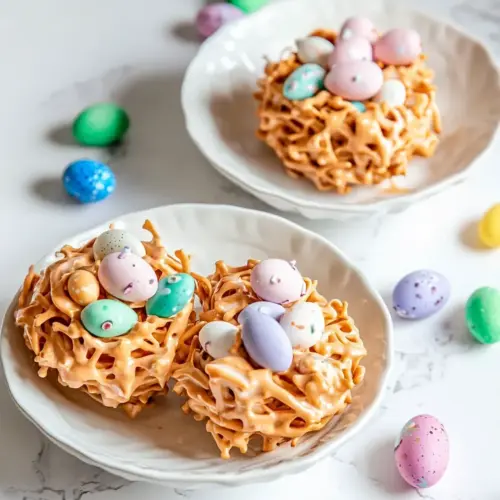
Easter Haystacks
Easter Haystacks are a creamy, crunchy, and easy no bake treat made from butterscotch chips, peanut butter, miniature marshmallows, chow mein noodles, and Cadbury Mini Eggs. This nostalgic candy delivers crisp texture and sweet, nutty flavor, perfect for spring gatherings or easy weeknight baking projects. Make a big batch for parties, because they store well and travel beautifully.
Equipment
- Microwave-safe Bowl
- Baking Sheet
- Parchment Paper
- Spoon
Ingredients
- 1 cup butterscotch chips Melting provides a sweet, caramel-forward base that binds the haystack mixture while contributing a rich butterscotch flavor and glossy finish; stir gently until smooth to avoid graininess and ensure even coating of the other components.
- 1/2 cup creamy peanut butter Adding creamy texture helps create a stable, spreadable binder that melds flavors and holds the noodles and marshmallows together; use warm but not boiling heat to keep the peanut butter smooth and prevent separation.
- 1 cup miniature marshmallows Contributing light, chewy sweetness offers soft contrast to the crunchy noodles and mini eggs while adding volume and a nostalgic marshmallow bite; fold in gently so the pieces remain fluffy and distributed throughout.
- 5 ounces chow mein noodles Supplying crisp, airy crunch delivers the haystack structure and a satisfying textural counterpoint to the soft and sticky elements; handle carefully to keep strands intact and evenly coated for consistent clusters.
- 72 Cadbury Mini Eggs Decorating with colorful, candy-coated eggs brings festive sweetness, a crunchy shell, and visual appeal that finishes the haystacks; scatter evenly on top or gently press into clusters so they adhere without crushing.
Instructions
- Line a baking sheet with parchment paper set aside.: The smell of clean paper and the sight of a ready sheet give you a calm starting point, and the parchment will prevent sticking so the nests lift easily. Use a rimmed sheet to catch any drips, and keep it flat on the counter so the nests set evenly. A common mistake is skipping lining, which can make removal messy and damage the nests, so take the extra minute to prepare the surface.
- Combine butterscotch chips and peanut butter in a large microwave safe bowl. Microwave ingredients for 30 seconds, stir and repeat until completely melted.: When you stir these together pre melting, you notice the chips clinging to the spoon and the peanut butter thick and glossy, which helps them melt uniformly. Use a bowl with high sides to avoid splatter during microwaving, and stir before heating so the peanut butter distributes into the chips for even melting. Avoid using a small bowl, which can cause uneven heating and scorching on the sides.
- Add the chow mein noodles to the peanut butter mixture. Stir until combined then add the marshmallows and stir to combine.: The sound of occasional faint bubbling and the sight of a smooth, glossy mixture tell you it's ready, and stirring between bursts ensures heat spreads evenly. Take care not to overheat, because burnt butterscotch gets grainy and loses its sweet tone. A common error is using long microwave intervals, which can lead to separation or burned spots, so use short bursts and stir thoroughly.
- Drop by spoonfuls onto the prepared baking sheet and shape into nests with an indent in the middle. Place three eggs in the middle of each nest.: As you fold the chow mein noodles in, you should see them becoming lightly coated, their brittle snap softening to a glossy sheen where the mixture clings. Folding gently preserves the airy crunch and prevents the noodles from breaking into dust. If you stir too aggressively you can pulverize them, resulting in a dense cluster rather than a nest, so be gentle and deliberate.
- Let cool at room temperature or place in the refrigerator or freezer to speed up the process.: At this stage the aroma shifts to a sweet, toasty note, and the mini marshmallows will cling, creating small pockets of softness within the nest. Mixing briefly ensures an even distribution without overworking the marshmallows into a gooey mass. Overmixing can make the mixture too sticky and difficult to shape, so stop as soon as the pieces are evenly scattered.
- Drop by spoonfuls onto the prepared baking sheet and shape into nests with an indent in the middle.: When you spoon the clusters onto the parchment, they should hold shape and look rounded, and the practice of creating a slight well gives a defined space for the eggs. Use the back of a spoon to create the indentation, pressing lightly so the nest walls remain intact. A common slip is pressing too hard, which flattens the nest and prevents it from resembling a cozy cup for the eggs.
- Place three eggs in the middle of each nest.: Gently nestle the Cadbury Mini Eggs so they sit attractively in the center, their glossy shells contrasting with the textured nest. The visual pop completes the presentation and signals a festive treat, but avoid pressing them down, which can break the shell or cause the eggs to sink into the cluster.
- Let cool at room temperature or place in the refrigerator or freezer to speed up the process.: Cooling changes the texture from tacky to firm, and as the mixture sets you will notice a muted sheen fade to a matte finish. Room temperature gives a gentler set and maintains some chew, while refrigeration makes them firmer and easier to pack. One common oversight is trying to move them before they are set, which can smear the nests and ruin their shape, so give them time to firm up based on your chosen method.
Notes
- Adjust egg count: Consider using fewer eggs per nest for a minimalist look, or swap placement to create a surprise when bitten into.
- Mix textures: Stir in more miniature marshmallows for extra chew or add a few more noodles for heightened crunch without changing the base ratios.
- Temperature control: If you prefer softer nests, set them at room temperature; for firmer, chilled nests, place them in the fridge until solid.
- Presentation boost: Place nests in small paper candy cups to make serving and gifting simpler and neater.
- Make ahead storage: Follow the storage notes to keep nests fresh for several days at room temperature or longer chilled in the fridge.