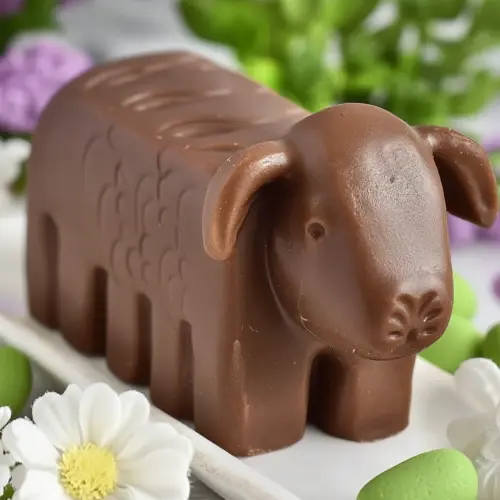
Easter Fudge Lamb
Easter Fudge Lamb is a creamy, nostalgic chocolate treat that offers smooth texture and playful presentation, perfect for holiday gifting or a festive dessert. This easy, approachable fudge blends melted semi sweet chocolate chips, marshmallow creme, and a rich cooked sugar base for reliably glossy results, making it an ideal make ahead sweet for spring gatherings.
Equipment
- Heavy saucepan
- Candy thermometer
- Greased mold
- Spatula
Ingredients
- 3 cups sugar Sweeten the fudge base with a substantial amount of granulated sugar, which dissolves into the milk and butter to create the classic candy texture. Cooked to the proper temperature, sugar crystallizes correctly to produce a smooth, set fudge rather than grainy candy. Balance sweetness with other ingredients so the final product is rich but not cloying.
- 3/4 cup butter Provide richness and fat that create a creamy, smooth mouthfeel; butter also helps prevent sugar from crystallizing too quickly. Melted into the heated mixture, butter contributes flavor depth and a glossy sheen to the finished fudge. Use unsalted or adjust other seasonings if using salted butter for consistent taste.
- 2/3 cup evaporated milk Add body and creaminess through evaporated milk, which intensifies dairy flavor and reduces water content compared with regular milk. Simmered with sugar and butter, evaporated milk helps achieve the correct texture and contributes to the fudge’s firmness once cooled. Its concentrated solids aid in achieving a stable, set confection.
- 2 cups (1 12-ounce bag) semi-sweet chocolate chips Melt and flavor the fudge with semi-sweet chocolate chips, providing cocoa richness and structure as they blend into the warm mixture. Chocolate chips contribute both sweetness and slight bitterness to balance sugar and marshmallow, and their cocoa butter helps set the fudge as it cools. Choose high-quality chips for the best flavor and melt consistency.
- 1 7-ounce jar marshmallow creme Introduce lightness and a creamy, marshmallow flavor from marshmallow creme, which adds chewiness and a softer texture to the fudge. Folded into the warm chocolate base, marshmallow creme helps stabilize the mixture and imparts a characteristic marshmallow sweetness and sheen. Use a full jar to ensure an even distribution of flavor and texture.
- 1 teaspoon vanilla Enhance overall flavor with vanilla, which rounds out the chocolate and marshmallow notes and adds aromatic warmth. Stirred in at the end of cooking, vanilla heightens perceived sweetness and deepens complexity without adding extra sugar. Use pure vanilla extract for the most natural flavor enhancement.
Instructions
- Combine sugar, butter, and milk in a heavy saucepan.: The initial aroma is simple and buttery, a quiet promise of the treat to come. Use a heavy saucepan so heat distributes evenly, which prevents hot spots that can scorch the mixture. As the sugar dissolves into the evaporated milk and butter , you'll notice a slightly syrupy sheen forming, and stirring will help break down any residual sugar grains. The reason this matters is even melting prevents future crystallization which leads to grainy fudge. One common mistake is rushing with high heat, which can burn the dairy and create off flavors.
- Bring to a boil stirring constantly. Continue boiling for about 5 minutes over medium heat, stirring until the candy thermometer reaches 234º.: As the mixture comes to a boil, the kitchen fills with a toffee like scent, and steady bubbling signals the water content evaporating to concentrate sugars. Stir constantly to avoid burning and to encourage even heating, and rely on the candy thermometer reading to know when you've reached the soft ball stage like 234º. This temperature ensures the fudge will set properly once cooled. If you skip stirring here or let it scorch, the final texture will suffer, becoming grainy or tough. Also avoid guessing time alone, because stove output varies and thermometer guidance is more reliable.
- Remove from heat, stir in chocolate till melted.: At this point, you'll notice the vigorous bubbling calming and the steam subsiding, creating a moment to work quickly and carefully. The residual heat will melt the semi sweet chocolate chips , and stirring gently creates a glossy, homogeneous chocolate pool. This step is crucial for smoothness, as fully melted chocolate integrates into the sugary matrix, preventing streaks or lumps. A common pitfall is adding chocolate too early while the mixture is still aggressively boiling, which can separate fats and dry out the texture.
- Add marshmallow crème and vanilla and mix till completely combined.: When you fold in the marshmallow creme , expect a fluffy, billowy texture to appear before it fully incorporates, and the aroma softens into a familiar sweet, vanilla kissed chocolate. Mixing thoroughly produces a uniform texture and makes slicing tidy when set. The marshmallow helps stabilize the fudge, reducing the chance of crystallization. Beware of under mixing, which can leave sticky pockets of marshmallow or uneven sweetness.
- To make a Fudge Lamb, pour into a greased mold. Allow to cool upside down.: Pouring the warm mixture into a greased mold should feel satisfying as it fills cavities and captures detail. The surface will look glossy and slightly warm to the touch. Letting it cool upside down helps eliminate trapped air and produces a clean release when unmolding, while chilling until fully set ensures firm, sliceable fudge. A common error is trying to unmold too soon, which yields a soft, misshapen lamb; patience yields a neat, firm shape and clean slices.
Notes
- Keep a clean pan: Residual grease or old sugar bits can cause uneven heating and crystallization, so start with a spotless heavy saucepan.
- Wipe sugar from the pan sides: Use a pastry brush dipped in water to wash down sugar crystals on the sides during heating, preventing unwanted crystal formation.
- Use a reliable thermometer: A candy thermometer provides the accuracy needed for consistent results, especially when working at precise temperatures like 234º.
- Temper your patience: Allow the mold to cool completely before unmolding and slicing, chilling in the refrigerator if your kitchen is warm.
- Warm the mold slightly if sticking: If the lamb is reluctant to release, warm the mold briefly with your hands or a warm towel to ease the process, rather than forcing it.
- Store properly: Keep the fudge in an airtight container at cool room temperature, or refrigerate for longer shelf life, to preserve texture and flavor.