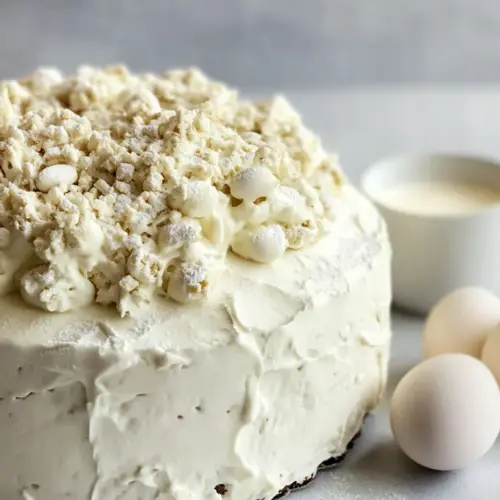
Easter Cake
Easter Cake is a light, tender layered cake with creamy whipped frosting and bright blueberry filling. This spring friendly dessert offers a delicate crumb, a silky whipped cream finish, and a jammy burst of blueberry in each bite, perfect for easy weeknight baking or a show stopping brunch centerpiece. Make it for celebrations when you want a festive, refreshing dessert that is worth the effort.
Equipment
- Stand mixer
- Whisk attachment
- Paddle attachment
- 9-inch Round Cake Pans
- Parchment Paper
- Offset Spatula
- Pastry bag and tip
- Wire Rack
Ingredients
- 2 1/2 cups (313 grams) cake flour Provide structure and fine crumb to the cake; sifted cake flour ensures a tender, delicate texture by having lower protein than all-purpose flour and minimizing gluten development.
- 1 3/4 cups (350 grams) granulated sugar, divided Add sweetness and assist with browning; dividing the granulated sugar allows some to be creamed with fats for lift while reserving the rest for egg white stabilization or balancing fillings.
- 1 1/4 teaspoons (6.25 grams) baking powder Lighten and leaven the batter by releasing carbon dioxide when heated; baking powder helps the cake rise evenly and contributes to a soft, airy crumb.
- 3/4 teaspoon (2.25 grams) kosher salt Enhance overall flavor and balance sweetness; kosher salt strengthens gluten slightly and heightens other flavors when distributed evenly throughout the batter.
- 1/4 teaspoon (1.25 grams) baking soda Provide additional leavening and react with acidic ingredients; baking soda neutralizes acids in buttermilk and contributes to oven spring and tender texture.
- 10 tablespoons (140 grams) unsalted butter, melted and slightly cooled Contribute richness, moisture, and tender crumb; melted and slightly cooled unsalted butter adds flavor and helps incorporate fat uniformly into the batter.
- 1/4 cup (56 grams) vegetable or canola oil Increase moistness and improve mouthfeel without adding dairy; vegetable or canola oil keeps the cake tender and helps retain freshness over time.
- 1 tablespoon vanilla bean paste (18 grams) or vanilla extract (12 grams) Impart concentrated vanilla aroma and flavor; vanilla bean paste or extract enhances the cake's fragrance and complements both the batter and frosting.
- 3/4 cup (180 grams) whole buttermilk, room temperature Introduce acidity and tang while reacting with baking soda; whole buttermilk adds moistness, tenderizes the crumb, and contributes a subtle tangy note.
- 6 large egg yolks (112 grams), room temperature Provide richness, color, and emulsifying properties; egg yolks add fat, help create a smooth, rich batter, and contribute to structure and tenderness.
- 3 large egg whites (90 grams), room temperature Incorporate air and provide lift when whipped; egg whites create volume and lightness in the cake, improving texture and crumb when folded into the batter.
- teaspoon cream of tartar Stabilize whipped egg whites and increase volume; cream of tartar helps maintain stiffness and structure in beaten whites for a more stable meringue or foam.
- Whipped Cream Frosting (recipe follows) Coat the cake and add creamy sweetness; whipped cream frosting offers a light, airy finish that complements the cake without overpowering its flavors.
- Blueberry Filling (recipe follows) Provide fruity contrast and moisture between layers; blueberry filling adds concentrated berry flavor, sweetness, and a pleasant textural element to each slice.
- Garnish: fresh blueberries, edible flowers Add visual appeal and fresh flavor as a finishing touch; fresh blueberries and edible flowers decorate the cake while contributing color and subtle freshness.
Instructions
- Preheat oven to 350°F (180°C). Spray 2 (9-inch) round cake pans with baking spray with flour. Line bottom of pans with parchment paper; lightly spray parchment.: As the oven warms to 350°F , you will smell the faint hum of the heating elements coming to life, and the consistent heat is essential for even rising. Properly greasing and lining the pans ensures the cake separates cleanly after baking, avoiding ragged edges. If you skip lining, the bottom can stick and tear; always press the parchment snugly to the pan bottom and give it a light spray so the batter slides easily. A common misstep is placing cold pans in the oven; allow pans to come to room temperature so the batter distributes evenly. You should feel confident that when you invert the pan after cooling for a short time, the layer will release with smooth sides.
- In a medium bowl, sift together flour, 1 1/2 cups (300 grams) sugar, baking powder, salt, and baking soda.: The dry mix should smell faintly of flour and salt, clean and slightly sweet from the granulated sugar. Sifting aerates the mixture and breaks up clumps, which makes for a lighter crumb after baking. I always run a whisk through the dry ingredients afterward to ensure even distribution of leaveners; uneven mixing can cause pockets of baking powder which create erratic rise. A typical mistake is skipping sifting when the flour is packed; that can yield a denser cake. Watch for a uniform pale, powdery blend as your cue to proceed.
- In another medium bowl, whisk together melted butter, oil, and vanilla paste or extract until well combined. Whisk in buttermilk and egg yolks until well combined.: When you mix melted butter with oil and vanilla , the aroma becomes richer and you can see the glossy sheen of fat blending; this gives the batter body and flavor. Adding room temperature buttermilk loosens the mixture into a silky emulsion, and the egg yolks thicken it into a custardy base that will incorporate smoothly with the dry ingredients. If your butter is too hot, the yolks may partially cook; allow the butter to cool to warm. A common trap is using cold ingredients here, which can cause the fats to seize and the batter to curdle slightly. The right texture is smooth and homogeneous, without lumps.
- In the bowl of a stand mixer fitted with the whisk attachment, beat egg whites and cream of tartar at medium-low speed until foamy. Increase mixer speed to medium-high; gradually add remaining 1/4 cup (50 grams) sugar, beating until soft peaks form, about 1 minute. Increase mixer speed to high, and beat until stiff, shiny peaks form, about 1 minute. (Do not overbeat.) Transfer egg white mixture to another medium bowl; return bowl to stand mixer.: As you whip the egg whites with cream of tartar , the noise will change from a whisper to a light roar, and the mixture will go from translucent to glossy white. Gradually adding the reserved sugar stabilizes the meringue and helps create stiff peaks that hold their shape when you lift the whisk. Watch closely so you stop at glossy, stiff peaks; overbeating dries the whites and makes them granular. A common mistake is getting yolk into the whites, which prevents full volume; always separate carefully. Properly whipped whites should form peaks that stand tall and bounce slightly without collapsing.
- Switch to the paddle attachment. Add flour mixture to mixer bowl; with mixer on low speed, gradually add butter mixture, beating just until combined, about 15 seconds; scrape bottom and sides of bowl and paddle. Beat at medium speed until thick, smooth, and well combined, about 30 seconds. Fold in one-third of egg white mixture until almost combined. Gently fold in remaining egg white mixture until no white streaks remain. Divide batter between prepared pans, smoothing with an offset spatula. Tap pans on a kitchen towel-lined counter 6 to 8 times to release air bubbles.: When the dry and wet mixtures join, you will see the batter turn from dusty to glossy and thicker, like a souffle base. The brief low speed incorporation prevents overworking the batter, preserving tenderness. Scraping the bowl is essential; any unmixed streaks will create dense pockets in the cake. A typical error is extended mixing which activates gluten and yields a tighter crumb. The goal here is a cohesive, slightly ribbon like batter that still carries air.
- Bake until edges are lightly browned and a wooden pick inserted in center comes out clean, about 20 minutes. Let cool in pans on a wire rack for 10 minutes. Remove from pans, gently remove parchment, and let cool completely on a wire rack.: Folding is a tactile, quiet step where the batter becomes lighter and aerated. You should feel gentle resistance, and the sound is soft as the spatula moves through. Folding maintains volume, and that delicate touch pays off in a tender rise. After filling the pans, tapping helps bring trapped air to the surface so the crumb bakes evenly. Avoid vigorous stirring here, which deflates the mixture and yields a denser cake. Visually you want the batter level and smooth before it goes into the oven.
- Level cooled cake layers, if desired. Place 1 cake layer on a serving plate.: As the cakes bake, the kitchen will fill with a warm, vanilla scented aroma and the tops will turn a gentle golden hue. The internal structure sets, and a clean wooden pick is the classic cue for doneness; the center should be springy to touch. Cooling in the pan for a short period stabilizes the crumb, then transferring to a wire rack prevents soggy bottoms. A common mistake is opening the oven early, which can cause collapse. Let the layers cool fully before leveling or frosting to avoid sliding filling and melting frosting.
- Transfer 1 1/2 cups (265 grams) Whipped Cream Frosting to a pastry bag fitted with a large round piping tip. Pipe a border of frosting around edge of cake layer. Spread half of Blueberry Filling within frosting border. Pipe remaining frosting in bag onto filling; gently spread smooth with an offset spatula. Top with remaining cake layer. Spread remaining frosting on top and sides of cake, creating a slight border on top of cake. Spoon remaining Blueberry Filling on top of cake within border. Loosely cover and refrigerate for at least 4 hours before serving or up to overnight. Just before serving, garnish with blueberries and flowers, if desired. Cover and refrigerate for up to 4 days.: Leveling produces neat layers and prevents a lopsided final cake. The crumb should feel springy and even when you slice. I often use a long serrated knife or a cake leveler for precise cuts. If you skip leveling, the cake may lean or the frosting may sit unevenly. Look for a flat, stable surface before you proceed to piping and spreading.
- Transfer 1 1/2 cups (265 grams) Whipped Cream Frosting to a pastry bag fitted with a large round piping tip. Pipe a border of frosting around edge of cake layer. Spread half of Blueberry Filling within frosting border. Pipe remaining frosting in bag onto filling; gently spread smooth with an offset spatula. Top with remaining cake layer: The contrast of soft Whipped Cream Frosting and jammy Blueberry Filling is evident in texture as you work. Piping a border keeps the filling contained and creates a clean look. As you spread, listen for the whisper of spatula on cake and aim for smooth, even layers. A common slip is overfilling, which causes the filling to seep out when stacked; keep some frosting as a dam and handle layers gently to avoid compressing the filling excessively.
- Spread remaining frosting on top and sides of cake, creating a slight border on top of cake. Spoon remaining Blueberry Filling on top of cake within border. Loosely cover and refrigerate for at least 4 hours before serving or up to overnight. Just before serving, garnish with blueberries and flowers, if desired. Cover and refrigerate for up to 4 days: Final frosting and filling set the cake's flavor interplay. Refrigeration allows the filling to firm slightly and the frosting to chill, making slicing neater. The top layer of filling should glisten but not run when chilled. A common mistake is slicing too soon, which causes the filling to smear; patience yields clean slices. When ready to serve, the cake should feel slightly cool, with a stable structure and bright, fresh garnish on top.
Notes
- Use sifted cake flour: Sifting cake flour removes lumps and aerates it, producing a finer crumb; it also helps accurate measuring, preventing a heavy cake.
- Stabilize whipped cream: If your Whipped Cream Frosting needs more hold, chill the bowl and beaters, and add a small stabilizer while whipping to keep peaks firm during assembly and serving.
- Check leaveners for freshness: Old baking powder or baking soda can cause poor rise, so test them if they are older than six months and replace as needed for reliable results.
- Prevent soggy layers: Do not over soak the cake with liquid; the Blueberry Filling should be thick enough to hold shape, and chilling before slicing prevents runny slices.
- Room temperature butter and eggs: Bring butter and eggs to room temperature to help them combine more homogenously, giving a smoother batter and consistent crumb.
- Decorate at the last minute: Add fresh blueberries and edible flowers right before serving to maintain visual appeal and prevent wilting.