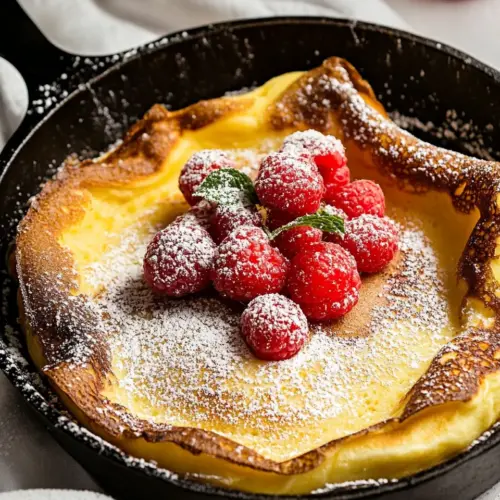
Dutch Baby
Dutch Baby is an airy, golden oven pancake that puffs dramatically with crisp edges and a tender, custardy center. Made with simple ingredients like eggs, flour, milk, and butter, it’s a quick showstopper for weekend brunch or an easy weeknight meal. The contrast of textures and buttery aroma make it irresistible, and it’s perfect to serve right away for a memorable bite.
Equipment
- Oven
- Cast-Iron Skillet
- Blender
- Hot mitts
Ingredients
- 3 large eggs, at room temperature (put in warm water 5 minutes) Beat vigorously to incorporate air and structure; eggs provide richness, lift, and the custardy texture of the Dutch Baby. Ensure they are at room temperature so they blend smoothly into the batter and create a light, puffy rise during baking.
- 1/2 cup all-purpose flour Sift or whisk finely to avoid lumps and supply the necessary gluten and body for the batter; all-purpose flour gives the pancake enough structure to puff while remaining tender. Measure accurately to keep the batter balance that produces the characteristic edges and custard-like center.
- 1/2 cup whole milk, at room temperature (microwaved 15 seconds) Warm gently and whisk in to loosen the batter and add creaminess; whole milk contributes fat and moisture that yield a silky interior. Using room-temperature milk helps it incorporate evenly so the batter achieves a smooth consistency and consistent rise.
- 1 tbsp sugar Sweeten mildly to balance the egginess and support browning; granulated sugar enhances flavor and caramelization on the edges. Add sparingly so the Dutch Baby retains its slightly savory profile while developing a pleasant golden crust.
- 1 tsp vanilla extract Flavor delicately to amplify the overall aroma and provide subtle warmth; vanilla extract rounds out the batter with sweet, floral notes. Use quality vanilla for a noticeable but not overpowering layer of flavor that complements toppings.
- Pinch of salt Season lightly to enhance other flavors and balance sweetness; a small pinch of salt sharpens the batter and deepens the overall taste. Distribute evenly so the tiny amount improves complexity without being perceptible as saltiness.
- Pinch of nutmeg, (optional) Optionally grate or sprinkle sparingly for warm, aromatic complexity; nutmeg adds a subtle, slightly sweet-spicy note that pairs well with vanilla and butter. Include only if desired, as it can shift the profile toward spiced breakfast flavors.
- 3 tbsp unsalted butter Melt thoroughly to grease the skillet and create the signature crisp, brown edges; unsalted butter supplies rich flavor and helps the batter climb the hot pan. Heat until sizzling so the batter begins cooking on contact and the Dutch Baby puffs dramatically.
Instructions
- Preheat oven to 425˚F. Place an oven-safe skillet such as cast iron into the oven and let it preheat for at least 8 minutes.: As the oven heats, you will notice a warm, dry air that signals the environment is ready to transform the batter into a puffed masterpiece. Preheating an oven to 425˚F ensures the skillet becomes searing hot, which is essential for the immediate steam production that lifts the batter. The sound of the oven fan settling and the brief scent of warm metal are cues that the oven is stabilizing. Why this matters, we get that rapid burst of heat so the edges set quickly while the center puffs, creating that contrast between a crisp rim and a tender interior. A common mistake is underpreheating, which yields a flatter result, so always allow at least 15 minutes for the oven to fully reach temperature, and check with an oven thermometer if your oven runs cool.
- Meanwhile, in the jar of a blender, combine eggs, flour, milk, sugar, salt, nutmeg, and vanilla, and blend 30 seconds on high speed until smooth, scraping down the sides of the blender halfway through to make sure all flour is incorporated.: When the skillet is in the oven it gradually absorbs intense, even heat; after about 8 minutes the metal will be uniformly hot and ready to sizzle butter . You can often sense the heat radiating when you open the oven briefly, and the skillet surface will appear to shimmer if you look closely. This step creates the thermal shock needed to immediately crisp the batter edges on contact, which produces a dramatic lift. If the pan is not hot enough the batter will spread and not rise as impressively, so resist the urge to shortcut this step. Use oven mitts to check, and avoid touching the pan as it will be dangerously hot.
- Carefully remove the pan from the oven using hot mitts. Add 3 tbsp butter to the hot pan and swirl to coat bottom and sides of the pan. The butter should sizzle.: As the blades whirl, the batter will change from lumpy to silky, giving off a faint, sweet aroma from the sugar and vanilla . Blending for about 30 seconds ensures the mixture is homogeneous, which helps it set evenly in the oven. Scraping the jar prevents pockets of unblended flour that can create dense spots in the final puff. The texture should be pourable, like heavy cream, indicating the correct hydration. If the batter seems too thick, a splash of milk can adjust it; too thin and it may not hold structure as well. A common error is underblending, which leaves lumps and uneven texture.
- Add batter to the buttered pan then bake for 16-18 minutes or until pancake is puffed and golden brown at the edges.: When you open the oven the blast of hot air and the bright heat will remind you how intense the environment is. Using sturdy hot mitts, slide the skillet onto the range top or an oven rack, and be mindful of the radiant heat nearby. This moment is crucial because the surface temperature of the skillet should be high enough to immediately foam the butter and cause a sizzle, a sound that reassures you the pan is ready. Avoid setting the skillet on a wet surface since thermal shock could warp the pan or cause splatter. A common pitfall here is underestimating the heat and touching the pan with insufficient protection, so always use proper mitts.
- Carefully remove the pan from the oven with hot mitts and serve pancake right away.: As the butter hits the hot metal it will foam and release a nutty, toasted scent; that sizzling noise is exactly what you want. Swirling ensures the entire surface is coated so the batter can slide and the edges crisp evenly. The visual cue is when the butter turns a light golden color and seems to shimmer across the skillet. If the butter browns too quickly, pull the pan out momentarily to avoid burnt flavors. Too little butter results in sticking and uneven browning, so don’t skimp.
- The butter should sizzle: That immediate sizzle indicates the pan is hot enough to create steam and lift the batter, producing the characteristic rise and crisp edge. The sizzling also imparts a faintly caramelized aroma that browns the exterior as the center sets. Pay attention to the intensity of the sizzle; if it is violent and smokey, the pan may be too hot and the butter could burn, so briefly vent the oven or reduce the oven temperature slightly. If you hear only a whisper, the pan might not be hot enough, which can affect the puff, so ensure the skillet has had sufficient preheat time.
- Add batter to the buttered pan then bake for 16 to 18 minutes or until pancake is puffed and golden brown at the edges: As the batter hits the skillet you will hear a gentle hiss and see it begin to set around the edges within a minute. Inside the oven the center will swell dramatically, creating those theatrical peaks and valleys, and the edges will take on a rich golden brown color. The aroma of cooked eggs and toasted butter will fill the kitchen, promising a satisfying contrast of textures. The visual cues for doneness are a deeply puffed center and deeply colored rim. Avoid opening the oven door repeatedly, as that can cause the structure to collapse. If you notice the center wobbling excessively after the time, allow one to two more minutes, but watch carefully to prevent overbrowning.
- Carefully remove the pan from the oven with hot mitts and serve pancake right away: The final moments are sensory rich, with a puffed dome that begins to deflate gently as it cools to a tender custard with a crisp rim. Serve immediately to enjoy the contrast between warm, ethereal center and crunchy edges; a delayed serving will reduce the height and change the texture. Use caution when transporting the skillet since the handle and metal will be extremely hot. A common mistake is letting it sit too long on the counter, which diminishes the visual impact and alters the eating experience, so bring it to the table promptly.
Notes
- Room temperature matters: Bringing the eggs and milk to room temperature helps the batter emulsify uniformly and encourages a stronger rise in the oven. If you forgot to set them out, try placing the eggs in warm water for five minutes and microwaving the milk for about fifteen seconds; this prevents the batter from becoming dense.
- Preheat your skillet: A properly heated cast iron or oven safe skillet is non negotiable. Give the pan at least eight minutes in the hot oven so it can radiate heat evenly, which creates immediate steam and the signature puff. Cold pans produce flat results.
- Blend for smoothness: Use a blender for about thirty seconds at high speed to produce a silky batter. Stop and scrape the sides midway to ensure no pockets of flour remain, which can create dense bits in the finished pancake.
- Mind the butter: Add the butter to the hot pan and swirl to coat. When the butter foams and sizzles, you know the surface is ready. If it browns too fast, slightly reduce oven time or temperature to avoid a bitter taste.
- Serve right away: The spectacle and the best texture happen within minutes of coming out of the oven. The pancake deflates as it cools, so plan to plate and enjoy immediately to capture the contrast between the crisp edges and the soft center.